Vitalik Buterin
Nov 8, 2026

Vitalik Buterin Says an Anti-Data-Center Movement Would Not Cause a Disaster

Ethereum co-founder Vitalik Buterin has rejected what he described as highly emotional reactions this week to an anti-data-center movement. In a post on X, he argued that even an extreme success for the movement would not produce a catastrophic outcome. Algorithmic progress, he said, means that a task requiring more and larger data centers two years from now could be handled by existing data centers four years from now, or possibly sooner. Buterin also said the world needs as much time as possible to address cybersecurity problems that have already appeared, along with coming risks such as biological threats. He argued that bottlenecks for scientific applications are found more often outside AI, so a one-year slowdown in AI development would hinder those applications by less than a year. On that basis, he considers a slowdown in the extremely rapid growth of compute capacity broadly beneficial. He added that this view does not rely on disputed doomsday arguments or RSI-related claims, and said that even if the slowdown were harmful overall, its harm would be far smaller than that of more than ten other political issues.


540
Vitalik Buterin Says an Anti-Data-Center Movement Would Not Cause a Disaster
Windows vulnerability
Nov 7, 2026

CZ Shares Warning on Windows Paint Vulnerability, Urges Immediate System Updates

Binance founder Changpeng Zhao, known as CZ, shared a warning on Nov. 7 about a remote code execution vulnerability in Microsoft Paint and urged users to update their operating systems. The flaw, tracked as CVE-2026-83844, carries a CVSS score of 8.1. Microsoft’s security response center revised the fixed version on Nov. 6 to Paint 11.2609.401.0, with every version below that release listed as affected. The earlier version cited by Dark Web Informer, 11.2605.91.0, is also included. The vulnerability can be attacked over a network, requires no privileges and does not require user interaction, although its attack complexity is rated high. Microsoft classifies the issue as Important and says it is less likely to be exploited. The company currently marks it as not publicly disclosed and not exploited. Microsoft lists the Microsoft Store as the update channel and advises users to install the new release or verify that automatic updates have completed. CZ has issued at least four system-update reminders on X since Nov. 5, including warnings related to the DarkSword iPhone malware and the limits of wallet software in protecting an operating system.

430
CZ Shares Warning on Windows Paint Vulnerability, Urges Immediate System Updates
Bitcoin
Nov 7, 2026

Blockstream Says Bitcoin Should Prepare for Quantum Attacks With New Signatures

Bitcoin infrastructure firm Blockstream said in its third-quarter business update that Bitcoin could prepare for future attacks from quantum computers by adopting new digital signature technology, according to ChainCatcher, citing Bloomingbit. A previous report from the Blockstream team compared three lattice-based signature schemes: Dilithium, Falcon and Hawk. Researchers assessed Falcon-1024 as offering the best balance among data size, verification speed and the maturity of its security foundations. They wrote that if a lattice-based signature scheme had to be selected for Bitcoin today, they would choose Falcon-1024. The researchers also identified unresolved challenges, including finalizing the Falcon standard, obtaining verified implementations and addressing the memory burden such implementations could place on hardware wallets. For the short term, the team described hash-based signatures as the more conservative option. Once Falcon is standardized and its implementation technology matures, Blockstream said the two approaches could be combined to improve security and processing efficiency.

450
Blockstream Says Bitcoin Should Prepare for Quantum Attacks With New Signatures
Windows Vulnerability
Nov 7, 2026

CZ Warns of Windows Vulnerability Risk and Urges Users to Update

Changpeng Zhao, the founder of Binance, reposted a security warning on X concerning a high-severity vulnerability in Microsoft Paint and urged users to update their operating systems immediately. Zhao said applications cannot protect users from vulnerabilities in the underlying operating system. The vulnerability disclosed by Microsoft is tracked as CVE-2026-83844 and carries a CVSS score of 8.1. It affects Microsoft Paint versions earlier than 11.2605.91.0. The issue involves an out-of-bounds read and could allow an unauthenticated attacker to execute malicious code remotely. Microsoft has released a security patch for the vulnerability. There is currently no confirmed report that the flaw has been actively exploited.

520
CZ Warns of Windows Vulnerability Risk and Urges Users to Update
CZ
Nov 7, 2026

CZ Urges Users to Update Operating Systems Over Windows Paint Vulnerability

Binance founder CZ has urged users on X to update their operating systems immediately, warning that applications cannot protect users from vulnerabilities in the operating system itself. The warning followed a post he reposted disclosing a high-severity vulnerability in Microsoft Windows Paint, identified as CVE-2026-83844. The flaw allows an unauthenticated attacker to execute malicious code remotely and carries a CVSS score of 8.1. Microsoft has released a security update for the issue. Administrators are advised to make sure that Paint is updated to version 11.2605.91.0 or later. The reminder was published by Techub News, with the referenced post attributed to the X account @cz_binance. The available information does not provide additional details about affected systems, exploitation, or the scope of the vulnerability beyond the stated technical description. Users and administrators are advised in the source material to apply the available operating-system and application updates, with Paint specifically required to meet the listed version threshold.

490
CZ Urges Users to Update Operating Systems Over Windows Paint Vulnerability
Gnosis Pay
Nov 6, 2026

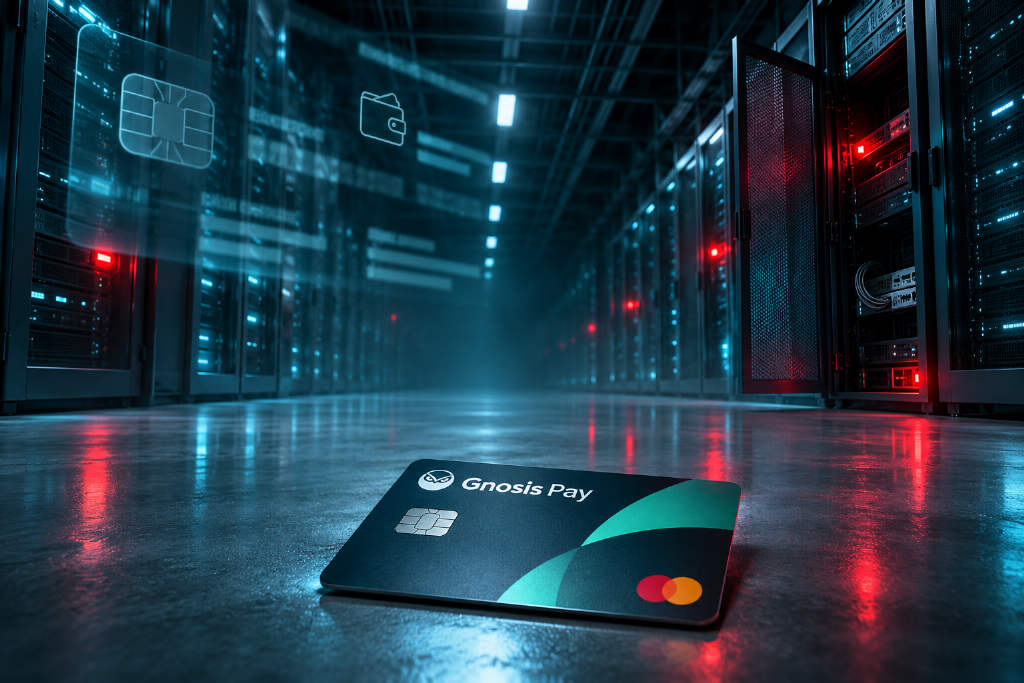
Gnosis Pay Breach Exposes Card Details, Personal Data and Wallet Addresses

Crypto-linked Visa debit card provider Gnosis Pay disclosed a breach of its legacy consumer card system, saying unauthorized access exposed sensitive payment, personal and cryptocurrency wallet information. The company said it detected the incident on Nov. 3 and began containing it within two hours. Customer funds and the separate enterprise platform used for white-label card programs were not affected, according to Gnosis Pay. Breach notifications reviewed by Cointelegraph listed full card numbers, expiration dates, CVV codes, customer names, home addresses and wallet addresses among the exposed data. Email addresses, phone numbers, nationalities and, in some cases, banking details including IBAN and BIC information were also involved. One notification said a customer’s card was canceled on Nov. 3 and that no suspicious transactions or movement of funds had been detected. Gnosis Pay said it replaced compromised credentials, fixed the vulnerability and would require 3D Secure verification for online payments until the legacy system is retired on Dec. 20. The company did not disclose the number of affected customers.

380
Gnosis Pay Breach Exposes Card Details, Personal Data and Wallet Addresses
Lazarus Group
Nov 5, 2026

Inside Lazarus: How North Korean Hackers Infiltrated Crypto Firms and Moved Stolen Funds

PANews published a long-form report tracing the operating playbook of Lazarus Group, the North Korea-linked hacking organization tied to a string of major cyber and crypto theft cases. The story opens with the October 2026 Binance breach, in which $6.34 billion in digital assets was stolen after attackers allegedly used a fake recruiting process to compromise an engineer’s work device, move laterally through internal systems, and reach the wallet-signing environment. Although Binance said it intercepted and froze about $2.85 billion, the incident still set a record for the crypto industry. The report then widens the frame. Drawing on public material from the FBI, Microsoft, Chainalysis, TRM Labs, Mandiant, Sygnia, NCC Group and others, it describes how Lazarus evolved from high-profile cyber sabotage and bank theft into a sprawling apparatus that targets exchanges, wallet providers, blockchain companies and even job applicants. Cases cited include the Sony Pictures attack, the Bangladesh Bank theft, Ronin, DMM Bitcoin and Bybit. It also follows the money after the thefts: funds split across fresh wallets, routed through decentralized exchanges and cross-chain services, and in some cases handled by over-the-counter intermediaries. The article argues that Lazarus is not just a theft crew, but part of a broader state-linked system in which financial theft, espionage and operational tradecraft are tightly connected.

2080
Inside Lazarus: How North Korean Hackers Infiltrated Crypto Firms and Moved Stolen Funds
OpenAI
Nov 5, 2026

OpenAI says its security model found 948 Linux kernel privilege-escalation flaws

OpenAI said an unreleased cybersecurity model identified 948 distinct local privilege-escalation vulnerabilities in the Linux kernel through an automated pipeline that handled discovery, validation and exploit development. The company said the full run cost about $1.2 million and produced 1,169 working privilege-escalation exploits that achieved root access, along with 291 information-leak proof-of-concepts. After merging related variants, the final count came to 948 independent flaws. According to OpenAI, the process began with scout agents that narrowed more than 40 million lines of kernel code to 2.8 million lines of high-value targets, or about 7% of the total, at an API cost of $3,426. Analyst agents then scanned that subset and generated 2,308 suspected vulnerability reports in 12 hours, costing $316,000. A triage agent later reproduced 1,724 kernel-crash bugs within 30 hours, with a reported hit rate of 74.7% and a 3.1% rate of outright hallucinated false positives. OpenAI also said the system discovered at least 10 new Linux kernel exploitation techniques and that its broader "Patch the Planet" effort is applying compute to open-source security work. The company said the same pipeline has already been connected to Firefox and Chrome, and recently helped Firefox fix more than 40 vulnerabilities.

480
OpenAI says its security model found 948 Linux kernel privilege-escalation flaws
Total 720 items
Go topage