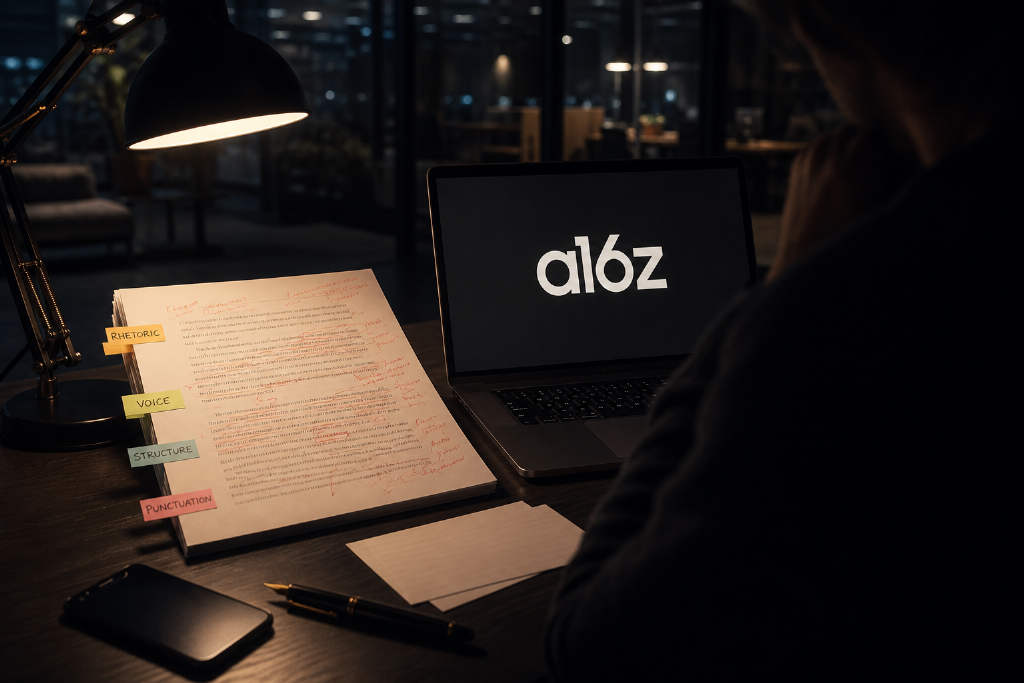
a16z says the better test for AI writing is whether the text actually does its job
Steph Zinn of a16z Crypto argues that the current obsession with spotting "AI tells" rests on two shaky assumptions: that machine-written text can be identified through a stable set of giveaways, and that anything carrying those markers must be weak writing. In the essay, published in Chinese by TechFlow, she rejects both ideas and proposes a simpler standard: does the piece of writing actually accomplish what it is supposed to do? Zinn breaks common AI-style problems into four buckets — rhetoric, voice, structure, and punctuation — and says many of them long predate large language models. AI has not invented those habits so much as scaled them. Across the piece, she addresses founders and writers who use LLMs in practice, outlining when vague phrasing, generic tone, overbuilt structure, and repetitive punctuation get in the way of clear communication, and when some of those traits still make sense. Rather than treating AI as something to hide at all costs, she frames it as a tool that can help people draft, organize, and research, so long as the writer still edits for specificity, clarity, and purpose.