Paradigm
Oct 25, 2026

Paradigm CTO says audited JIT-enabled EVM evm2 is set for release

Paradigm partner and CTO Georgios Konstantopoulos said the firm is preparing to launch a new Ethereum Virtual Machine implementation called evm2, which has already completed an audit. The project includes built-in just-in-time compilation, or JIT, and its codebase has been published on GitHub. According to the repository materials, evm2 is written in Rust and is designed to let developers customize opcodes, gas rules, transaction types, and precompiled contracts without changing the core code. The README says the implementation can reach up to 2x the execution speed of revm, a widely used Rust-based EVM implementation. Konstantopoulos said the new EVM will be used in Foundry, Reth, Tempo, and other EVM ecosystem projects built on the same technology stack. Foresight noted that Reth is Paradigm’s Ethereum execution client, Foundry is an Ethereum smart contract development framework for the EVM, and Tempo is a payments-focused public blockchain incubated by Stripe and Paradigm. All three are currently built on revm.

1310
Paradigm CTO says audited JIT-enabled EVM evm2 is set for release
Intel
Oct 21, 2026

Intel installs first major truss at Ohio chip plant, with completion now set for 2030

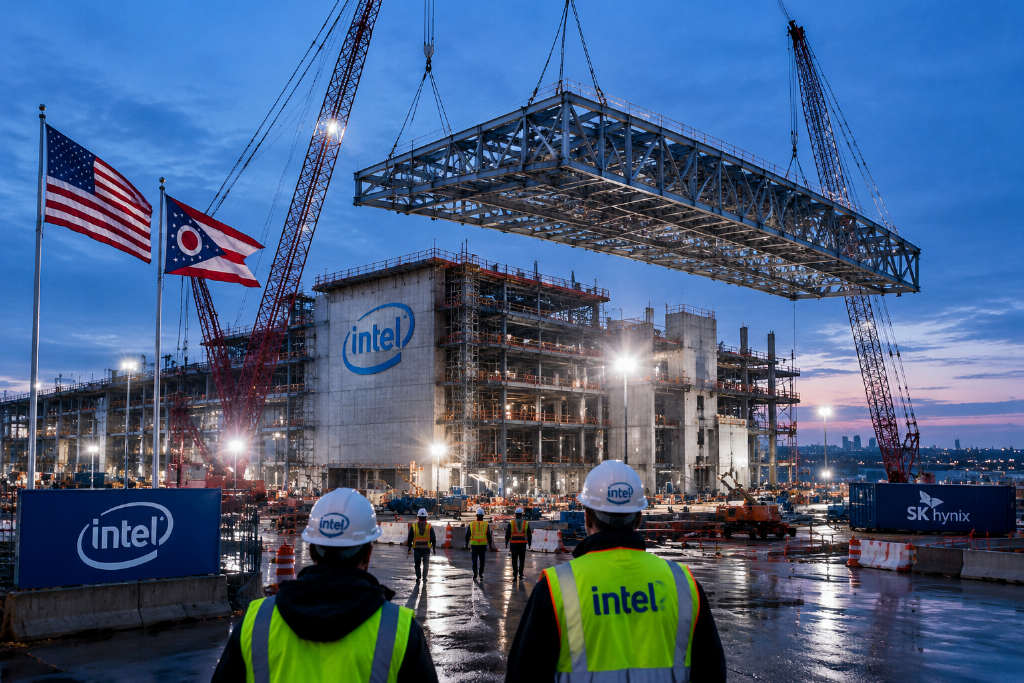
Intel said it has installed the first major structural truss at its large chip manufacturing site in New Albany, Ohio, moving the project into a new phase of construction. The facility had originally been scheduled to begin production in 2025, but its completion timeline has now shifted to 2030, a delay of at least five years from the original plan. Naga Chandrasekaran, who leads Intel’s foundry business, said in a post on the company’s website that the milestone marks another step in expanding leading semiconductor capacity in the United States. Intel also still needs customers to secure returns on the investment. CNBC reported that SK Hynix, a leading producer of high-bandwidth memory, may work with Intel as early as September by leasing part of the foundry space at the site to make memory chips, though neither company has confirmed the plan. The Ohio project is part of Intel’s broader push to expand chip manufacturing for external customers.

590
Intel installs first major truss at Ohio chip plant, with completion now set for 2030
Intel
Oct 20, 2026

JPMorgan lifts Intel to Neutral after 36% pullback, but stops short of a bullish call

JPMorgan raised Intel to Neutral from Underweight in an Oct. 18, 2026 report, arguing that much of the long-running bearish trade has already played out after the stock fell about 36% from its June peak. The bank did not turn positive on the name. Instead, it said the risk-reward profile now looks more balanced, with Intel trading close to JPMorgan’s $85 price target for December 2027. The report pointed to better execution in several areas: stronger competitiveness in data center CPUs, a sharp improvement in profitability at the Data Center and AI segment, progress in manufacturing with 18A-P in risk production and 14A targeted for high-volume manufacturing in 2028, and fast growth in ASIC services revenue. JPMorgan said those developments were enough to remove its Underweight rating. Still, the bank kept a cautious stance. External foundry revenue remains small relative to Taiwan Semiconductor Manufacturing Co., management has warned that 2027 free cash flow will be “more challenged,” and incremental dilution remains a key risk. JPMorgan said the next move in the stock will depend on four proof points, including data center CPU execution, broader AI compute strategy, external foundry customer wins, and stronger data center networking capabilities.

1050
JPMorgan lifts Intel to Neutral after 36% pullback, but stops short of a bullish call
JPMorgan
Oct 20, 2026

JPMorgan lifts Intel to Neutral after 36% pullback, but says the turnaround still needs proof

JPMorgan raised Intel to Neutral from Underweight in an Oct. 18 report and set a December 2027 price target of $85. Based on the report’s listed Oct. 16 close of $89.85, that target still sits about 5% below the market price, showing the call was driven less by fresh upside and more by a reset in risk and reward after the stock fell roughly 36% from its June high. The bank said execution has improved under Lip-Bu Tan, with Intel’s Data Center and AI segment becoming the company’s largest profit contributor. JPMorgan pointed to tight Granite Rapids supply, long-term customer agreements including Google, and demand tied to agentic AI workloads as reasons earnings could keep improving into the next reporting periods and through 2027. Still, the firm kept a Neutral rating. It said Intel may continue losing share in server and PC CPUs, external foundry revenue remains small, and free cash flow is not expected to turn positive until 2028. JPMorgan also flagged the risk of more financing and possible dilution if cash needs persist while Intel continues to invest in manufacturing capacity.

640
JPMorgan lifts Intel to Neutral after 36% pullback, but says the turnaround still needs proof
Intel
Oct 20, 2026

Intel CEO Lip-Bu Tan says U.S. stake does not shape strategy, restructuring is 80% complete

Intel CEO Lip-Bu Tan said in an interview with Nikkei that the Trump administration holds a minority stake in Intel but is not using that position to influence the company’s operating strategy. He added that Intel still needs strong government backing if its foundry business is to grow over the long term. According to the report, the U.S. government converted previously allocated federal funding into an $8.9 billion investment last year, taking a 9.9% stake in Intel. After Intel issued new shares in August, that holding was diluted to about 8.2%. The government acquired 433.3 million passive shares in August last year and does not hold a board seat. Tan also said Intel’s restructuring is 80% complete. He identified AI-related advanced packaging and application-specific integrated circuits, or ASICs, as possible growth areas. He also commented on competition from China, saying the gap is not very large today and pointing to Chinese AI models including Kimi, GLM and DeepSeek as examples of competitive technology.

800
Intel CEO Lip-Bu Tan says U.S. stake does not shape strategy, restructuring is 80% complete
Microsoft
Oct 16, 2026

Microsoft says it has finished pretraining MAI-Base-2, a 2.8 trillion-parameter model

Microsoft said it has completed pretraining for MAI-Base-2, its latest in-house foundation model, with total parameters reaching 2.8 trillion. The model uses a mixture-of-experts, or MoE, architecture and activates 80 billion parameters per inference step. According to the company, training ran for 38 days across August and September on 16,000 NVIDIA GB200 GPUs and processed about 50 trillion tokens. Microsoft also said the model introduces native vision pretraining for the first time, with visual data accounting for 18% of the training mix. In internal testing disclosed by Microsoft, MAI-Base-2 outperformed models including DeepSeek-V4-Pro-Base, Kimi K3 and Qwen3.8 on text prediction benchmarks covering coding, question answering, mathematics and science and engineering subjects. Microsoft added that training a model at the same level as DeepSeek-V4-Pro-Base would require only about one-quarter to one-twelfth of the compute under its method, though it kept scaling MAI-Base-2 further. Mustafa Suleyman, Microsoft’s AI chief, said at an internal meeting on Oct. 15 that the pretrained base surpasses the OpenAI model behind GPT-5.6 Sol while using one-quarter of the training compute. The model remains in post-training, with deployment planned first in Microsoft products and later through Foundry to enterprise partners.

1140
Microsoft says it has finished pretraining MAI-Base-2, a 2.8 trillion-parameter model
Intel
Oct 16, 2026

Intel said to win Apple, Google and Nvidia-related foundry work, with 14A at the center

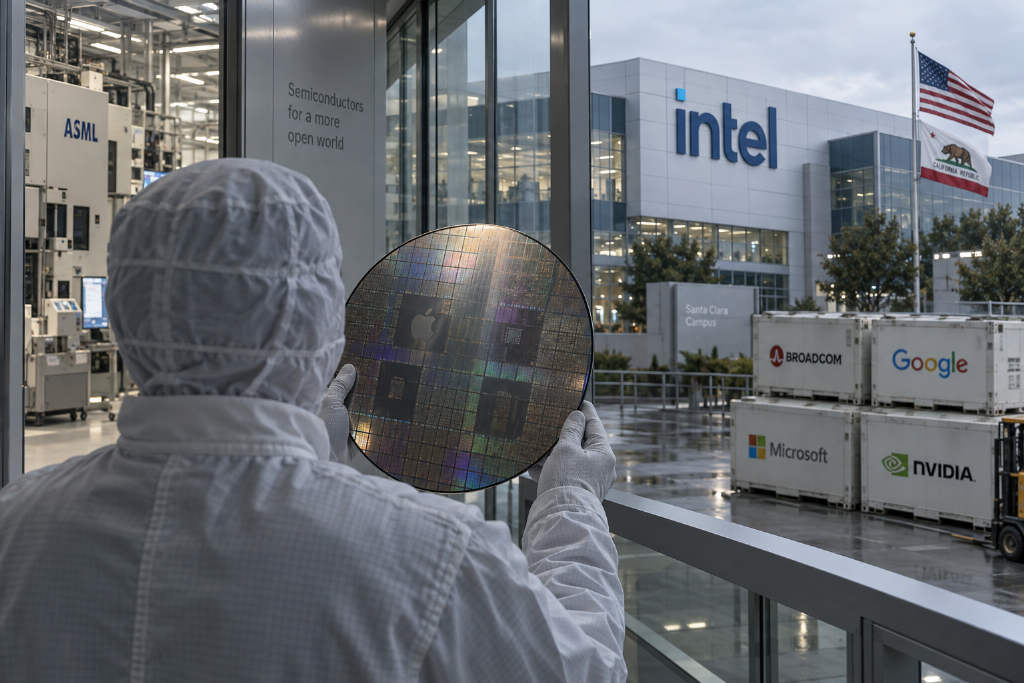
Intel’s foundry business may be lining up a broad set of customers, according to Wccftech’s report citing KeyBanc analysts after an Asia supply-chain survey. The note says Intel has already secured foundry contracts tied to Broadcom networking switch chips and Google server processors, and may later manufacture server processors for Microsoft and gaming GPU chips for Nvidia. KeyBanc also said Apple could place a multigenerational, cross-family order covering M-series chips for Macs and A-series chips for iPhones on Intel’s 14A process rather than the previously rumored 18A-P. The firm estimated Apple’s wafer demand at roughly 600,000 wafers, translating into a revenue opportunity of $15 billion to $20 billion for Intel. Beyond wafer production, KeyBanc projected that Intel’s EMIB-T advanced packaging could be used for Google’s next-generation TPU chips and for about 1 million Qualcomm AI300 chips, while EMIB-M could target Amazon Trainium 3 and Microsoft Cobalt 400. The report also pointed to yield constraints at substrate suppliers including Ibiden and Unimicron. None of the cited customer engagements or revenue estimates has been publicly confirmed by Intel or the companies involved.

1050
Intel said to win Apple, Google and Nvidia-related foundry work, with 14A at the center
CanSemi
Oct 14, 2026

CanSemi Debuts Above $100 Billion Yuan Valuation as Investors Bet on Silicon Photonics and Capacity Growth

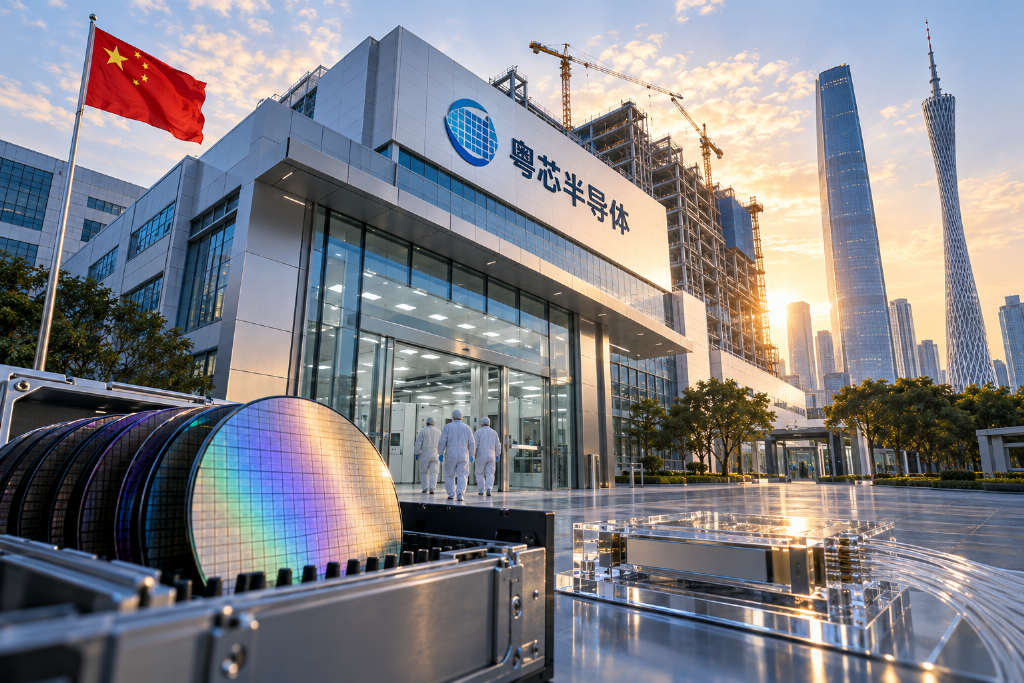
CanSemi Semiconductor made its ChiNext debut on Oct. 13 and immediately drew attention for one reason: valuation. The company, which is still loss-making, opened at RMB 45 after pricing its IPO at RMB 12.01, a 274.69% jump that briefly put its market capitalization at about RMB 129.6 billion. It later closed at RMB 38.80, still up 223.06% on the day, with a market value of roughly RMB 111.7 billion. The pricing stands in sharp contrast to the company’s current financial profile. In the first half of 2026, CanSemi posted RMB 1.777 billion in revenue, up 68.76% year over year, but reported a net loss attributable to shareholders of RMB 1.052 billion and a gross margin of negative 24.46%. From 2023 through the first half of 2026, cumulative net losses exceeded RMB 7.5 billion. What investors appear to be buying is not present earnings, but a future built on rising utilization, improving product mix, and exposure to silicon photonics. Prospectus data show utilization climbed from 55.23% in 2023 to 96.38% in 2025, while the company says higher-value products such as SiPho, BCD power management, and HV display driver chips helped lift pricing. The market is also looking at a planned expansion to 120,000 wafers per month, nearly double the 63,300 wafers per month of actual capacity at the end of 2025. The company has said the earliest it expects to turn profitable is 2029, and that forecast depends on several assumptions, including revenue growth, margin recovery, capacity ramp-up, product commercialization, and government subsidies.

1090
CanSemi Debuts Above $100 Billion Yuan Valuation as Investors Bet on Silicon Photonics and Capacity Growth
Total 88 items
Go topage