Ethereum
14 hours agoNews Editor

ENS Drops Namechain Plan as More Crypto Projects Move Core Activity Back to Ethereum L1

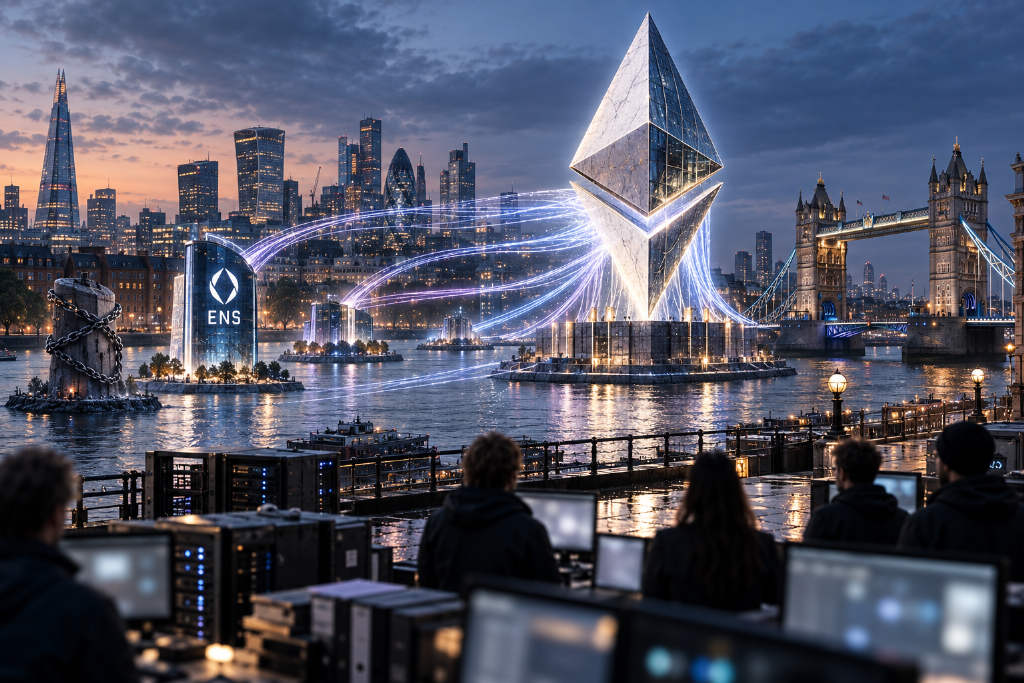
Ethereum Name Service has rolled out ENS v2 directly on Ethereum mainnet, abandoning the Layer 2 path it had spent years preparing through its planned Namechain rollup. The move is part of a wider pattern described in the source article: a growing list of crypto projects are stepping back from dedicated L2 deployments, shelving custom chain plans, or shutting down live networks and returning core contracts to Ethereum L1. The article ties that shift to Ethereum’s higher block gas ceiling in 2025, which rose from 30 million to 60 million and pushed L1 transaction fees lower, while the cost of operating an app-specific chain has become harder to justify. It cites ENS, Synthetix, Superseed, Trueo, ShapeShift, Blast, Nillion, and Abstract as examples. At the same time, projects are not simply moving every function back on-chain. A common design pattern is emerging: custody, ownership, and settlement stay on Ethereum L1, while matching, computation, or other heavy tasks run off-chain or in cheaper environments. The piece also points to Ethereum Economic Zones and the idea of ephemeral rollups as efforts to redraw the boundary between L1 and L2 rather than erase it.

50
ENS Drops Namechain Plan as More Crypto Projects Move Core Activity Back to Ethereum L1
Curve
24 days agoNews Editor

Curve says Ethereum’s Glamsterdam upgrade may ease congestion for complex DeFi trades

Curve said Ethereum’s upcoming Glamsterdam upgrade could give complex DeFi transactions more reliable access to block space, pointing to a wide gap in gas usage between different transaction types on mainnet tests. According to the protocol, a leveraged lending transaction used about 1.84 million gas, while a direct stablecoin swap required only 125,000 gas. The protocol said the upgrade is expected to optimize block space allocation by adjusting network parameters. That change could help more computation-heavy DeFi activity get included more consistently, including loop liquidations and leveraged lending transactions. Curve framed the proposal as a potential way to reduce execution bottlenecks for transactions that compete poorly with simpler operations under current conditions. Glamsterdam has already completed its hard fork process on testnet, but a date for the mainnet upgrade has not been set. The item was cited by Techub and attributed to Crypto.news.

610
Curve says Ethereum’s Glamsterdam upgrade may ease congestion for complex DeFi trades
Ethereum
25 days agoNews Editor

Ethereum’s Glamsterdam upgrade goes live on Sepolia, raising the block gas cap to nearly 200 million

Ethereum’s Glamsterdam upgrade was activated on the Sepolia testnet on Tuesday, according to CoinDesk, lifting the block gas cap from about 60 million to nearly 200 million. The change represents an increase of more than threefold and marks an early public test of the network’s new capacity settings. A review of more than 25 consecutive test blocks found actual gas usage ranged from roughly 52 million to 92 million, or about 26% to 46% of the available limit. None of the sampled blocks reached full capacity. The upgrade also changes how gas is charged for certain tasks and adjusts fees tied to data storage. That means developers may need to retest applications that rely on specific assumptions about gas costs. The next public testnet, Hoodi, is tentatively scheduled to launch on Oct. 27, while an activation date for Ethereum mainnet has not yet been set.

600
Ethereum’s Glamsterdam upgrade goes live on Sepolia, raising the block gas cap to nearly 200 million
Ethereum
2 months agoNews Editor

EIP-8141 revives the debate over ETH’s role, but Ethereum is not switching gas payments to stablecoins

Vitalik Buterin’s mention of progress on EIP-8141, also known as Frame Transactions, has reignited a familiar argument in the Ethereum market: if users can pay transaction costs without holding ETH, does ETH lose its value proposition? The article argues that this framing misses a key distinction. What users see and settle with at the wallet level is not the same as what the Ethereum protocol accepts as the underlying gas asset. Under the design described in the proposal, transaction signing, execution, and gas payment can be separated. A user might sign a transfer of 100 USDC, while a Paymaster or sponsor account supplies the ETH needed to pay network gas and later settles the cost with the user in USDC or another ERC-20 token. In that setup, Ethereum is still being paid in ETH at the protocol layer. The piece also places EIP-8141 in the broader push to hide gas complexity from end users, much like ERC-4337 introduced sponsored gas flows through smart accounts. Its potential impact on ETH, the author says, depends less on whether users directly hold ETH and more on whether smoother wallet experiences translate into materially higher real usage of Ethereum.

1340
EIP-8141 revives the debate over ETH’s role, but Ethereum is not switching gas payments to stablecoins
Gas
2 months agoNews Editor

Gas loses ground as blockchains move from VM debates to resource markets and a chain-cloud model

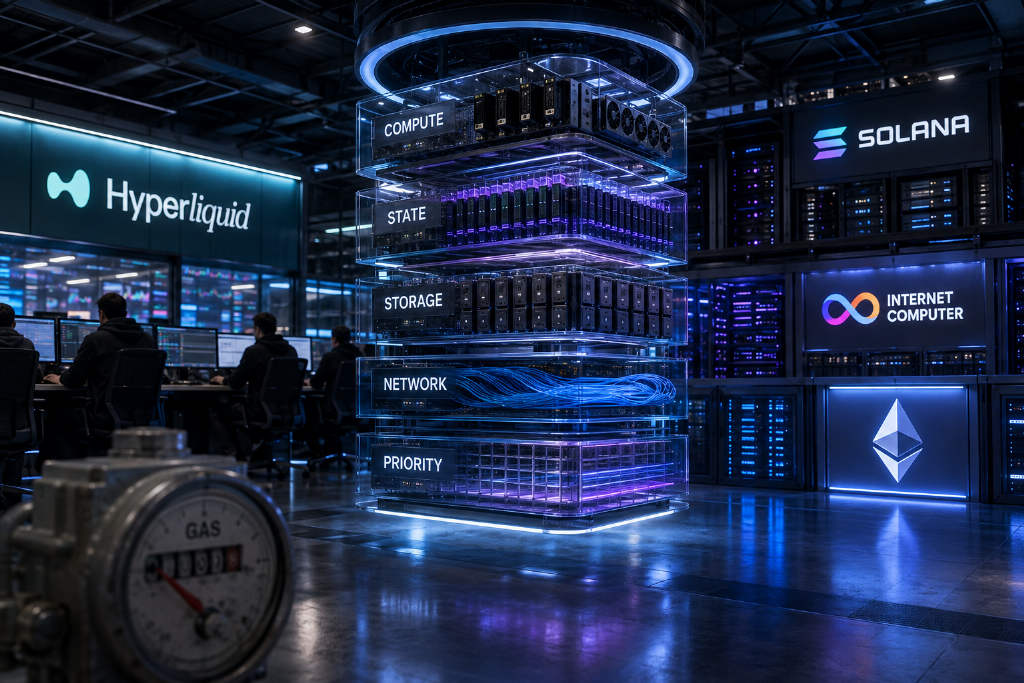
A Foresight market analysis argues that gas is not disappearing, but its role as the single abstraction for blockchain resources is weakening. The article points to four separate tracks that all lead in the same direction: Hyperliquid hides infrastructure costs inside trading fees, Solana is trying to price transaction inclusion separately from actual resource use, Internet Computer prices compute, storage, bandwidth and messaging through cycles tied to XDR, and Ethereum itself is revisiting gas accounting through the Platåberget testnet and proposed changes tied to the Glamsterdam upgrade. In that view, gas is shifting from a core user-facing abstraction to a lower-level settlement layer for resource markets. The piece also argues that the bigger issue may not be gas alone, but the way virtual machines bundle execution, state, resource usage and proving into one model. It contrasts EVM with FuelVM, Sealevel, Move, RISC-V and zkVM, then traces how older chains such as EOS, TRON and Hive had already explored multi-resource accounting. Its broader conclusion is that blockchain design is moving toward explicit resource accounting, pricing, allocation and markets, with the end state looking less like a single chain and more like a protocol-managed, market-priced, cryptographically verified cloud of global compute resources.

1460
Gas loses ground as blockchains move from VM debates to resource markets and a chain-cloud model
HyperEVM
3 months agoNews Editor

HyperEVM average Gwei climbed from about 0.15 to 60 in two days

HyperEVM’s average Gwei has risen sharply over a short period, according to monitoring data cited by ChainCatcher. HyperliquidNews said the average Gwei on HyperEVM increased from about 0.15 Gwei to 3 Gwei on Aug. 22, then moved higher again to 60 Gwei today. Based on the figures provided in the update, that marks a roughly 400-fold increase from the earlier level. The report did not provide additional context on the driver behind the move.

1510
HyperEVM average Gwei climbed from about 0.15 to 60 in two days
Ethereum
3 months agoNews Editor

Ethereum’s Glamsterdam upgrade will end the fixed 21,000-gas rule for basic ETH transfers

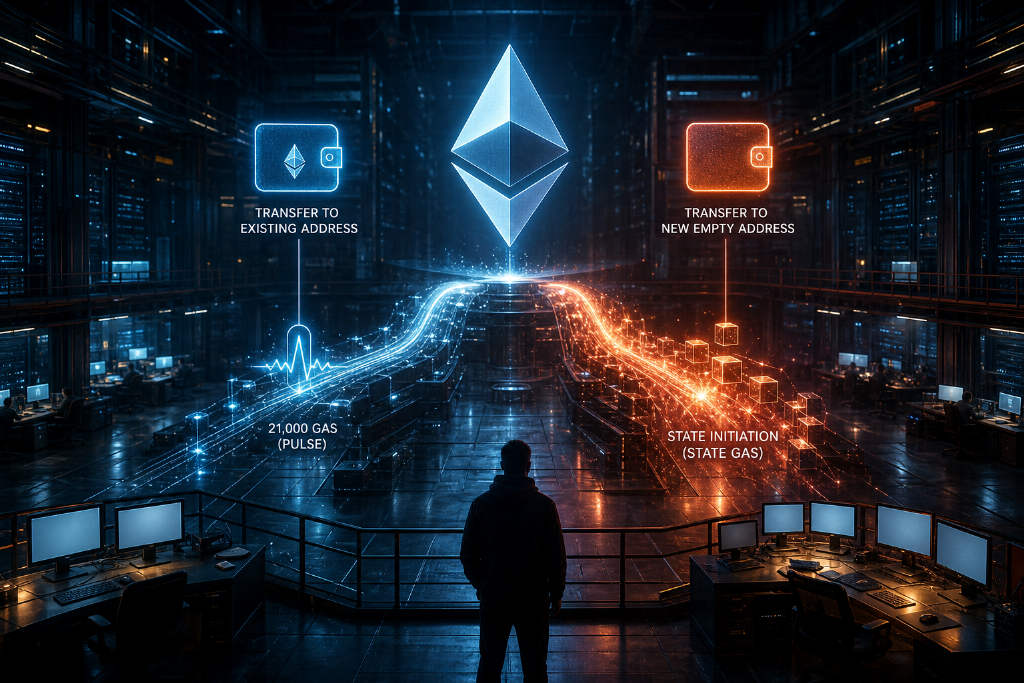
Ethereum’s next major upgrade, Glamsterdam, will change one of the network’s oldest assumptions: a basic ETH transfer will no longer always cost 21,000 gas. Under the proposal, transfers to existing accounts will still use 21,000 gas, but sending ETH to an address that has never appeared on Ethereum before will add 183,600 units of a new category called state gas. The change means wallet software, blockchain tracking services and fee calculators that treat 21,000 as both the minimum and maximum gas cost for an ETH transfer may return incorrect fee estimates or reject transactions that should be valid. Developers from the Ethereum Foundation said service providers should update their systems before Glamsterdam reaches mainnet. The upgrade is scheduled to activate on Thursday on Platåberget, a practice Ethereum network that uses worthless tokens for testing, before moving to Sepolia and Hoodi and later to mainnet. The warning is directed at infrastructure providers rather than ordinary users, and CoinDesk reported that no action is required this week for people simply sending ETH.

1480
Ethereum’s Glamsterdam upgrade will end the fixed 21,000-gas rule for basic ETH transfers
Total 13 items
Go topage