Anthropic
Nov 10, 2026

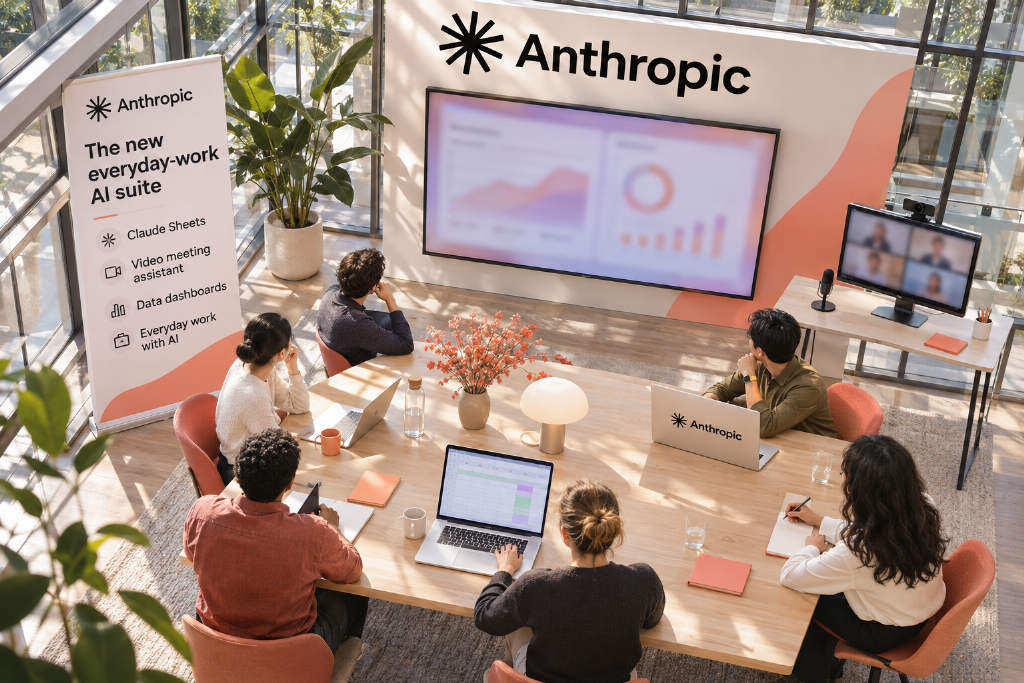
Anthropic Launches Office Tool Suite With Meeting Assistant and Claude Sheets

Anthropic has launched a suite of workplace tools that brings its artificial intelligence capabilities into everyday office tasks, according to Techub News. The package is set to be formally presented at a company event on Tuesday. It includes a video-conferencing assistant, a data-dashboard tool and a spreadsheet service called Claude Sheets. Claude Sheets is similar to Microsoft Excel and Google Sheets, but includes Anthropic’s AI features. The release puts Anthropic into more direct competition with Microsoft and Google, which are described in the report as its supporters. Bloomberg also reported on the development. The announcement covers the company’s office software package and the products included in it: the meeting assistant, the data-dashboard tool and Claude Sheets. No additional details about pricing, availability or specific product functions were provided in the source material. The tools are presented as products designed to bring Anthropic’s AI into routine workplace use, while Claude Sheets is positioned as the spreadsheet component of the suite.
00
Anthropic Launches Office Tool Suite With Meeting Assistant and Claude Sheets
Gemini
Nov 10, 2026

Google Opens Gemini 4 Carbon to Paid API Developers as Prices Double in December

Google has opened Gemini 4 Carbon to all paid API developers and businesses, expanding access beyond the limited group of cybersecurity defenders who first received the model on October 28. Google AI Ultra subscribers can also use Carbon in the Gemini app, Google Search’s AI Mode and the Antigravity development tool. Carbon has no free API allowance. Until November 30, paid users will pay $2 per 1 million input tokens and $10 per 1 million output tokens, including tokens used for model reasoning. On December 1, those rates will rise to $4 and $20, while cached input will increase from $0.10 to $0.20 per 1 million tokens. Google said Carbon ranked first in CursorBench 4.0, WANDR and AutomationBench, with a per-task cost below half that of the second external model, although the company did not identify that model. Carbon also ranked second in the MKA multimodal knowledge-agent benchmark. Google highlighted cybersecurity results from Wiz and its own research team, while acknowledging that protection against sophisticated prompt-injection attacks still needs work.

00
Google Opens Gemini 4 Carbon to Paid API Developers as Prices Double in December
SlowMist
Nov 5, 2026

SlowMist CSO says Android zero-click RCE flaw has been patched across multiple versions

SlowMist Chief Information Security Officer @im23pds said Google fixed more than 200 vulnerabilities in its November 2026 security bulletin, including CVE-2026-58868, the most severe issue in the Android Framework layer. The flaw is described as a Critical zero-click remote code execution vulnerability that can be exploited without user interaction or additional privileges. It affects multiple Android versions, including Android 14 through 17. According to the post, there is currently no confirmed evidence of in-the-wild exploitation. Google included a fix for the vulnerability in the patch released on Nov. 1, while the Nov. 5 patch covered the full set of issues addressed in this round, including flaws in the kernel and chip layers. Users can verify their update status by checking the security patch level on their devices.

1190
SlowMist CSO says Android zero-click RCE flaw has been patched across multiple versions
SlowMist
Nov 5, 2026

SlowMist CSO 23pds urges Android users to install November patch after zero-click RCE fix

SlowMist Chief Information Security Officer 23pds said on X that an Android zero-click remote code execution flaw has been included in the November security patch and urged users to update their devices. Google said in its November 2026 security bulletin that it fixed more than 200 vulnerabilities. The most severe issue was CVE-2026-58868, a Critical flaw in the Framework layer that could allow remote execution of arbitrary code without user interaction or additional privileges. The issue affects Android 14, 15, 16, 16 QPR2, and 17. There is currently no confirmed evidence of in-the-wild exploitation. According to 23pds, devices with a security patch level of 2026-11-01 or later include fixes for CVE-2026-58868 and other Framework and System issues, while versions dated 2026-11-05 or later cover the full set of vulnerabilities addressed this round, including fixes at the kernel and chipset layers involving MediaTek and Qualcomm. Users can check their security patch level under Settings > About phone > Android version.

1170
SlowMist CSO 23pds urges Android users to install November patch after zero-click RCE fix
AI chips
Nov 4, 2026

AI chip startup Tenspresso said to be in funding talks at a possible $500 million valuation

Techub News, citing Bloomberg, reported that AI chip startup Tenspresso is in funding talks that could value the company at $500 million. The company was founded just three months ago, according to the report. Bloomberg also said Tenspresso was started by a former Google AI chip engineer. The financing discussions and the potential valuation were the only deal details disclosed in the brief report, with no information provided on investors, round size, or timing. The update points to early investor interest in a very young semiconductor startup centered on AI chips, though the talks were described as ongoing and no transaction was confirmed.

1150
AI chip startup Tenspresso said to be in funding talks at a possible $500 million valuation
Google
Nov 4, 2026

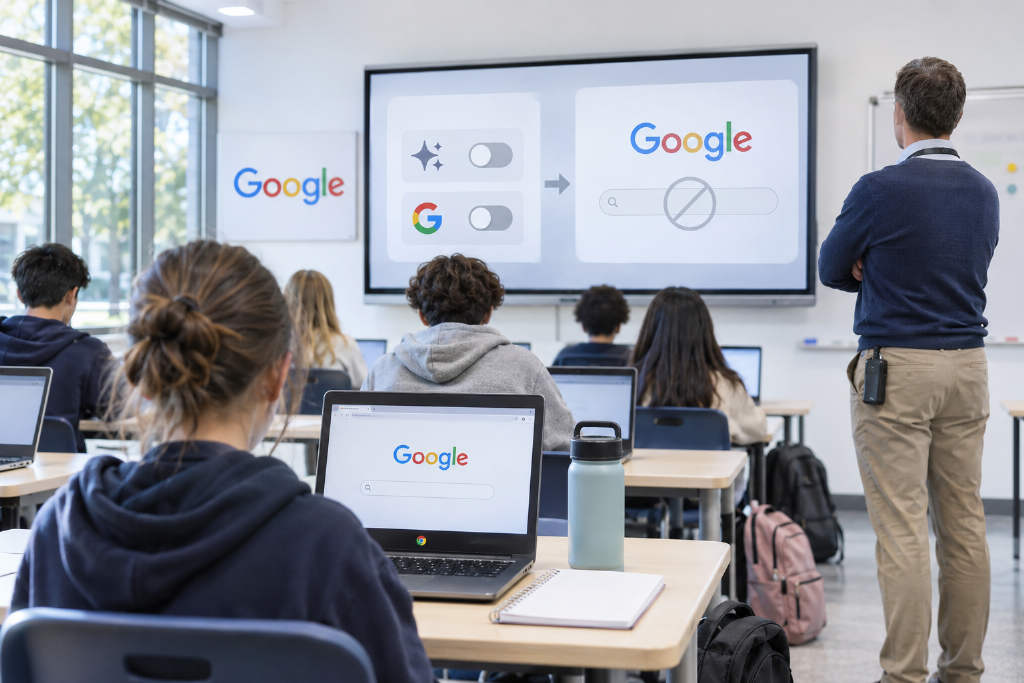
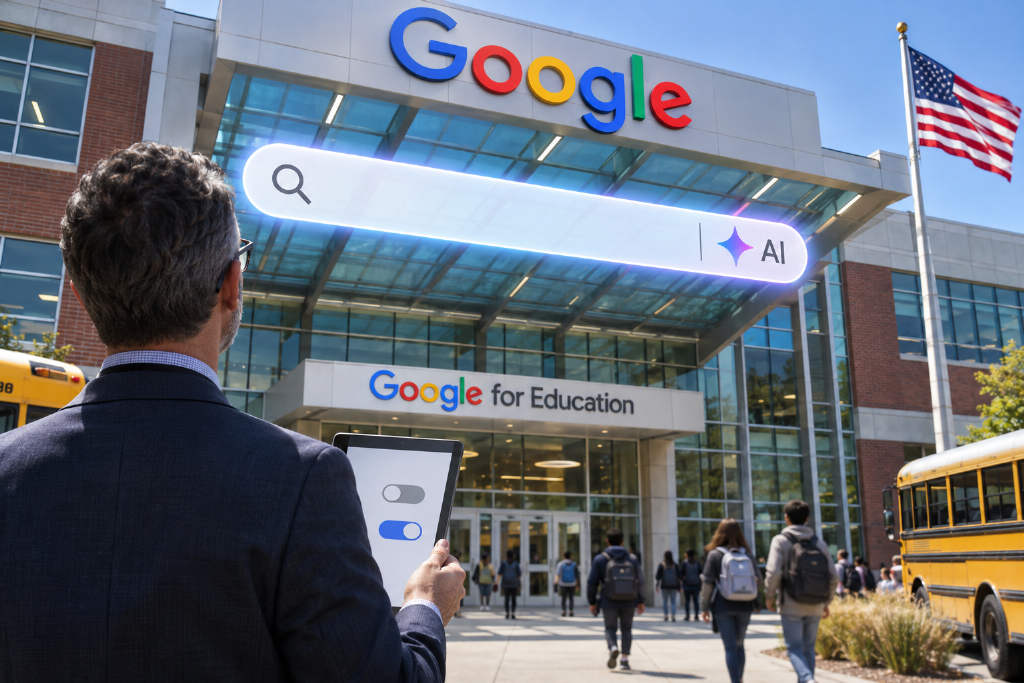
Google tells schools they can turn off AI, but not keep Search AI-free

Google said K-12 student accounts will have its AI tools turned off by default unless school administrators choose to enable them, but the company is not offering a version of Google Search without generative AI. Under the setup announced Tuesday, administrators will be able to manage Gemini, Gemini Notebook, Gemini in Classroom, and Search separately. That allows schools to block standalone chatbot products while still keeping Search, yet it does not let them strip AI out of Search itself. The policy has triggered criticism from educators and public officials who argue Google is using its position in schools and its dominance in search to push AI into classrooms before many districts have decided how to regulate it. Google says the changes are meant to address concerns that AI chatbots can short-circuit learning by handing students ready-made answers. Still, according to reports cited in the original story, schools that enable Search starting in early 2027 will have to choose between versions that include standard AI features such as AI Overviews and AI Mode or an education-focused Guided Learning experience. Neither option restores the traditional search experience without generative AI.

970
Google tells schools they can turn off AI, but not keep Search AI-free
Google
Nov 4, 2026

Google sets AI off by default for K-12 accounts, but schools cannot keep search free of AI

Google said Tuesday that its AI products will be turned off by default for K-12 student accounts unless school administrators choose to enable them. The company also said admins can separately manage Gemini, Gemini Notebook, Gemini in Classroom, and Search. That gives schools a way to block standalone chatbot tools while keeping search available, but it does not let them strip AI out of search itself. Chris Phillips, Google’s vice president and general manager for education, told educators that search and AI are now tightly integrated, and schools uncomfortable with AI can opt not to enable search at all. According to The New York Times, starting in early 2027, schools that enable search will receive either a version with standard AI features such as AI Overviews and AI Mode or an education-focused Guided Learning experience. Neither option includes a traditional search product without generative AI. The plan has drawn criticism from New York City Mayor Zohran Mamdani and former Federal Trade Commission Chair Lina Khan. New York City already has a one-year ban on generative AI for students in eighth grade and below, affecting nearly 600,000 students, while Los Angeles has also limited the technology.

970
Google sets AI off by default for K-12 accounts, but schools cannot keep search free of AI
Total 656 items
Go topage