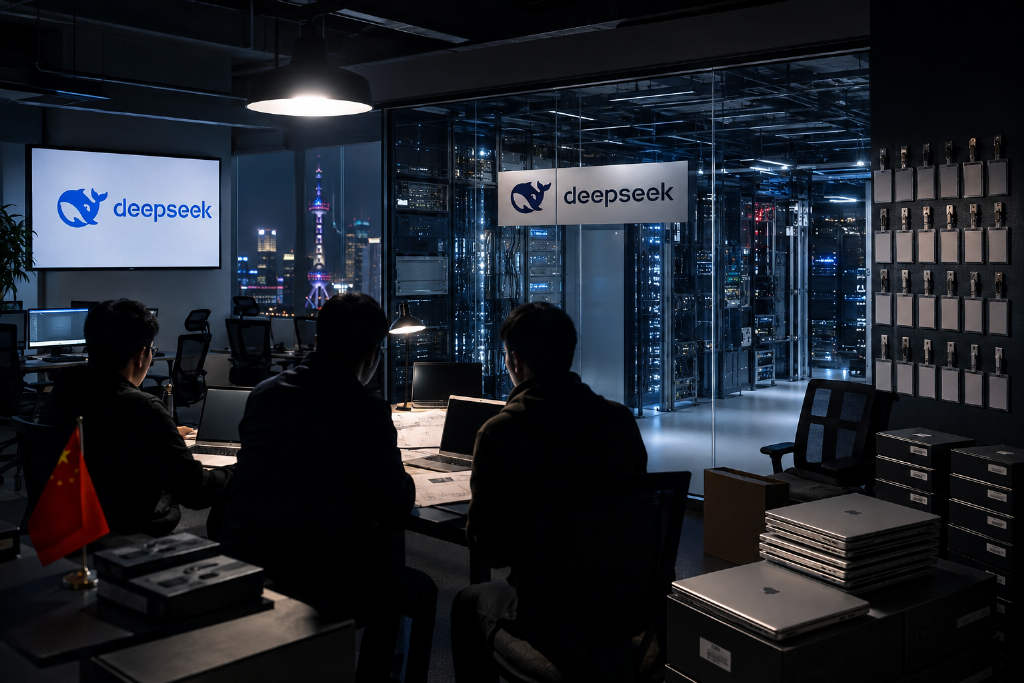
DeepSeek2026-09-08 01:18:11DeepSeek opens 150 roles focused on backend and Agent elastic computing, with no AI research hiresDeepSeek has launched a hiring push for 150 people, a sizable addition for a company described in the source as having roughly 300 to 500 employees in total. None of the openings are for AI research. Instead, all of them fall under two engineering tracks: backend development engineers and Agent elastic computing R&D engineers, aimed mainly at senior backend candidates with two to 10 years of experience. The recruitment details point to a broader engineering build-out around DSec, short for DeepSeek Elastic Compute, a platform that was first publicly disclosed in the DeepSeek-V4 technical report. According to the report cited in the source, DSec consists of three Rust-based components — Apiserver, Edge, and Watcher — linked through an in-house RPC protocol and running on DeepSeek’s self-developed 3FS distributed file system. The backend openings span six areas, from large model research platforms and Agent framework components to API infrastructure, online services, and data engineering. The job descriptions also show how DeepSeek wants engineers to work: close to frontline researchers, able to identify problems on their own, and comfortable using AI Agent tools in day-to-day software development while knowing when to step in if those tools go wrong.940
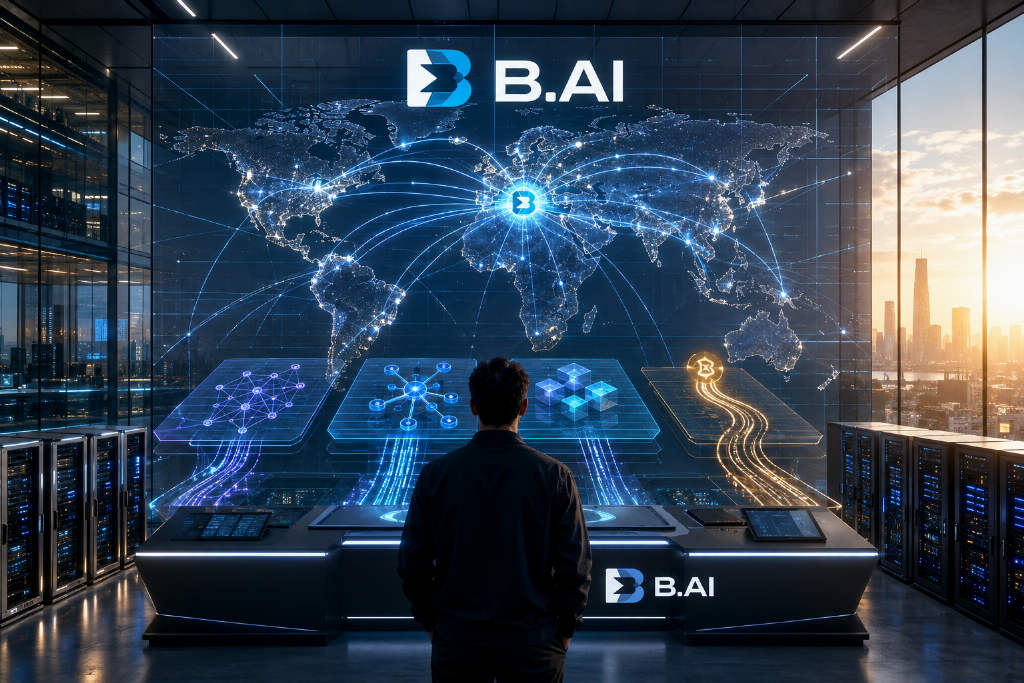
B.AI2026-09-03 08:21:51B.AI Surpasses 2.3 Million Users, Positioning as Intelligent Global Settlement LayerB.AI, a one-stop AGI infrastructure platform, announced on September 3 that its cumulative user count has exceeded 2.3 million. The platform describes itself as an intelligent global settlement layer connecting models, agents, and value transfer. It services through optimized computing costs, aggregated large models, and intelligent routing scheduling, with products including LLM Services, BAIclaw, MCP, and Agent payment, covering model invocation, agent execution, and value settlement.990
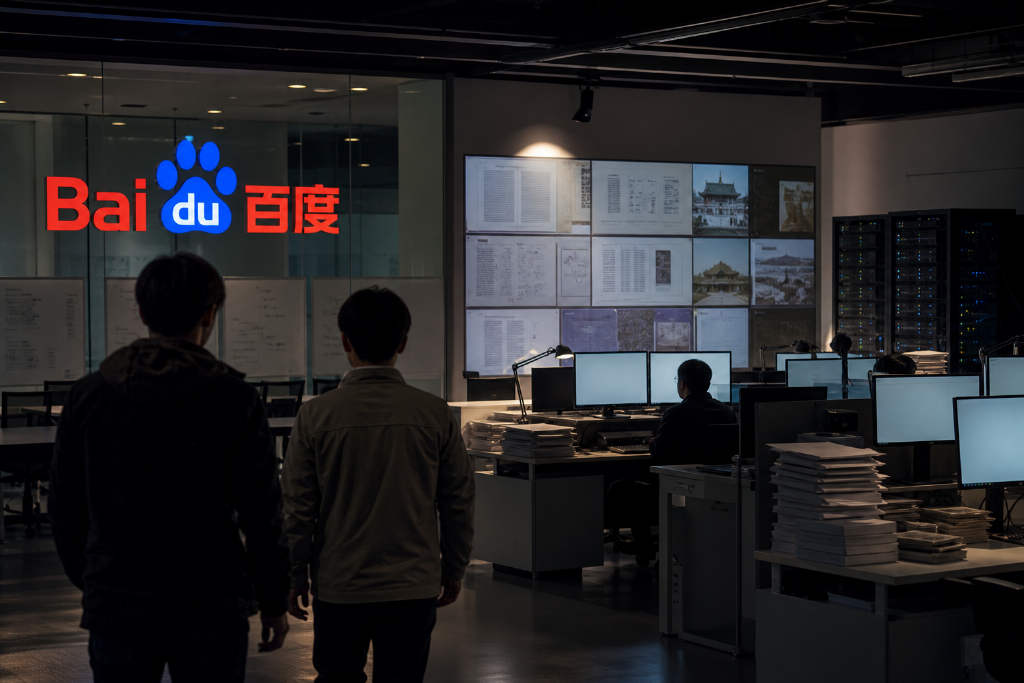
Baidu2026-09-03 03:17:13Baidu Reinforces ERNIE Team with Two Key Hires: Frontier Lab Researcher and DeepSeek OCR LeadBaidu is strengthening its Foundation Model Unit (BMU) with two key hires. Sun Tianxiang, BMU head, brought in a researcher codenamed Wuqin from a North American Frontier Lab to boost ERNIE pre-training. Meanwhile, former DeepSeek researcher Wei Haoran, lead author of DeepSeek-OCR, joined BMU as head of multimodal algorithms. Wei previously contributed to the open-source Unlimited OCR, which set a record on OmniDocBench. The moves come as Baidu ramps up core model development.1620
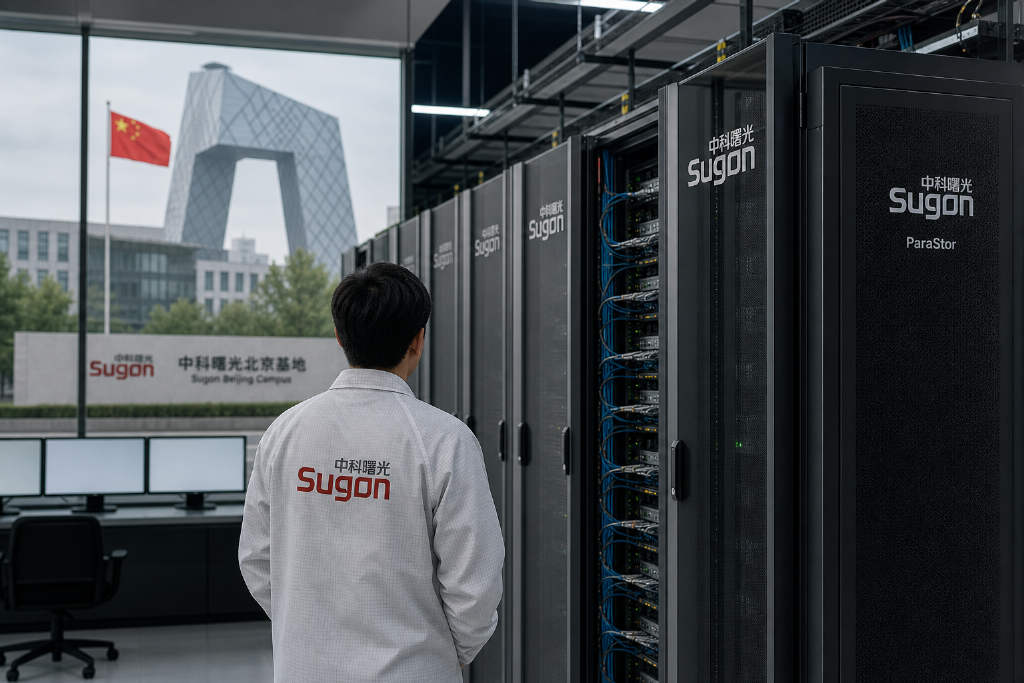
Sugon2026-08-26 06:56:50Sugon says it will release a new storage technology for large-model inferenceSugon said on Aug. 26 that it is preparing to release a new token acceleration solution designed for large-model inference. According to people related to the company cited in the report, the technology will focus on handling repeated computation and data scheduling during inference. The report also said Sugon’s ParaStor distributed storage system has already been deployed in “Sugon 8000 (Dengfeng),” described as China’s first fully domestic 100,000-card AI supercluster. The storage platform is used to support data throughput and elastic scaling for large-scale computing workloads. Separately, the latest report from CCID Consulting said Sugon ranks first in four verticals: AI, education, embodied intelligence, and autonomous driving. The update was cited by BlockBeats, with the original flash attributed to Jin10.980
Shanghai2026-08-24 10:17:10Shanghai’s 15th Five-Year industrial plan includes blockchain, AI computing, and large-model developmentShanghai has issued its 15th Five-Year plan for accelerating new industrialization and building a modern industrial system, laying out a broad technology agenda centered on computing infrastructure, AI models, and selected strategic sectors. The document calls for a full upgrade of intelligent computing capacity, including work on high-performance, low-power, and high-efficiency computing chips, stronger cluster networking and cloud service capabilities, and exploration of new architectures such as heterogeneous computing, optical computing, and quantum artificial intelligence. It also calls for optimizing intelligent computing infrastructure and building a city-level computing power network. The plan says Shanghai will continue to invest in large models, with a focus on next-generation model research and development and key technologies including architecture design and training optimization. It also aims to promote coordinated development across chips, large models, and intelligent computing cloud services while building an independent ecosystem. In parallel, the city will push forward the “Moli Jushen” initiative, accelerate embodied intelligence technology maturation, and strengthen the independent full-industry-chain layout for intelligent robots. The document also names real-world deployment areas including industrial manufacturing, logistics assembly, commercial retail, healthcare and eldercare, and household services. In Jing’an District, blockchain is listed under the district’s featured industrial tracks within data intelligence.1070
Token2026-08-18 10:33:04Jiaxing’s city-investment group starts selling tokens, raising questions over marginsOn July 30, the Yangtze River Delta (Jiaxing) Token Operations Center officially launched, with Jiaxing City Investment and Development Group taking the lead. The article says the center follows a “five unifications” model, including a unified API, token metering, settlement, subsidy offsets, and security audits, while offering access to more than 100 major models such as DeepSeek and Qwen. It frames the move as part of a broader shift in which infrastructure-like AI services are being absorbed by state-backed operators. The piece also points to 2026 moves by China’s three telecom giants, notes their 2025 revenue growth rates, and argues that as tokens become more like utilities, pure token-selling margins may shrink.680
StepFun2026-08-04 08:52:16StepFun splits smartphone unit into standalone company as it pushes model and agent-device strategyStepFun is pursuing two strategic tracks internally, according to a Huxiu Tech report cited by ChainCatcher: one centered on large language models and another focused on agent-driven devices. Its smartphone business has been moved into a standalone company called Zhiyue Xingchen, with a team that has Huawei and Honor backgrounds taking the lead. Ni Jiayue, the company’s terminal president, is overseeing the effort. The report said StepFun’s first agent smartphone, STEPX Neo, was shown during WAIC, though the company did not disclose pricing or a mass-production timeline. Huxiu also reported that StepFun is assembling an overseas commercialization team and plans to sell large-model APIs abroad, mainly voice models. The smartphone line is also part of that overseas sales plan. Chairman Yin Qi had previously explored an “AI + car” route at Qianli Technology, formerly Lifan Technology. This time, the company is treating smartphones as the first piece of its terminal strategy, aiming to build a closed loop spanning models, operating systems, and devices. The phone runs the Step AOS agent operating system, and the report said the business model ultimately returns to Token consumption. StepFun also continues model partnerships with 60% of China’s leading smartphone brands, covering an installed base of more than 42 million devices. As of publication, the company had not commented.1890
AI2026-07-01 06:01:49Kimi Raises $3.9 Billion in Four Rounds Within Six Months, Highlighting Capital-Intensive Nature of AI Large Models大模型公司Kimi在半年内完成四轮融资,累计金额超39亿美元,投前估值达315亿美元。其商业化年经常性收入(ARR)已达3亿美元,成为估值新锚点。算力投入刚性、技术代际差距短等特征使AI企业进入重资产、高消耗、持续输血模式,融资逻辑从财务回报转向国家战略与产业卡位。520