Cursor
Sep 3, 2026

Cursor adds macOS sessions to Cloud Agents through Namespace Devboxes

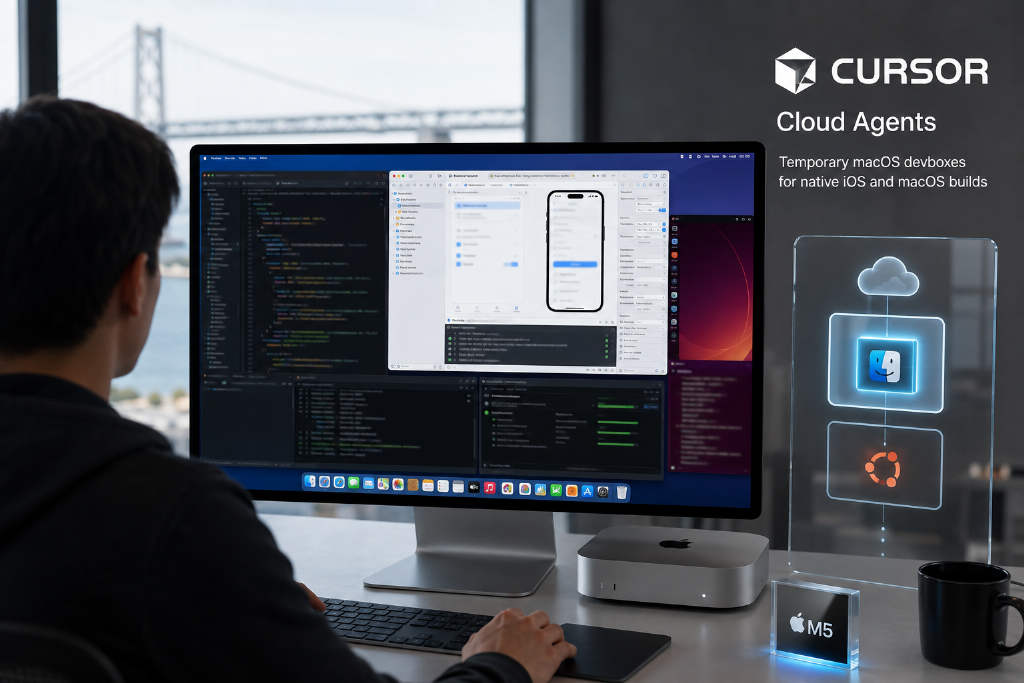
Cursor has connected its Cloud Agents to Namespace Devboxes, giving users a macOS option when launching an agent session. Under the setup, Namespace spins up a temporary Apple M5 Mac for each session so the agent can edit code, compile projects, and run tests on an actual macOS machine rather than a Linux-based workaround. The change addresses a practical limitation in Cursor’s cloud development environment, which had defaulted to Ubuntu. That setup worked for web and backend tasks, but it could not handle full builds for native iOS and macOS development. According to the BlockBeats brief, Cursor still handles model inference and task planning, while shell commands, file edits, Git operations, compilation, and testing are executed inside Namespace’s macOS DevBox. Once the task is finished, the DevBox is destroyed.
2060
Cursor adds macOS sessions to Cloud Agents through Namespace Devboxes
Doubao Work
Sep 2, 2026

Doubao Work Adds Multi-Agent Parallel Mode, Mac Gains Local Computer Control

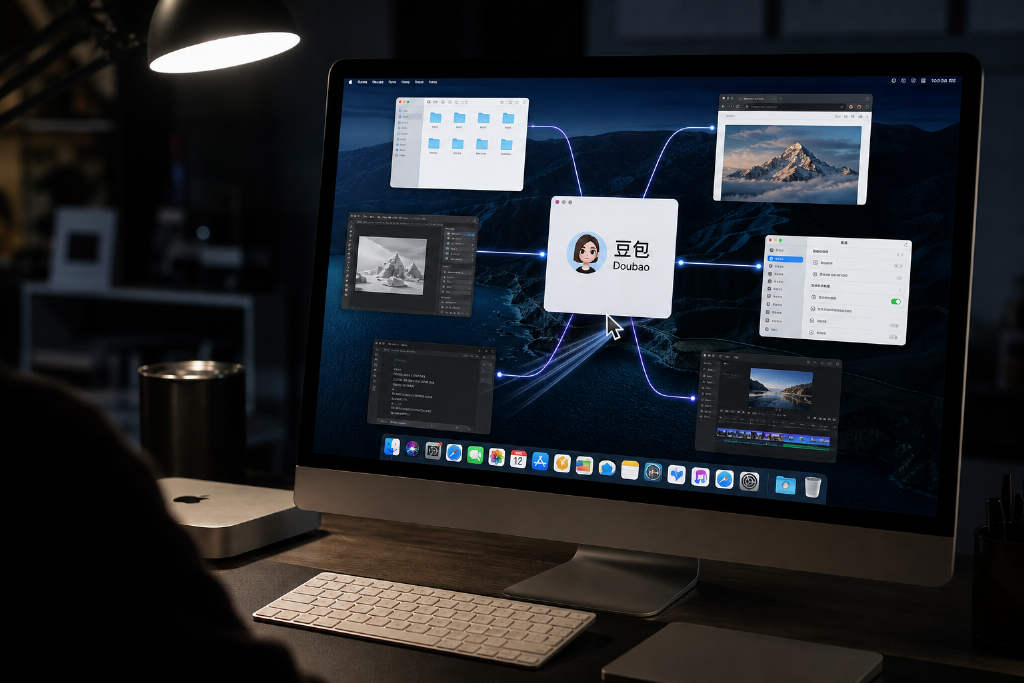
Doubao Work has finally gained two capabilities: parallel multi-agent execution and local computer-operation support on macOS. With the first feature, a single complex task can be broken into smaller pieces and split across several sub-agents. Each sub-agent then works on a different module at the same time, and whatever they produce is gathered into one deliverable when the whole job is done. The second feature brings Mac in line with Windows. GUI-based operation had already arrived on the Windows side, where Doubao Work can interact with the software shown on screen. On Mac, similar control only worked inside a browser until now. The refreshed macOS client can identify local interface elements itself, which lets Doubao Work complete a task by following on-screen steps even when the target program offers no MCP, API, plugin, or CLI hooks. BlockBeats relayed the news in a 7x24 flash update.

1870
Doubao Work Adds Multi-Agent Parallel Mode, Mac Gains Local Computer Control
Apple
Aug 16, 2026

Dutch NCSC warns exploited macOS flaw let attackers install Monero miners on internet-exposed Macs

The Dutch National Cyber Security Centre (NCSC) has warned that a recently patched authentication flaw in Apple’s macOS Screen Sharing component is already being exploited in the wild, according to The Hacker News. The bug, tracked as CVE-2026-65400 and rated 9.8 on the CVSS scale, allowed attackers to access internet-exposed Macs listening on port 5900 without valid credentials and deploy Monero mining malware. Apple issued emergency fixes on Aug. 6 through macOS Tahoe 26.6.1, Sequoia 15.7.9 and Sonoma 14.8.9, saying the patch strengthened credential validation by improving state management. The NCSC said it confirmed multiple attacks in which intruders gained root privileges and installed mining software. Security researcher @osxreverser also disclosed another pre-authentication flaw in the same component, likewise fixed in version 26.6, which could be exploited with only a target IP address and no username. Calif said researchers used AI to build working exploits for the two bugs in just four hours, highlighting how AI is shortening the time between vulnerability discovery and exploit development. Users were advised to update immediately or disable Screen Sharing if patching is not possible.

2270
Dutch NCSC warns exploited macOS flaw let attackers install Monero miners on internet-exposed Macs
Apple
Aug 8, 2026

macOS screen sharing flaw let attackers log into Macs without a password on the same network

Apple patched a serious macOS screen sharing authentication flaw, tracked as CVE-2026-65400, on Aug. 6. According to Apple’s security advisory, if Screen Sharing was enabled on a Mac, an attacker on the same network could log in without valid credentials. The bug was tied to the screensharingd service, which reportedly mishandled Secure Remote Password, or SRP, authentication and returned an outdated success state, causing an unauthenticated connection to be treated as authenticated. The report said that meant an attacker needed neither a valid macOS account nor an old VNC password to log in as any user. A proof of concept published by security researchers went further, showing the issue could be used to read and write files, execute code remotely with root privileges, and establish persistence through LaunchDaemons or shell startup files. The vulnerability was reported by Alfredo Pesoli through Bynario Atlas. Apple said it has no evidence of active exploitation so far. For crypto users who store private keys, seed phrases, or software wallets on a Mac, the risk is acute because a compromised endpoint can expose wallet data regardless of local password protections. Apple has released fixes in macOS Tahoe 26.6.1, Sequoia 15.7.9, and Sonoma 14.8.9.

1240
macOS screen sharing flaw let attackers log into Macs without a password on the same network
macOS
Aug 8, 2026

Critical macOS screen sharing flaw allows passwordless remote login; Apple fixes it in version 26.6.1

A critical security flaw in macOS screen sharing could let a network attacker log into a Mac with any account without knowing the password, according to a disclosure by security researcher Calif tracked by Dongcha Beating. The bug, assigned CVE-2026-65400, affects systems with screen sharing enabled and was described as a form of unauthenticated remote code execution that can give an attacker full desktop control. Calif said the root cause and exploitation method were identified after reverse-engineering Apple’s macOS 26.6.1 patch, and proof-of-concept code has already been released. Apple has fixed the issue in macOS 26.6.1 and users are advised to update as soon as possible. While there is no evidence so far of broad exploitation in real-world environments, the public release of PoC code is raising the risk for unpatched machines. For users who cannot update right away, turning off screen sharing is cited as a temporary mitigation until the patch can be installed.

2500
Critical macOS screen sharing flaw allows passwordless remote login; Apple fixes it in version 26.6.1
Anthropic
Aug 8, 2026

Claude Code adds cross-session messaging as Anthropic pushes multi-agent workflows

Anthropic said on Aug. 7 that Claude Code has added a cross-session messaging feature, letting one Claude Code session send progress to another while multiple chats work on different parts of the same project. The feature is listed in Claude Code v2.1.224 and sends a summary rather than a full conversation log or attached files, with the receiving session picking up that information inside its current task. Tech outlet 9to5Mac said the rollout is currently available first on macOS. In ABMedia’s framing, the update matters not only as a workflow convenience for developers running several windows at once, but also as another sign that AI agents are moving from isolated execution toward coordination, where compressed context is exchanged between agents instead of raw source material. The report also points to related moves mentioned in the article, including an Agent Plugins open standard introduced by OpenAI with Microsoft and Amazon, and Claude Code’s earlier support for connecting user-configured Connector setups.

2250
Claude Code adds cross-session messaging as Anthropic pushes multi-agent workflows
Apple
Aug 5, 2026

Apple caps bug bounty submissions as AI-generated reports flood review queues

Apple has placed limits on how many new bug reports security researchers can keep open at one time, after a wave of AI-generated submissions swamped its review process. According to the Financial Times, the company also added a 30-day cooling-off period between batches of submissions, while internal researchers can request higher limits in advance. The issue has already hit legitimate researchers. Italian cybersecurity startup Bynario said it used ChatGPT to scan macOS and found more than 50 vulnerabilities in three weeks, including a privilege-escalation flaw that could grant unrestricted access to a Mac. Yet the company said it could not submit the findings because it had exhausted its quota. Apple later said it had contacted Bynario and was reviewing the submissions. The same pattern has appeared elsewhere. curl maintainer Daniel Stenberg said AI-generated vulnerability reports had become so frequent and unreliable that curl shut down its HackerOne bug bounty program on Feb. 1, 2026. Apple’s response now includes another layer of automation: using its own AI systems to triage incoming reports before human verification.

3000
Apple caps bug bounty submissions as AI-generated reports flood review queues
Apple
Aug 4, 2026

Apple’s AI Report Backlog Left a macOS Exploit Worth Up to $200K Unfiled

Apple has limited how many security reports a researcher can keep open at one time after a flood of AI-generated submissions overwhelmed its review process, according to the Financial Times. The restriction already had a concrete cost: Milan-based startup Bynario said it found more than 50 bugs in the latest macOS over three weeks with help from ChatGPT, including a privilege escalation exploit chain, but could not report it because Apple had stopped accepting additional submissions from the firm. Bynario CEO Alfredo Pesoli said the exploit could fetch $100,000 to $200,000 on the criminal market. Apple said it has since contacted the company and is reviewing its work. The report also points to a wider split in the market: AI tools are generating fake or low-effort bounty submissions at scale, while at the same time helping uncover real flaws at Apple, Mozilla, and in crypto-related software and infrastructure.

1040
Apple’s AI Report Backlog Left a macOS Exploit Worth Up to $200K Unfiled
Total 23 items
Go topage