Chainlink
Sep 28, 2026

Chainlink rolls out CCIP 2.0, letting large crypto apps add custom cross-chain checks

Chainlink has released CCIP 2.0, updating its cross-chain interoperability protocol to let enterprises add their own security checks on top of the platform’s default validation setup. Under the new model, users can build extra verification layers for cross-blockchain transfers beyond Chainlink’s standard network of 16 operators. The upgrade comes after Kelp DAO suffered a $292 million hack in April. That incident was attributed to a LayerZero bridge configuration that used a single validator, according to the source material. Following the attack, Kelp DAO moved its rsETH token to Chainlink. The report also said Chainlink’s risk management network will no longer run as a separate security backstop. That means users who do not add their own validators will rely on one validation network instead of two. CoinDesk was cited as the source for the report carried by Odaily.


1370
Chainlink rolls out CCIP 2.0, letting large crypto apps add custom cross-chain checks
Chainlink
Sep 28, 2026

Chainlink rolls out CCIP 2.0 after rival bridge hack exposed single-verifier risk

Chainlink on Monday released CCIP 2.0, a new version of its Cross-Chain Interoperability Protocol that lets companies add their own verification checks to cross-chain transfers on top of Chainlink’s default 16-operator network. The upgrade arrives months after the April attack on Kelp DAO’s bridge, in which about $292 million in rsETH was drained after a LayerZero-based setup that relied on a single verifier was allegedly tricked. Kelp later said it would move rsETH to Chainlink. The update expands the menu of verifier options available to users. Companies can run their own verifiers or hire outside providers including Infosys and Nethermind, while Chainlink’s own node-operator network continues to check every transfer. At the same time, the release changes how Chainlink’s Risk Management Network works. That separate set of nodes no longer acts as an independent backstop, meaning users who do not add optional verifiers appear to depend on one verification network rather than the two-layer design Chainlink previously promoted. Chainlink said existing users were automatically migrated, and added that Aave and Maple have begun adopting some of the upgrade’s other features, though it did not name any institution using the new verifier model yet.

1580
Chainlink rolls out CCIP 2.0 after rival bridge hack exposed single-verifier risk
Kelp DAO
Sep 25, 2026

Kelp DAO Developer Sues LayerZero and CEO Bryan Pellegrino Over $292 Million rsETH Bridge Exploit

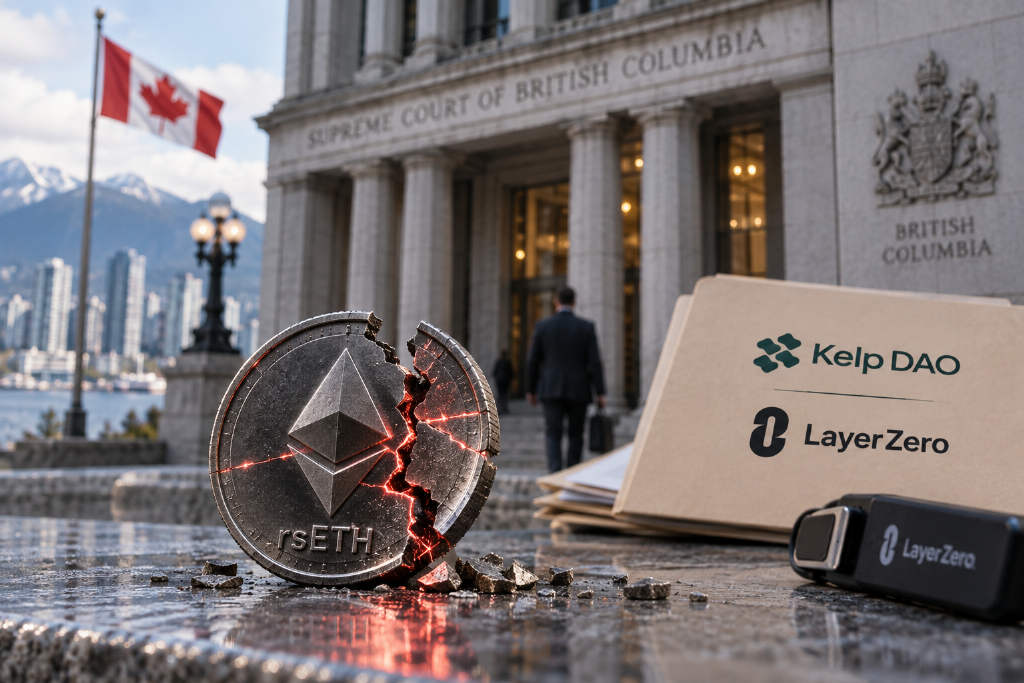
Evercrest Technologies, the company behind liquid restaking protocol Kelp DAO, has filed suit against LayerZero Labs and co-founder and CEO Bryan Pellegrino in the Supreme Court of British Columbia over the April exploit of rsETH’s LayerZero bridge. The civil claim, dated Sept. 24 and published by Kelp late Thursday, says the exploit stemmed directly from LayerZero’s failures and argues that LayerZero had reviewed and approved the bridge setup in writing. The April 18 attack released 116,500 rsETH worth roughly $292 million at the time, despite those tokens not being backed by deposits. LayerZero later linked the incident to North Korea’s Lazarus Group. Evercrest is alleging negligent misrepresentation, negligence, and defamation, and says the exploit and LayerZero’s subsequent public statements caused tens of millions of dollars in damage. The dispute centers on whether LayerZero had supported a single-verifier bridge design, what warnings were or were not given to Kelp, and whether public comments from LayerZero and Pellegrino mischaracterized Kelp’s configuration after the exploit.

1090
Kelp DAO Developer Sues LayerZero and CEO Bryan Pellegrino Over $292 Million rsETH Bridge Exploit
Aave
Sep 22, 2026

AAVE buyback restart faces balance-sheet pressure after rsETH fallout

Aave tokenholders have been watching for signs that the protocol might restart AAVE buybacks, but DeFi researcher Chado argues the path is far less straightforward than the market may hope. The overhang traces back to the April 18 rsETH incident tied to Kelp DAO’s LayerZero bridge route, which left Aave dealing with a large hole after undercollateralized rsETH was used to borrow WETH on the protocol. While asset freezes, recoveries and expected liquidations reduced the shortfall, Aave still ended up committing 25,000 ETH from its treasury and taking on a long-term financing facility from Mantle of up to 30,000 ETH. Chado’s analysis focuses on what that means for cash flow. Over the 144 days after the incident, Aave generated about $181.2 million in protocol fees, but only around $24 million was retained by Aave DAO, or roughly $167,000 per day. That was down about 41% from the prior 144-day period. Using ETH at about $2,639 and assuming the full 30,000 ETH Mantle facility, the loan would equal roughly $79 million. At the recent retained-income pace, repaying that amount would theoretically take about 473 days. Chado frames that as a static stress test rather than a fixed repayment plan, but the conclusion is clear: until Aave’s balance sheet is repaired, protocol income may struggle to flow back to AAVE holders.

2470
AAVE buyback restart faces balance-sheet pressure after rsETH fallout
Ethereum
Sep 15, 2026

MEV Bot Yoink Front-Runs $7.81 Million rsETH Exploit Targeting Safe Wallet on Ethereum

An MEV bot known as Yoink front-ran a transaction tied to an rsETH exploit targeting a Safe wallet on Ethereum, in an incident PeckShield valued at roughly $7.81 million. Onchain data shows the Yoink transaction received 2,900 rsETH, sent 2,882.37 rsETH to the address 0xC70f00CD7E461686b04B0E912E309becA8b80ea0, and routed 17.63 rsETH to Uniswap v4’s Pool Manager. The pool then sent 18.95 ETH to the Yoink contract, which forwarded 18.93 ETH to the block builder. Both the Yoink transaction and the original attack transaction were included in Ethereum block 25980525 at 12:38 a.m. ET. Yoink landed in position zero, while the original attack reverted. Security researchers said that ordering matches a front-running pattern. BlockSec linked the exploit to a flawed authorization check in an executor contract tied to an enabled Safe module, while Blockaid said the attacker used a public keeper multicall to direct a custom Uniswap v4 liquidity module into an attacker-created hooked pool, where aEthrsETH was unwrapped into rsETH.

1750
MEV Bot Yoink Front-Runs $7.81 Million rsETH Exploit Targeting Safe Wallet on Ethereum
Kelp
Sep 15, 2026

Kelp Freezes rsETH Transfers for One Address for 24 Hours, Says Token Remains Fully Backed

Ethereum restaking protocol Kelp said on Sept. 15 that it detected suspicious activity involving an address that received rsETH several hours earlier and has placed a temporary 24-hour pause on that address. During the restriction window, rsETH cannot be transferred into or out of the address. Kelp said its contracts remain secure and that rsETH is still fully collateralized. The protocol added that minting, withdrawals, and integrations are operating normally, and users do not need to take any action. The update followed an earlier alert from Blockaid, which said an unidentified user’s Safe wallet on Ethereum had been compromised. Confirmed losses currently stand at about $7.73 million in rsETH. The statement limits the action to a specific address rather than describing a protocol-wide shutdown.

1530
Kelp Freezes rsETH Transfers for One Address for 24 Hours, Says Token Remains Fully Backed
Uniswap V4
Sep 15, 2026

Uniswap V4 Hook exploit drains about $7.73 million from a Safe wallet

A Safe wallet on Ethereum belonging to an unidentified user was exploited, with confirmed losses of about $7.73 million in rsETH, according to monitoring cited by BlockBeats from Blockaid. The attacker reportedly used a public Keeper Multicall to redirect a custom Uniswap V4 LP module in the Safe to a Hook Pool created by the attacker. From there, a malicious Hook was used to unwrap aEthrsETH into rsETH. The assets were then extracted by Yoink MEV within the same block. The report did not identify the wallet owner and only described the loss as currently confirmed at around $7.73 million in rsETH.

1500
Uniswap V4 Hook exploit drains about $7.73 million from a Safe wallet
Total 89 items
Go topage