Cloudflare
Oct 12, 2026

Cloudflare acquires Deno, plans to fold celld into workerd and shut down Deno Deploy in six months

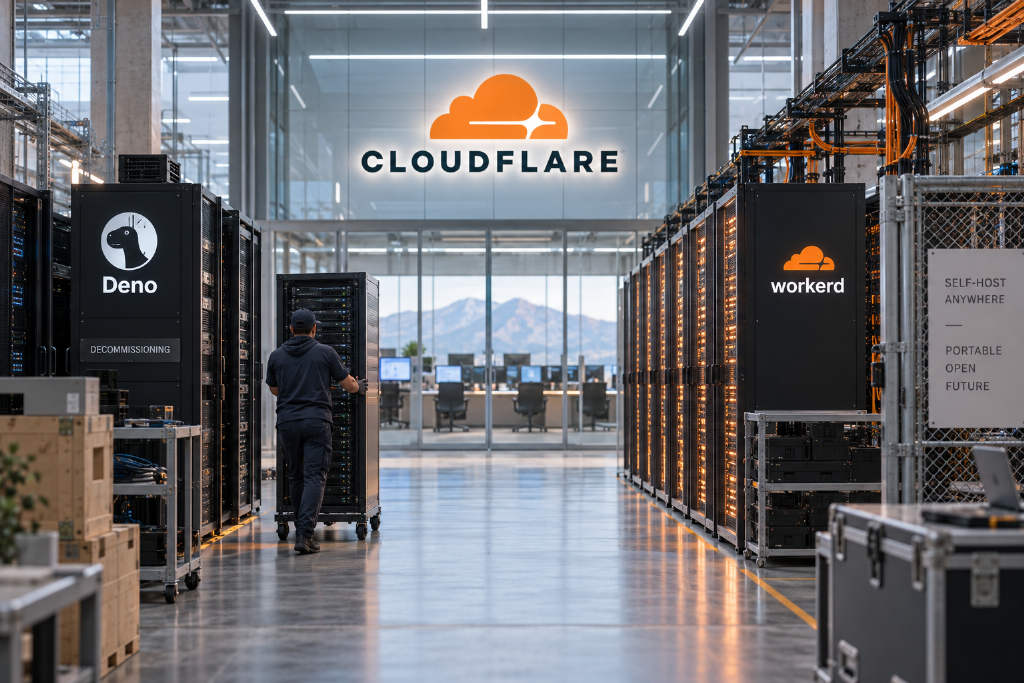
Cloudflare has acquired Deno, the JavaScript and TypeScript runtime company founded by Node.js creator Ryan Dahl, in a deal whose financial terms were not disclosed. The centerpiece of the acquisition is celld, an open-source project designed to run Cloudflare’s serverless programming model on customer-owned infrastructure. Cloudflare plans to merge celld into its open-source runtime workerd, aiming to make self-hosting a supported way to run Workers applications and to answer long-running concerns that applications built on Cloudflare Workers are hard to move elsewhere. According to the article, Deno had raised about $26 million, including a Series A led by Sequoia, and the entire Deno team, led by Dahl and co-founder Bert Belder, will join Cloudflare. The move also sets a clear transition clock for existing users: Deno Deploy will shut down in six months, while the Deno runtime will receive monthly bug fixes and security updates for one year, with the article noting that support is expected to end around October 2027. For teams already running production workloads on Deno, the acquisition creates an unplanned migration window while Cloudflare works to turn portability from a promise into a product.
1330
Cloudflare acquires Deno, plans to fold celld into workerd and shut down Deno Deploy in six months
InsForge
Sep 30, 2026

InsForge launches InstaCloud and raises $8 million in seed funding

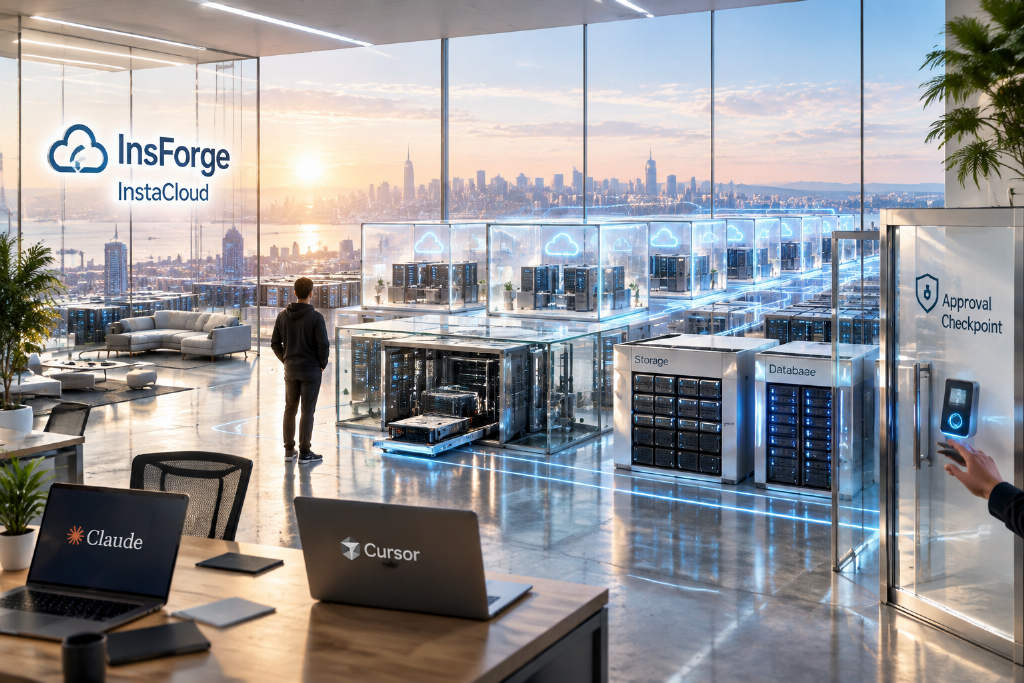
Y Combinator startup InsForge has introduced InstaCloud, a serverless cloud platform built for AI coding agents, and said it has raised $8 million in seed funding. The product is designed to let tools such as Claude Code and Cursor deploy and run applications directly, shifting part of the DevOps workflow from human operators to agents. InstaCloud can scale compute resources automatically with traffic and scale down to zero when idle, without requiring users to choose machine specifications in advance. Agents can manage services through CLI or MCP, deploy code, inspect logs, and work with databases and storage. One of the product’s key features is an "environment branch" system that lets agents clone a full isolated stack, including Postgres, object storage, and application containers, for code changes, database migrations, and testing. If something breaks, the branch can be deleted without affecting production. Critical actions can also be routed through human approval.

2850
InsForge launches InstaCloud and raises $8 million in seed funding
Anthropic
Jul 30, 2026

Anthropic shifts MCP to a stateless design, opening the protocol to cloud and serverless deployment

Anthropic has rolled out the biggest update yet to the Model Context Protocol, or MCP, moving the protocol’s core architecture from a stateful model to a stateless one in the MCP 2026-07-28 specification released on July 28. According to the official MCP blog, the change removes the initialization handshake and session ID requirement that previously tied requests to the same machine. In the new design, each request carries its own identity information through the _meta field and HTTP headers, allowing any machine behind a standard load balancer to process it. That change makes MCP servers suitable for serverless and edge environments and has also reached Amazon Bedrock AgentCore. The specification also adds Multi Round-Trip Requests, or MRTR, so tools can still ask users for confirmation during execution without relying on a persistent connection. On top of that, the update formally brings in three official extensions: MCP Apps, Tasks, and Enterprise Managed Auth. MCP said monthly SDK downloads have recently surpassed 400 million, with downloads up 4x this year, underscoring the scale of adoption behind the architectural shift.

2420
Anthropic shifts MCP to a stateless design, opening the protocol to cloud and serverless deployment
Telegram
Jul 15, 2026

Telegram launches serverless platform for bot and Mini App backends

Telegram has officially rolled out a serverless platform that lets developers run backend code for bots and Mini Apps directly on Telegram infrastructure, removing the need to build servers or manage containers. The service runs in isolated V8 sandbox environments located close to the Bot API, which Telegram says delivers very low latency and automatic scaling. Developers can deploy standard JavaScript modules with a single command, npx tgcloud push, cutting backend operations work. The platform also comes with a built-in SQLite-based database and native support for Bot API calls and outbound HTTP requests. According to the available documentation, Telegram has outlined module structure, available APIs, resource limits, security policies, and its billing model. The service is now open to all developers and marks a new step in Telegram’s shift toward a serverless application ecosystem.

2610
Telegram launches serverless platform for bot and Mini App backends