US Economy
Oct 7, 2026

U.S. trade deficit widened to $105.6 billion in August as imports hit a record

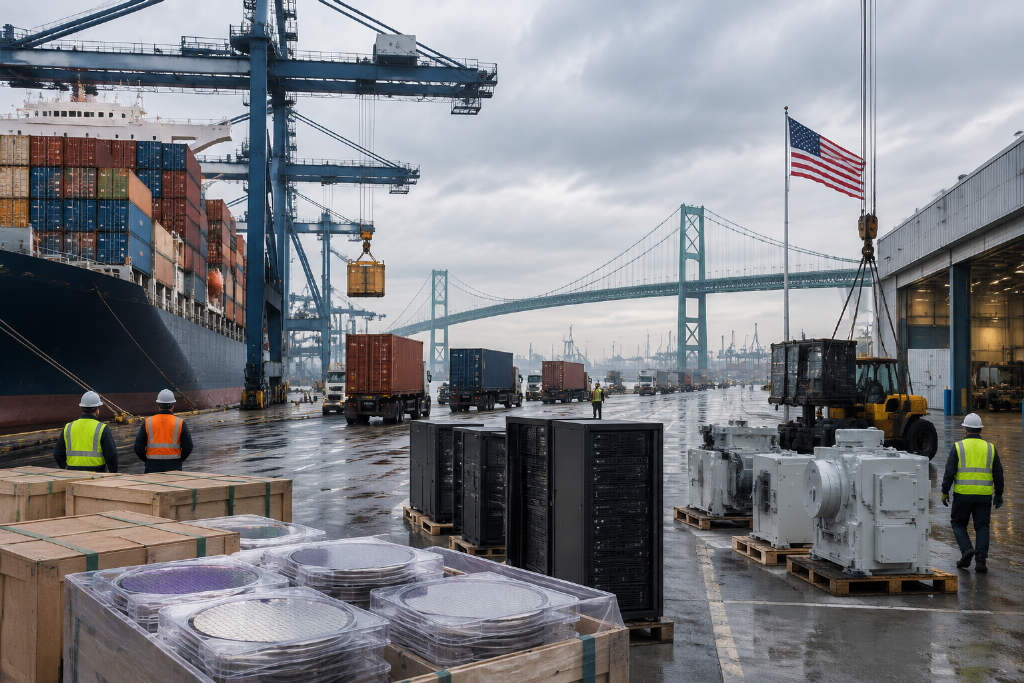
U.S. Commerce Department data showed the country’s goods and services trade deficit widened to $105.6 billion in August, up 13.7% from the revised $92.8 billion recorded in July and the highest level in 17 months. Imports rose 4.3% month over month to a record $420.8 billion, while exports increased 1.4% to $315.2 billion. A major driver was capital goods, with August capital goods imports climbing by $6.2 billion to $146.4 billion, also a record. Demand was particularly strong for products tied to AI data center construction, including advanced semiconductors and industrial electromechanical equipment. According to the analysis cited by BlockBeats, the Trump administration’s effort to curb imports and narrow the trade gap through higher tariffs has been offset by strong U.S. consumer demand and business capital spending. The report added that companies still need to source high-end chips, servers, and industrial equipment from overseas while domestic replacement capacity remains limited. It also said the import surge is expected to weigh on third-quarter GDP, though solid private consumption and business investment could still keep annualized Q3 GDP growth above 3%.

1010
U.S. trade deficit widened to $105.6 billion in August as imports hit a record
Federal Reserve
Oct 6, 2026

Daly says persistent AI, tariff and energy shocks could warrant more Fed tightening

San Francisco Fed President Mary Daly said demand tied to the AI boom could spread beyond high-end AI chips into the broader semiconductor market, with some companies already moving to secure memory chip supply in advance and redesign products to use fewer chips. She said the price pressure linked to AI may not be a one-off shock and could take longer to ease than the Federal Reserve’s usual one- to three-year assumption. Daly also said she fully supported the Fed’s September rate hike. Whether additional action is needed, she said, will depend on whether shocks tied to AI, tariffs and energy prices lifted by the Middle East conflict fade. If those forces last longer or stack on top of one another, the Fed may need to tighten policy further. If they prove temporary, more rate hikes may not be necessary.

780
Daly says persistent AI, tariff and energy shocks could warrant more Fed tightening
U.S. inflation
Sep 28, 2026

WSJ Says Tariffs, War and Immigration Curbs Are Adding to U.S. Inflation Pressure

The Wall Street Journal said inflation pressure in the United States is being reinforced by several forces at once, undercutting an early goal of Donald Trump’s second-term economic team. According to the report, officials had hoped fiscal restraint and deregulation would help bring down long-term interest rates, but that outcome has not materialized. The report listed several drivers behind the renewed inflation pressure: tariffs have raised the cost of imported goods, the war with Iran has pushed up oil and diesel prices, immigration restrictions have reduced labor supply, and the boom in artificial intelligence investment has lifted demand for electricity and equipment. Taken together, those factors have added to price pressures across the economy. The Wall Street Journal also noted that U.S. inflation is rising again. The Federal Reserve has shifted back to rate hikes, and the yield on the 10-year U.S. Treasury briefly climbed last week to its highest level since 2007.

740
WSJ Says Tariffs, War and Immigration Curbs Are Adding to U.S. Inflation Pressure
US-China trade
Sep 28, 2026

US and China release $30 billion tariff-cut lists, with soybeans left out of China’s plan

The United States and China on Monday released separate lists covering about $30 billion in goods for tariff reductions, offering the first concrete details after commitments made following the Trump-Xi summit. According to Bloomberg, China’s list includes a wide range of US farm products such as corn, wheat, meat and dairy, but leaves out soybeans, the largest US agricultural export to China. Reuters reported that US soybeans still face an additional 10% tariff. On the US side, Bloomberg said the tariff-cut list covers 77 import categories, including fireworks, household goods, sporting equipment and toys, broadly matching product directions previously outlined by the White House. Reuters said China’s list also includes sorghum, vegetable oils, soybean oil and soybean meal, with the covered items totaling about $17 billion in 2024 imports. Market reaction was muted. Bloomberg reported that grain futures fell after the lists were published as traders waited for clearer signs of actual Chinese purchases. The two sides also agreed to set up a trade committee, with reciprocal tariff cuts on the $30 billion in goods as its first task. The development is being watched as an early test of whether summit agreements can be implemented.

980
US and China release $30 billion tariff-cut lists, with soybeans left out of China’s plan
China-US trade
Sep 28, 2026

China and U.S. unveil reciprocal tariff-cut framework covering roughly $30 billion each

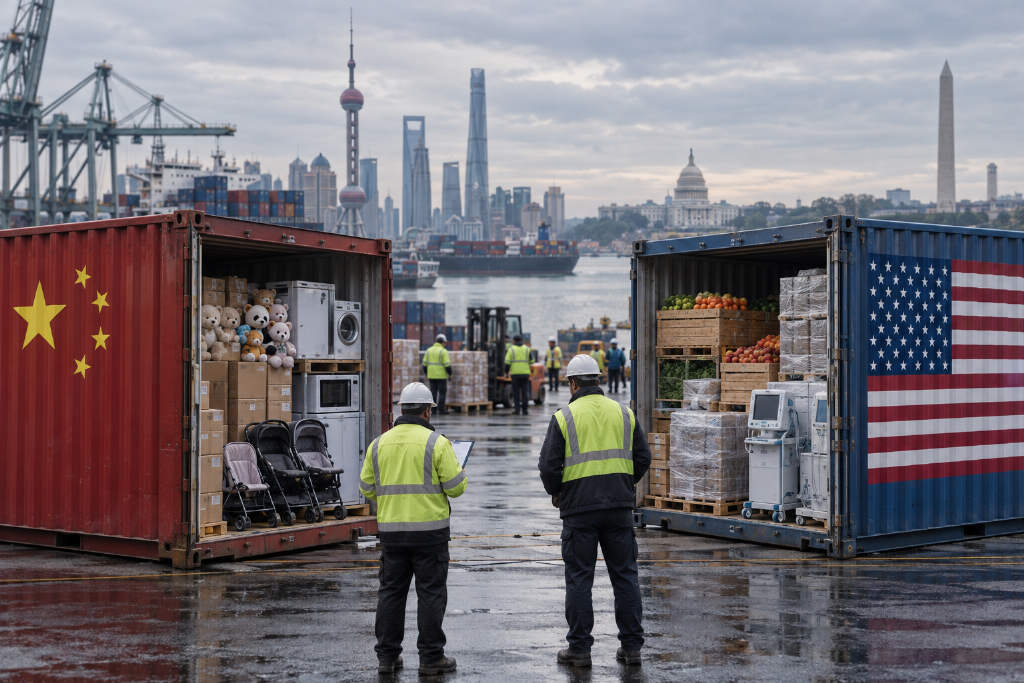
China’s Ministry of Commerce has announced a reciprocal tariff-reduction framework between China and the United States described as a "$30 billion for $30 billion" arrangement. Under the disclosed terms, the U.S. will lower tariffs on about $30 billion worth of imports from China, including toys, home appliances, and baby products. China, in turn, will reduce tariffs on about $30 billion worth of imports from the U.S., including agricultural products and medical devices. The two sides will also jointly release a list of products covered by the tariff cuts. The update was reported by ChainCatcher.

910
China and U.S. unveil reciprocal tariff-cut framework covering roughly $30 billion each
US-China relations
Sep 26, 2026

US-China summit outlines AI hotline and possible tariff relief on $30 billion in goods

U.S. President Donald Trump and Chinese President Xi Jinping wrapped up a summit in Washington this week with a list of announced outcomes, including a new dialogue channel on what the White House called "Super Intelligence" and a trade understanding covering $30 billion in non-sensitive goods on each side. According to the White House summary, the two countries will set up a bilateral communication mechanism for AI-related incidents and hold the next round of exchanges before November 2026. The White House also said both sides reached a consensus to recommend more favorable tariff treatment for selected non-sensitive goods, while China committed to import at least 10 million tons of U.S. coal in both 2027 and 2028. Still, several foreign media outlets said the summit did not produce a major breakthrough, with core disagreements left for later talks. Differences between the White House version and the list published by Xinhua also drew attention, especially on coal, rare earths and the scope of the outcomes. Taiwan, another closely watched issue, was not mentioned in the White House readout.

940
US-China summit outlines AI hotline and possible tariff relief on $30 billion in goods
US-China trade talks
Sep 21, 2026

US-China trade talks open in New York, putting AI infrastructure and biotech names in focus

A new round of high-level US-China trade talks has started in New York, with markets closely watching both the negotiations and an expected leaders’ meeting later this month. China’s Ministry of Commerce said Vice Premier He Lifeng is visiting the United States from Sept. 19 to 23, and the first session took place on the morning of Sept. 20 local time at JPMorgan’s headquarters in New York. The US side was led by Treasury Secretary Bessent, with Trade Representative Greer also taking part. The agenda is broader than in earlier rounds, covering artificial intelligence, AI safety, technology export controls, tariff extensions, rare earths and critical mineral supply chains, and procurement lists. Two issues stand out for markets: whether the tariff truce due to expire on Nov. 10 will be extended, and whether both sides can reach a more stable and predictable arrangement on export controls tied to rare earths and critical minerals. After China’s commerce ministry released the visit schedule on Sept. 17, Chinese ADRs and the offshore yuan both strengthened. The Nasdaq Golden Dragon China Index rose 0.76% while major US indexes were mixed. Alibaba, Bilibili and PDD moved higher, with gains concentrated in AI and IDC-related names such as GDS and VNET. Separately, Reuters reported on Sept. 18 that the US Treasury is drafting new rules on investment in China’s pharmaceutical sector that would still allow most license-in drug deals, with restrictions focused on pathogens or biotechnology that could be weaponized.

1200
US-China trade talks open in New York, putting AI infrastructure and biotech names in focus
India
Sep 21, 2026

India reviews details of proposed U.S. tariffs on buyers of Russian oil

India is examining the specifics of a U.S. tariff proposal tied to purchases of Russian oil, according to ChainCatcher. Indian Commerce Minister Piyush Goyal said the country is studying the details of the U.S. move. The comment came after the U.S. House of Representatives passed a bill authorizing the president to impose punitive tariffs of as much as 100% on India and other countries. The report did not provide additional details on the review process or any timeline for a response. The development places the focus on how India may assess the bill’s scope and its potential application to countries that continue buying Russian oil.

1030
India reviews details of proposed U.S. tariffs on buyers of Russian oil
Total 138 items
Go topage