Morgan Stanley
Nov 4, 2026

Morgan Stanley says it is among the first banks to tokenize real-world assets

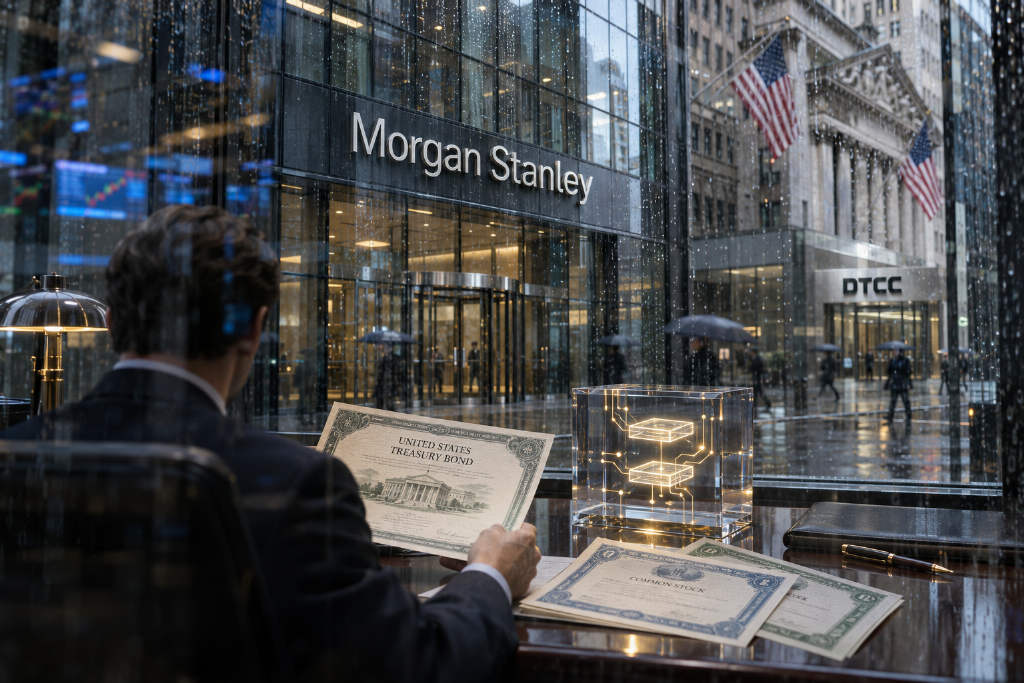
Morgan Stanley said it is among the first banks to tokenize real-world assets, including U.S. stocks and Treasuries. The statement came after the Depository Trust & Clearing Corporation, or DTCC, launched its Tokenization Service, known as DTS, on Oct. 28. The input provided for this item does not include additional details on the scope, structure, or timeline of Morgan Stanley’s tokenization work beyond that statement. CoinDesk was listed as the source, and the article was categorized as a hot story in the provided feed data. The published timestamp attached to the item was 2026-11-04T09:22:58.000Z.

390
Morgan Stanley says it is among the first banks to tokenize real-world assets
Boundless
Nov 4, 2026

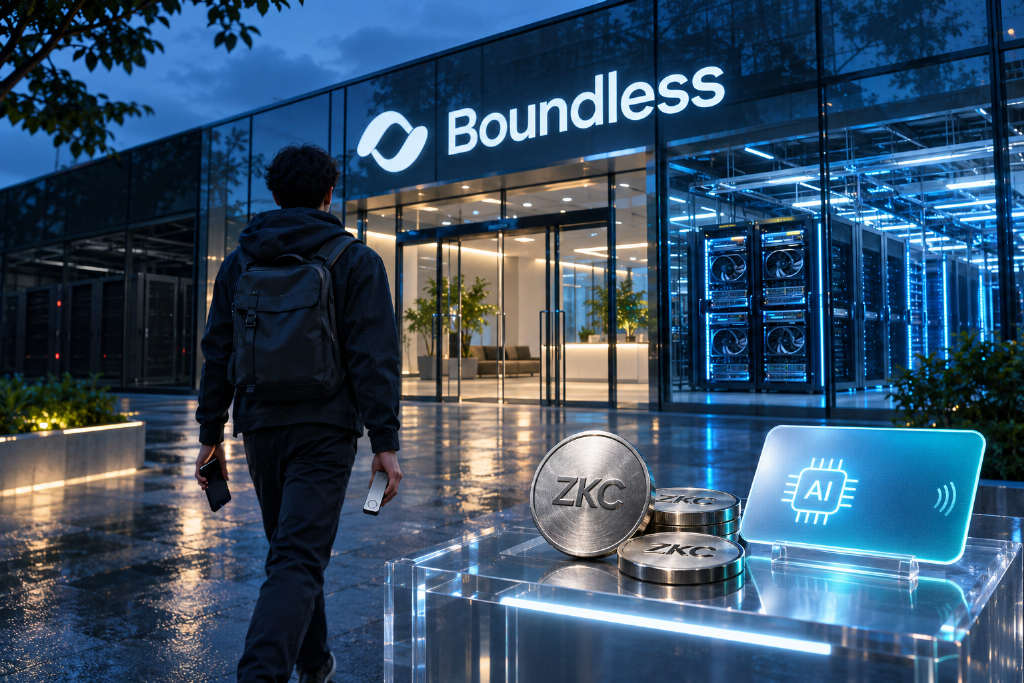
Boundless sets Jan. 2, 2027 launch for tokenized AI inference plan tied to ZKC staking

Boundless Foundation said its tokenized AI inference program will go live on Jan. 2, 2027, introducing a new reward structure for ZKC stakers. Under the plan, users who stake ZKC will receive model usage credits on the Boundless AI platform based on their share of the network’s total staked amount. Those credits can be used to access frontier open-weight models. The initial credit pool is set at about $1,000 and will be distributed once every two days. Boundless said staked ZKC will not be consumed under the new setup, and users will not need to migrate or restake their tokens. The foundation also said ZKC will gradually move to a fixed supply, with new issuance ending after the final staking reward cycle is settled. At the same time, Boundless will suspend its ZK proving business indefinitely starting Nov. 5, 2026. On that date, it will stop accepting new proving requests and close the reward claim channel for proving rewards. The Explorer user interface is scheduled to go offline on Nov. 30, while staking will remain available through a separate interface. The last staking reward cycle will end on Jan. 1, 2027.

3040
Boundless sets Jan. 2, 2027 launch for tokenized AI inference plan tied to ZKC staking
Hong Kong
Nov 4, 2026

Hong Kong to submit bill on virtual asset licensing regime in 2026, officials say at FinTech Week forum

Hong Kong officials used the main forum of Hong Kong FinTech Week x StartmeupHK 2026 to lay out the city’s next regulatory and market-development priorities for digital assets, artificial intelligence and tokenization. According to an official Hong Kong government news release cited by ChainCatcher, the forum concluded on Nov. 3 at the Hong Kong Convention and Exhibition Centre. Christopher Hui Ching-yu’s deputy, Joseph H. L. Chan, deputy secretary for financial services and the treasury, said regulatory certainty is critical to innovation. Under the direction of the Policy Statement 2.0 on the Development of Digital Assets in Hong Kong, the government plans to establish licensing regimes covering virtual asset trading, custody, advisory and management services, and submit an amendment bill to the Legislative Council in 2026. At a panel session, Securities and Futures Commission Chief Executive Officer Julia Leung outlined the regulator’s strategic vision. She said artificial intelligence and tokenization can support the development of Hong Kong’s financial markets, while investor protection and market integrity must be preserved. Leung also said the industry needs stronger cyber resilience as AI-related threats intensify. On tokenization, she said scale will depend on integrating it into market operations to improve efficiency, accessibility, liquidity and settlement speed. Hong Kong Monetary Authority Chief Executive Eddie Yue said the city is well placed to capture new growth opportunities from fintech, citing progress under Fintech 2030.

430
Hong Kong to submit bill on virtual asset licensing regime in 2026, officials say at FinTech Week forum
Morgan Stanley
Nov 4, 2026

Morgan Stanley joins first group of banks tokenizing assets on DTCC's DTS

Morgan Stanley said it has become one of the first banks to tokenize real-world assets after the launch of DTCC Tokenized Services, or DTS. The bank said it has already converted U.S. equities and U.S. Treasuries into tokenized form. DTS launched on Oct. 28 and is designed to create tokenized representations backed by securities held in custody by The Depository Trust Company, or DTC. According to the announcement cited by ChainCatcher, the service is intended to improve liquidity, collateral mobility and capital efficiency. The update places Morgan Stanley among the earliest banks using the newly launched DTCC infrastructure for tokenized representations of traditional financial assets.

490
Morgan Stanley joins first group of banks tokenizing assets on DTCC's DTS
Cross River
Nov 3, 2026

Cross River and Offchain complete proof of concept for tokenized lending platform features

Cross River and Offchain are working to embed tokenization features into a lending platform, according to ChainCatcher. The two companies have already completed a proof of concept and are aiming to move the functionality into a production environment in early 2027. The update points to a development timeline that has advanced beyond the testing stage, with the next stated milestone being production deployment. No additional technical details, product specifications, or rollout scope were disclosed in the brief.

360
Cross River and Offchain complete proof of concept for tokenized lending platform features
Bybit
Nov 3, 2026

Bybit CEO Ben says AI, tokenization and connected financial infrastructure are reshaping finance

Bybit CEO Ben spoke at a fireside chat during the main forum of Hong Kong FinTech Week 2026, where he shared his views on artificial intelligence, asset tokenization and the growing connectivity of financial infrastructure. He said these three forces are driving deep changes across financial services, linking different asset classes and markets more closely while improving efficiency and widening participation. Ben also said financial innovation should not be judged only by easier market access or faster execution. As financial services become more tightly integrated with technology infrastructure, he said security safeguards, risk management and compliance frameworks carry equal weight. In his view, a financial ecosystem can earn lasting trust from market participants only if innovation is paired with disciplined risk controls.

640
Bybit CEO Ben says AI, tokenization and connected financial infrastructure are reshaping finance
HashKey RWA
Nov 3, 2026

HashKey RWA CEO Anna Liu says tokenization’s next phase hinges on cross-institution asset mobility

HashKey RWA CEO Anna Liu said at Hong Kong FinTech Week 2026 that the next stage of tokenization will be defined by whether assets can move across institutions with clear ownership rights. In her keynote, titled "The Next Stage of Tokenization: From Putting Assets On-Chain to Shared Infrastructure," Liu argued that the main obstacle to scaling tokenized finance is not on-chain transfer itself, but the repeated ownership checks, compliance reviews, system integrations, and operational coordination required whenever assets are used across institutions. She said that even if an asset can be transferred instantly on-chain, settlement, legal title confirmation, and business coordination between institutions can still create friction. Liu called for reusable cross-institution capabilities in three areas: ownership, funding, and networks. She also said true interoperability does not require every institution to operate on the same blockchain. In practice, HashKey RWA recently launched the first tokenized securities product in its hToken series, while HashKey Group has joined a DTCC industry working group and Hong Kong Monetary Authority EnsembleTX as an Industry Pioneer.

630
HashKey RWA CEO Anna Liu says tokenization’s next phase hinges on cross-institution asset mobility
KuCoin Ventures
Nov 2, 2026

KuCoin Ventures says Wall Street is moving on-chain while crypto liquidity stays under pressure

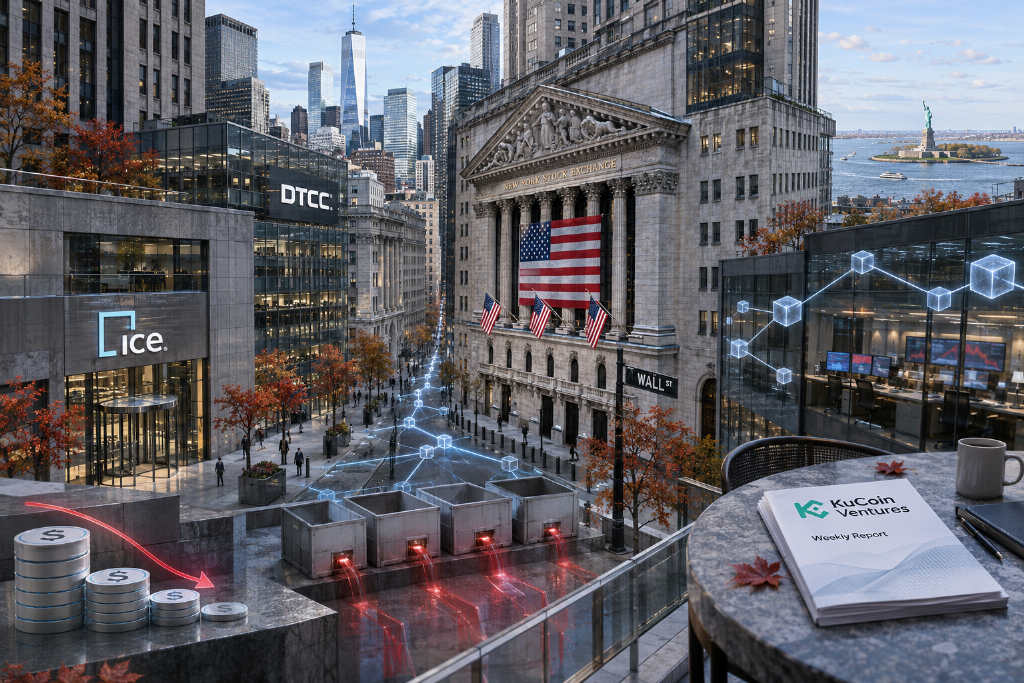
KuCoin Ventures said in its latest weekly report that traditional finance is stepping deeper into on-chain markets even as crypto liquidity remains strained. The report highlighted several developments from the past week: Intercontinental Exchange, the parent company of the New York Stock Exchange, said it plans to bring Hyperliquid-based perpetual contracts into a regulated U.S. market through a deal and strategic investment in Trade[XYZ]; macro investor Stanley Druckenmiller publicly confirmed he is an investor in Trade[XYZ]; and DTCC’s DTC launched a tokenization service that allows securities entitlements to move between traditional and tokenized formats. At the same time, 38 companies, including Walmart and Eli Lilly, were listed in an OKXICE notice as objecting to tokenized stock trading arrangements on that venue. The report also pointed to a tougher macro and market backdrop. The Federal Reserve kept rates unchanged at 3.75%–4.00% in October, but stronger growth and firmer inflation kept December hike expectations alive, with CME FedWatch showing about a 74.6% probability of a 25-basis-point increase as of Nov. 2. In crypto, BTC and ETH fell after a Binance security incident, while U.S. spot BTC ETFs posted a weekly net outflow of about $203 million and ETH ETFs saw about $432 million in weekly net outflows. Stablecoin supply also kept shrinking, with total market capitalization at roughly $295.6 billion as of Nov. 2, down 1.47% over seven days and 2.96% over 30 days. In venture markets, disclosed crypto funding reached about $1.37 billion across 11 deals, though most of that came from Kalshi’s $1 billion round.

470
KuCoin Ventures says Wall Street is moving on-chain while crypto liquidity stays under pressure
Total 1107 items
Go topage