Tempo
Oct 9, 2026

Tempo absorbs $447 million of Open USD as stablecoins target the weekend gap in dollar settlement

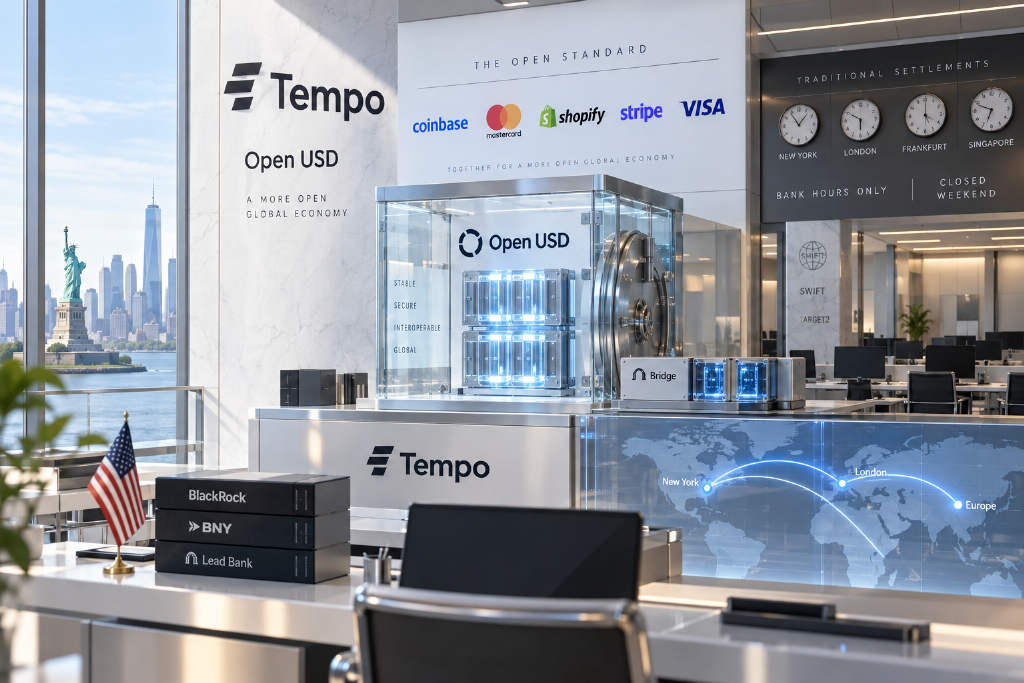
Traditional wholesale payment rails still shut for long stretches on weekends, even as trading continues around the clock. That gap is where Tempo, a settlement network without a native token, is trying to position itself. In an article by Alea Research, Open USD — launched on Sept. 30 by Open Standard, a consortium formed by Coinbase, Mastercard, Shopify, Stripe, and Visa — moved most of its initial supply onto Tempo within a day. On Oct. 1, the stablecoin’s first full day of operation, $447 million of the $490 million in circulation was on Tempo, helping lift the network’s dollar supply to $697 million. The report argues that Tempo is targeting three costly bottlenecks in money movement: weekends, cross-border corridors, and fragmented bank-ledger systems that do not interoperate smoothly. It says the network settles every hour, charges extremely low transaction fees, and lets supported dollar stablecoins pay their own fees. Revenue comes from API access and consulting rather than token economics. The piece also links Tempo’s growth to Stripe’s treasury operations, Open USD issuance through Bridge, and a broader push to let one pool of cash move across payments, collateral, and tokenized asset settlement without reissuing the underlying dollars at each step.
1190
Tempo absorbs $447 million of Open USD as stablecoins target the weekend gap in dollar settlement
crypto payments
Oct 6, 2026

Crypto card payment volume reaches $12.5 billion as stablecoin use accelerates

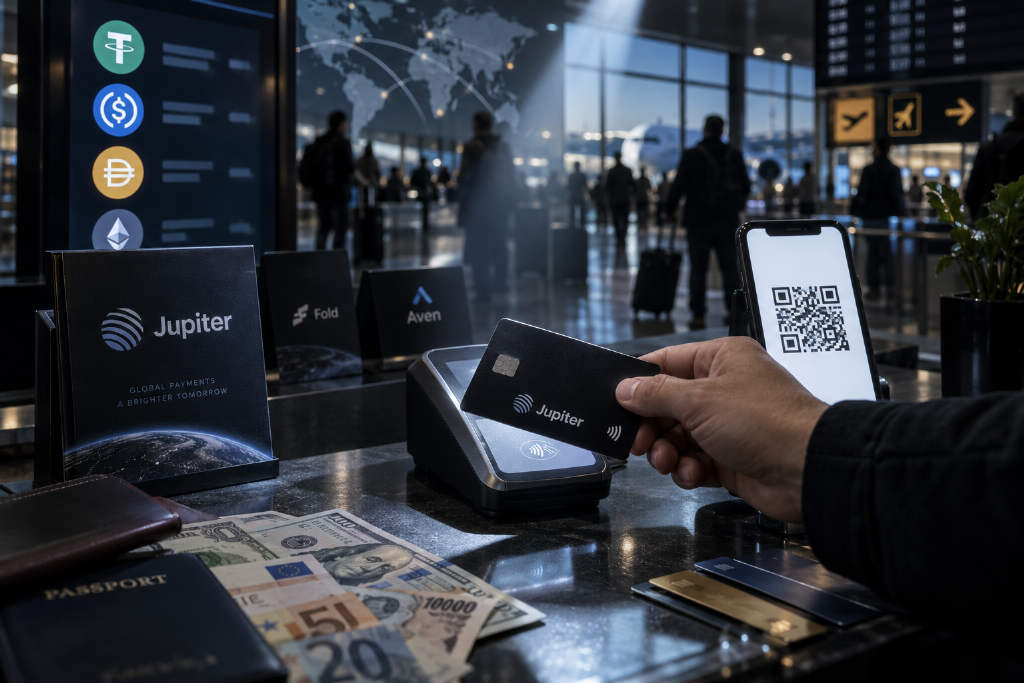
Crypto card spending has climbed to a record $12.5 billion, according to data from paymentscan.xyz that was first shared by The Kobeissi Letter. The total is up 140% year to date and 247% above the level recorded in October 2025. The Kobeissi Letter said the rise is being driven by wider use of stablecoins as a payment rail and a broader shift toward cheaper, faster cross-border transactions. QR-code payments are also gaining traction, with demand for QR-based spending helping lift activated cards on Jupiter Spend by 55% quarter over quarter. The figures arrive as more companies roll out crypto card products. Fold Holdings said earlier this year that it began issuing its Fold Bitcoin Credit Card to select waitlist users, while Aven introduced a Bitcoin-backed Visa card that allows holders to borrow against their BTC without selling it. Together, the numbers and product launches show how crypto cards are being positioned for everyday payments as well as bitcoin-linked credit.

1580
Crypto card payment volume reaches $12.5 billion as stablecoin use accelerates
crypto cards
Oct 6, 2026

Crypto card payment volume climbs to a record $12.5 billion

Crypto card payment volume has reached a record $12.5 billion, according to data from paymentscan.xyz that was first shared by The Kobeissi Letter. The figure is up 140% this year and 247% above the level recorded in October 2025. The Kobeissi Letter said the increase has been driven by heavier use of stablecoins as a payment rail and by demand for cheaper, faster cross-border transactions. QR-code payments are also gaining traction. That trend helped push activated cards on Jupiter Spend, one of the largest onchain card providers, up 55% month over month. At the same time, more companies are moving into the crypto card segment. Fold Holdings said earlier this year that it had started issuing its Fold Bitcoin Credit Card to some users on its waitlist. The card runs on Visa, is powered by Stripe Issuing, can be used at 175 million merchants, and offers 1.5% bitcoin cashback, rising to as much as 4%. Aven has also launched the Aven Bitcoin Visa Card, which lets cardholders borrow against bitcoin collateral for up to $1 million, with rates starting at 7.99%.

1090
Crypto card payment volume climbs to a record $12.5 billion
Visa
Oct 5, 2026

Visa survey says 46% of Asia-Pacific consumers may use stablecoins within five years

A Visa survey found that 46% of consumers in the Asia-Pacific region said they may use stablecoins over the next five years, while 16% said they had actually used stablecoins in the past year. The figures point to a gap between current adoption and stated future interest in the region. Separately, a CoinShares survey showed that digital asset ownership among affluent investors across the United States and seven European markets stood at roughly 54% to 70%. The survey also found that most current investors plan to increase their allocations in 2026. Together, the two survey results highlight continued interest in digital assets from both retail consumers in Asia-Pacific and wealthier investors in the U.S. and Europe.

1210
Visa survey says 46% of Asia-Pacific consumers may use stablecoins within five years
Visa
Oct 3, 2026

Visa says stablecoin-linked card payment volume rose nearly 200% year over year

Visa said payment volume tied to its stablecoin-linked card programs rose nearly 200% from a year earlier, with the network now supporting more than 160 consumer, business, and commercial card programs. The company also said that, in fiscal 2026 year to date, about 17% of stablecoin-linked card transaction volume has come from business and commercial card programs. Mark Nelsen, Visa’s head of global products, commerce and money movement solutions, said businesses are looking for trusted and reliable ways to move funds, and that stablecoins are appearing more often in commercial use cases such as supplier payments, treasury operations, and cross-border commerce. Research from Allium said payments are the fastest-growing stablecoin use case, with annual payment volume estimated at $401 billion to $527 billion. Within that range, service payments, payroll, and supplier payments account for $56 billion, $43 billion, and $28 billion respectively, while B2B cross-border payments make up 43%.

1210
Visa says stablecoin-linked card payment volume rose nearly 200% year over year
Visa
Oct 1, 2026

Visa and Lloyds Banking Group complete real-time cross-border settlement trial using USDC

Visa and Lloyds Banking Group said they have completed a real-time cross-border settlement trial built around stablecoin-based payment flows. The experiment focused on back-end processes used by financial institutions to complete payments and reconcile transfers after asset exchanges. According to the report, the test was designed to examine whether settlement using stablecoins can support international transactions with greater speed, transparency, and flexibility. The trial covered settlement worth about 120 million yen and ran over seven days, including the weekend. The item was cited by CoinPost and carried by Techub News as a brief.

800
Visa and Lloyds Banking Group complete real-time cross-border settlement trial using USDC
Visa
Oct 1, 2026

Visa says about 17% of stablecoin-linked card volume comes from business and commercial card programs

Visa said that about 17% of its stablecoin-linked card transaction volume in fiscal 2026 year to date has come from business and commercial card programs, according to data released by the company. Visa also said it now supports more than 160 stablecoin-linked card programs, while payment transaction volume tied to those programs has risen by nearly 200% year over year. The company added that businesses are exploring the use of stablecoins for settlement, treasury management, payments, and cross-border commercial transactions. The figures point to a growing share of enterprise use within Visa’s stablecoin-linked card activity, as the company expands the number of related card programs it supports.

1010
Visa says about 17% of stablecoin-linked card volume comes from business and commercial card programs
Visa
Oct 1, 2026

Visa says nearly 17% of its stablecoin-linked card volume this fiscal year came from businesses

According to The Block, new data released by Visa shows that nearly 17% of the company’s stablecoin-linked card transaction volume in fiscal 2026 year-to-date has come from businesses and commercial programs. The update points to a growing share of activity beyond retail users. Visa also said it now supports more than 160 stablecoin-linked card programs. At the same time, payment volume tied to those programs has climbed by nearly 200% year over year, based on the figures cited in the report. The data offers a snapshot of how stablecoin card usage is developing inside Visa’s network, with business and commercial use accounting for a meaningful portion of total volume so far in the current fiscal year.

1170
Visa says nearly 17% of its stablecoin-linked card volume this fiscal year came from businesses
Total 353 items
Go topage