Granola
Oct 29, 2026

Granola launches dictation on Mac and says iOS, Windows support is coming

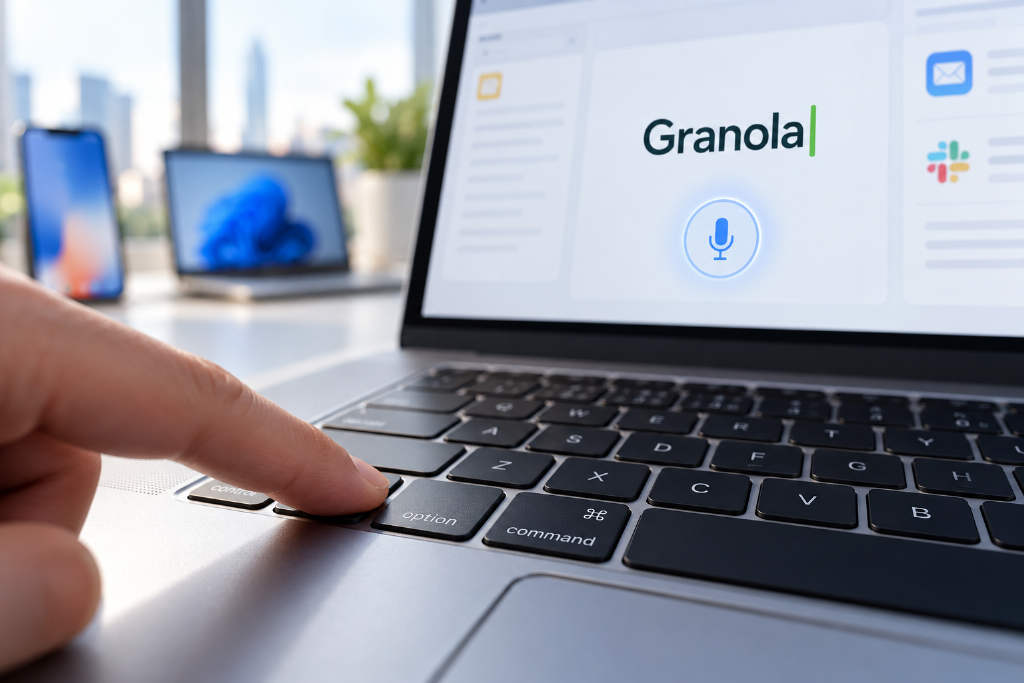
Voice AI app Granola has rolled out a new dictation feature for Mac, adding a product line that puts it in more direct competition with Wispr. Users can trigger the tool with a keyboard shortcut and use it across apps, including for notes, emails, and message replies. The company said the feature will also arrive on iOS and Windows soon. Granola is best known for its meeting transcription product, while rival Wispr has focused more specifically on dictation tools. According to TechCrunch, the two companies are valued at $1.5 billion and $2 billion, respectively. The update broadens Granola’s use cases beyond meeting capture and into general-purpose text input across desktop workflows.

240
Granola launches dictation on Mac and says iOS, Windows support is coming
Bitcoin
Oct 29, 2026

AI-discovered flaws that can crash Bitcoin nodes on Windows and Macs are now public

CoinDesk reported that three flaws uncovered through a language-model scan can crash Bitcoin nodes running on Windows and Macs. The disclosure is notable because it is the first made under Bitcoin Core’s new policy for bugs considered easy to find. The report did not provide further technical detail in the summary, but it made clear that the issues have now been publicly disclosed. The case also highlights a new disclosure framework inside the Bitcoin Core project, where vulnerabilities judged to be readily discoverable are handled under updated rules. In this instance, the three flaws identified by the scan were released publicly under that standard.

190
AI-discovered flaws that can crash Bitcoin nodes on Windows and Macs are now public
AI Agent
Oct 20, 2026

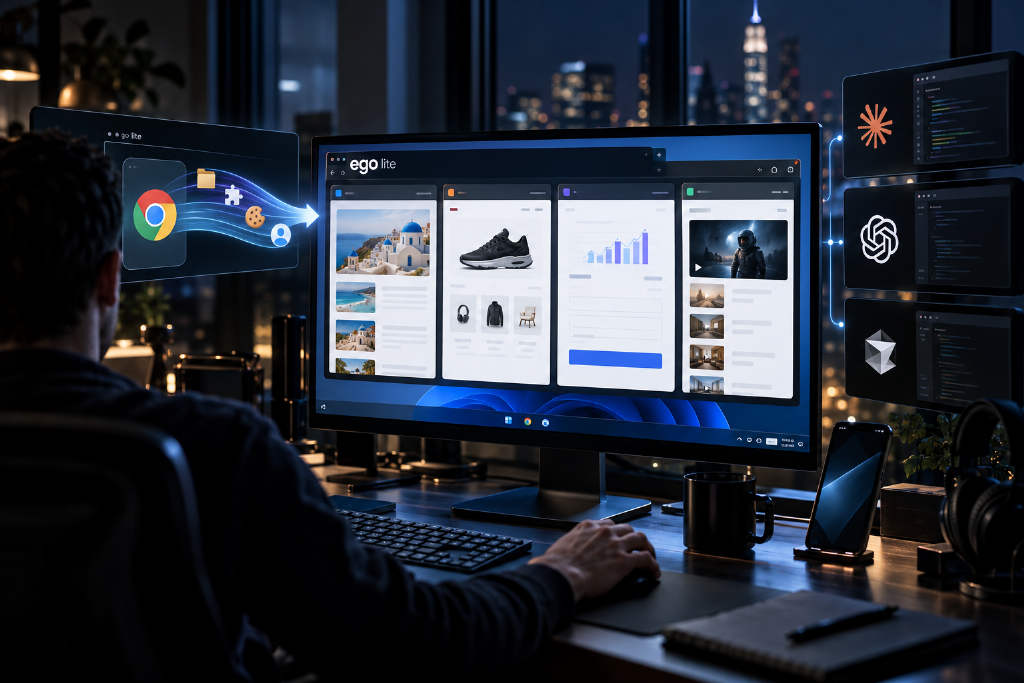
ego (lite) launches Windows beta with shared browser access for Claude, Codex and other agents

ego (lite), a browser built for AI agents, has released a Windows beta after previously being available only on macOS. Through the "ego-browser" Skill, users can let existing agents such as Claude Code, Codex and Cursor operate the browser directly. The product is built on Chromium and supports one-click import of Chrome bookmarks, extensions, cookies and login sessions, allowing agents to work inside already signed-in services including Gmail, X and enterprise back-office systems. Each agent runs in its own Space, so multiple tasks can proceed in parallel without taking over the tabs a user is actively using. Users can step in at any point for checkpoints such as CAPTCHAs or payments. ego (lite) also changes how agents read and act on webpages by generating a simplified page structure that marks buttons, input fields and other elements instead of passing full HTML to the model. Agents can bundle several actions into a single JavaScript sequence, which cuts tool calls and token usage. In internal testing across four browser tasks, the company said ego (lite) was up to 3.45 times faster than Vercel's agent-browser.

750
ego (lite) launches Windows beta with shared browser access for Claude, Codex and other agents
NetEase UU Remote
Oct 16, 2026

NetEase UU Remote releases third-party app integration protocol on GitHub

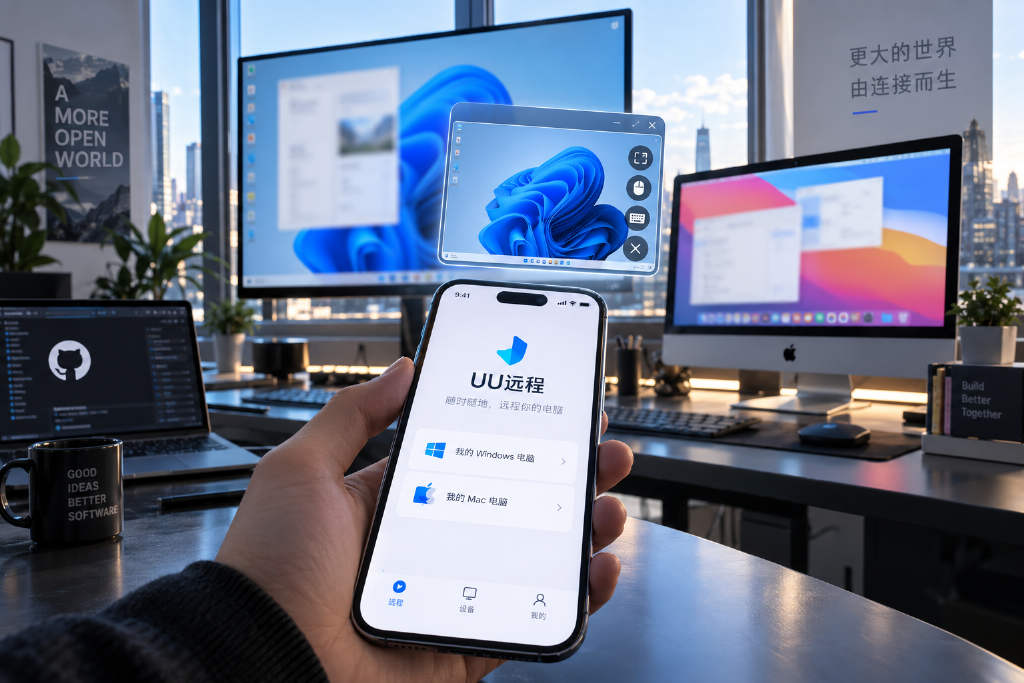
NetEase UU Remote has published a third-party app integration protocol on GitHub, allowing developers to add a PC remote-control entry point inside their own iOS and Android apps. In the example described, an AI coding assistant could add a "connect to work computer" button. On first use, the user is redirected to UU Remote to select and bind a Windows PC or Mac. After that, later taps can launch a remote session directly without making the user search for the device again. The remote-control feature supports both full-screen mode and picture-in-picture, so users can keep using other mobile apps while operating a computer through a floating UU Remote window. NetEase said developers can also receive connection results in small-window mode, including whether the target device is offline or whether the connection failed. The company said the release covers only a cross-app invocation protocol. It does not include the remote-control engine source code, and it is not an interface for AI to operate a computer automatically. Third-party apps still rely on the installed UU Remote client, while the actual remote session is handled by NetEase. At present, controlled devices are limited to Windows and macOS, and the mobile side requires UU Remote version 4.42.0 or later.

840
NetEase UU Remote releases third-party app integration protocol on GitHub
NetEase UU Remote
Oct 16, 2026

NetEase UU Remote opens third-party app access for one-tap PC remote control

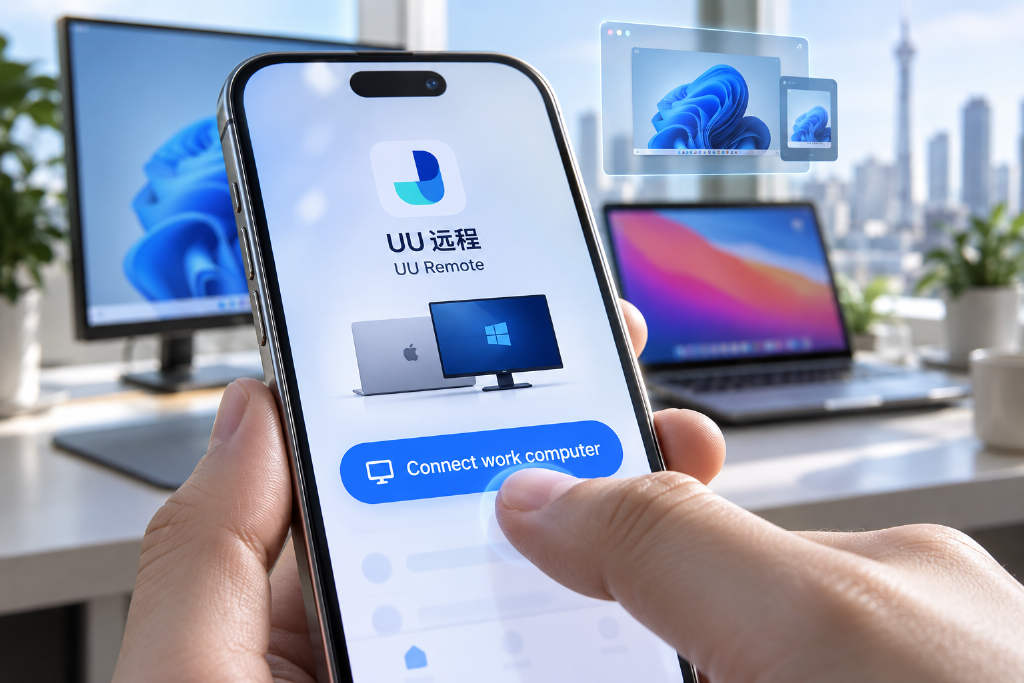
NetEase UU Remote has published a third-party app integration protocol on GitHub, allowing developers to add a PC remote-control entry inside their own iOS and Android apps. In the example described, an AI coding assistant could offer a "Connect work computer" button that sends users to UU Remote the first time to select and bind a Windows or Mac machine. After that, the same button can launch a remote session directly without requiring users to search for the device again. The remote feature supports both full-screen and picture-in-picture modes, letting users keep using other mobile apps while operating their computer through a floating window. Developers can also receive connection results in picture-in-picture mode, including whether the target device is offline or whether the connection has failed. NetEase said the release covers a cross-app invocation protocol rather than the source code of the remote-control engine or an interface for AI to operate a computer automatically. Third-party apps still depend on the installed UU Remote client, while the remote session itself is handled by NetEase. Controlled devices currently support Windows and macOS only, and the mobile side requires UU Remote version 4.42.0 or later.

910
NetEase UU Remote opens third-party app access for one-tap PC remote control
Microsoft
Oct 12, 2026

Nadella says companies should treat AI as an internal risk and keep an emergency stop for agents

Microsoft CEO Satya Nadella said in a lengthy post that companies should handle AI models as part of internal security risk management rather than relying on vendor assurances alone. He argued that models can make mistakes even without malicious intent and can also be exploited by attackers, especially when they are allowed to read sensitive data or carry out critical actions on a user’s behalf. Nadella said the model should be separated from the harness, or agent execution framework, that schedules and runs tasks. Access to data and tools, he wrote, should be controlled by external systems. He also called for tamper-resistant logs for every critical action so human reviewers can inspect what happened. Nadella said chain-of-thought output should be visible, while acknowledging that such reasoning traces may not be reliable. His strongest point was that companies should assume from deployment that a model could be compromised and isolate it accordingly. Authorized personnel, he said, must be able to pause or shut down an agent while it is running, effectively giving it an emergency brake. Microsoft also announced this month that its MXC isolation tool is now generally available on Windows, using external policies to limit which files and network resources an agent can access.

600
Nadella says companies should treat AI as an internal risk and keep an emergency stop for agents
Microsoft
Oct 8, 2026

Microsoft lays out a hybrid AI plan for Windows, with Copilot set to act directly on PCs

Microsoft has unveiled a Windows "hybrid intelligence" plan that would let AI agents carry out tasks directly on a computer, provided the user grants permission. Under the setup, Copilot would be able to read local files and recent activity, then perform actions such as organizing files, troubleshooting issues, and writing code. In Microsoft’s demo, the system gathered tax documents, renamed files, bundled attachments, and drafted an email to an accountant. The company said the architecture relies on local and cloud AI working together. Copilot handles the request, while Windows provides access to files and execution capabilities. Some jobs can run on-device, which cuts cloud token usage and keeps sensitive data local, while tasks that need stronger reasoning can still be sent to cloud models. To support this approach, Microsoft said it compressed its 137-billion-parameter coding model, MAI Code 1.1 Flash, to 53GB so it can run on high-performance PCs equipped with RTX Spark. GitHub Copilot will also use HydraFusion to choose between local and cloud models automatically. Microsoft has also introduced the MXC security sandbox, which is now generally available, while the new Copilot abilities are due to roll out to Copilot+ PCs in the coming months.

740
Microsoft lays out a hybrid AI plan for Windows, with Copilot set to act directly on PCs
NVIDIA
Oct 8, 2026

NVIDIA opens preorders for RTX Spark and unveils Windows AI system with Microsoft

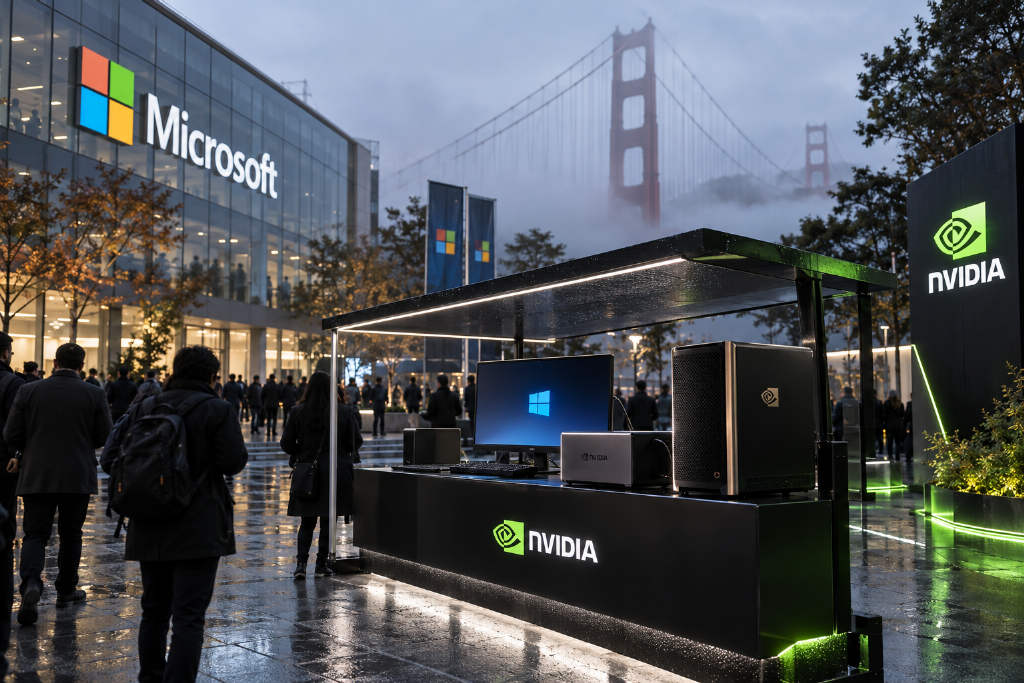
NVIDIA has opened preorders for RTX Spark on Oct. 8, 2026, according to a ChainCatcher brief citing CLS. The company also introduced a preview of NVIDIA DGX Station for Windows, which it described as its first desktop-side AI supercomputer built for Windows enterprise desktops. The announcements were made at a Microsoft event in San Francisco on Wednesday, where NVIDIA CEO Jensen Huang and Microsoft CEO Satya Nadella set out a joint plan to optimize hardware and software so AI agents can run natively on Windows PCs. Huang said NVIDIA was founded within the Windows ecosystem and that the age of AI agents has now arrived on the Windows platform. The update centers on product rollout and platform integration, with RTX Spark entering presale and DGX Station for Windows appearing alongside a broader Microsoft-NVIDIA collaboration.

640
NVIDIA opens preorders for RTX Spark and unveils Windows AI system with Microsoft
Total 19 items
Go topage