
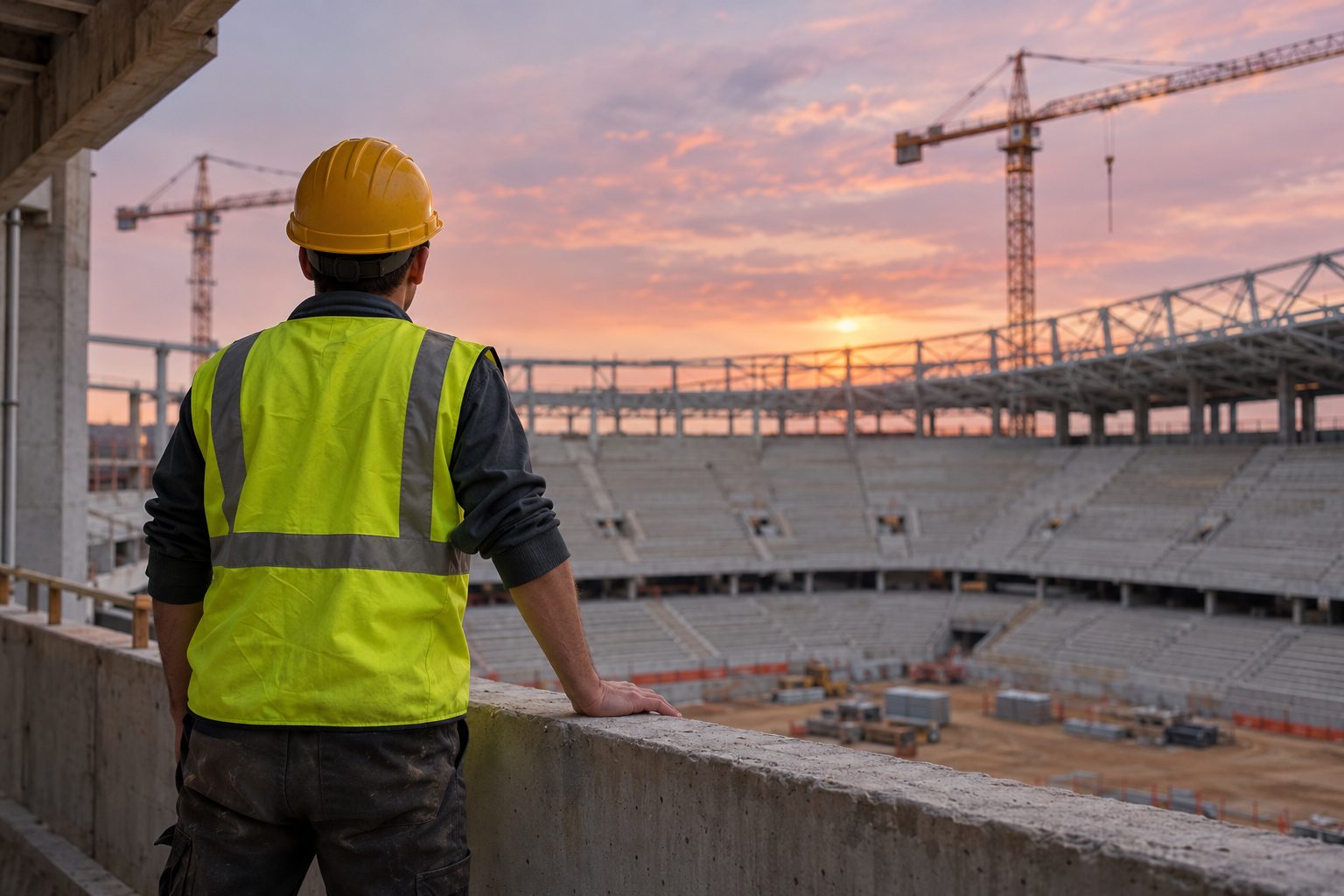
Morocco is accelerating preparations to co-host the 2030 World Cup with Spain and Portugal, while public discontent continues over the event’s impact on healthcare, education and living conditions.
Infrastructure work moves at different speeds
The frantic pace of infrastructure improvements contrasts with the exasperating slowness of a five-kilometre railway stretch linking Casablanca Airport with the city centre.
The Hassan II Stadium’s dream and objective is to host the final, beating the Santiago Bernabeu to it; its expected capacity is 120,000 spectators.
A major training centre and a changing squad
Flashscore says the Mohammed VI Sports Complex in Salé was inaugurated in December 2019 and is set across more than 30 hectares on the edge of the Maâmora Forest.
Flashscore says Real Madrid chose the Mohammed VI Sports Complex as a training base for the Club World Cup, which they won in February 2023.
Former head coach Vahid Halilhodzic described it as “by far the best technical centre in the world, five times better than Clairefontaine in terms of pitches, medical staff, swimming pools and catering”.
Today, around 75% of the players called up by head coach Mohamed Ouahbi were born outside Morocco. Ayoub Bouaddi represented France at every youth level before opting to play for Morocco at the 2026 World Cup; the country’s infrastructure advances also played a part.
Healthcare concerns drive protests
Protests in Morocco have used the slogan “No World Cup, we want healthcare”. The public, particularly young people, is calling for more funding for public healthcare after serious shortages were reported at numerous hospitals, alongside energy shortages.
Several local communities have also reported forced evictions and the loss of their homes without adequate compensation.
Questions over the event’s purpose
Flashscore says the drive to improve infrastructure for the global event has been matched by a decline in the quality of life of the middle class.
Flashscore says that, although football is hugely popular in the country, the criticism is not aimed at the sport itself but at using the mega-event as a “shop window” for the country at the expense of citizens’ healthcare and education.


