

What Is a Crypto Custodian?
A crypto custodian is a specialized financial institution that safeguards digital assets, like Bitcoin and Ethereum, for large investors, such as hedge funds, corporations, or high-net-worth individuals. Unlike everyday crypto users who manage their own private keys through wallets, these custodians take on the responsibility of securely storing private keys and ensuring compliance with regulations. They provide protection from theft, loss, and cyberattacks by employing sophisticated security measures, including cold storage and multi-signature authentication.
Crypto custodians are particularly suitable for entities with significant digital holdings that require professional oversight. Their services are not generally aimed at individual traders managing small crypto portfolios but rather those who need institutional-grade protection, insurance, and regulatory compliance to manage substantial digital assets safely. By entrusting a custodian, investors can focus on growth and investment strategies while their assets remain secure and accessible.
When Do You Need a Crypto Custodian?
A crypto custodian is typically necessary for those with substantial digital holdings—usually high-net-worth individuals, institutions, or companies managing large portfolios. If you have millions of dollars in cryptocurrency under management, the risk of handling these assets yourself becomes impractical. For these investors, crypto custodians provide the security, legal compliance, and peace of mind that are essential when managing significant amounts of digital assets.
For most everyday traders with smaller portfolios, a crypto custodian is not needed. Self-custody via wallets and personal management of private keys are sufficient for individual investors who aren’t dealing with large sums. Custodians are more appropriate for entities that require additional safeguards, such as insured storage, multi-signature authentication, and compliance with regulatory standards, which are often critical in institutional settings. When security, compliance, and scale become too complex to manage individually, it’s time to consider a crypto custodian.
Traditional Custody vs. Crypto Custody: The Key Differences
While traditional and crypto custodians share the goal of securing assets, their methods and challenges differ significantly. Traditional custodians manage physical assets, relying on physical security measures and mediated access. In contrast, crypto custodians focus on safeguarding digital assets with advanced cybersecurity and offer direct access to assets.
In this section, we’ll explore these key differences in detail, including the specific aspects of how digital and traditional custody systems operate.
Physical Assets vs. Digital Assets
Traditional custodians handle physical assets such as stocks, real estate, and collectibles. They ensure these items are stored safely and manage access to them. On the other hand, crypto custodians manage digital assets like Bitcoin and Ethereum, focusing on the security of private keys required to access and transfer these cryptocurrencies.
Physical Security vs. Cybersecurity
Traditional custodians use physical security measures, such as vaults and security personnel, to protect assets. Crypto custodians rely on cybersecurity techniques, including encryption and multi-signature protocols, to safeguard digital assets from cyber threats.
Mediated Access vs. Direct Access
Traditional custody often involves mediated access, where transactions and asset management are conducted through the custodian. In crypto custody, holders have direct access to their assets through private keys. These keys are like digital passwords that allow full control over the crypto holdings. If the private keys are lost or stolen, access to the assets can be compromised.
Hot Storage vs. Cold Storage
Within crypto custody, the storage of private keys is categorized into hot storage and cold storage:
- Hot Storage: Keeps private keys online, accessible through web-based wallets or software applications. This method offers convenience for frequent transactions but is more susceptible to online attacks.
- Cold Storage: Keeps private keys offline, such as on hardware wallets or physical media stored securely. This method provides enhanced security from online threats but can be less convenient for regular access.
Choosing the Right Crypto Custodian
Choosing the right crypto custodian is crucial for ensuring the security and management of your digital assets. Here’s how to evaluate your options:
- Credentials and Regulation: Ensure the custodian is regulated and adheres to high security and legal standards. Look for a custodian with a strong reputation and proven track record in handling digital assets
- Technical Expertise: Choose a custodian with deep technical knowledge and experience in cybersecurity, including encryption, cold storage, and multi-signature technology. This expertise is crucial for protecting your assets from cyber threats.
- Service Offerings: Review the custodian’s range of services, such as storage solutions, asset management, staking rewards for PoS tokens, and trading capabilities. Consider additional features like insurance, compliance reporting, and integration with other platforms.
- Cost Consideration: Compare the fees associated with the custodian’s services, including storage, transactions, and additional features. Balance the cost with the level of security and services provided to find the best value.
- Focus on Investors: Some custodians cater specifically to individual investors, while others serve larger institutions. Select a custodian that matches your investment size and needs to ensure you receive tailored services.
The Growing Importance of Crypto Custody
As more people invest in crypto, they need safe ways to keep their money. Custodians are important for managing and protecting digital items. They help keep things safe and follow rules in a market that is expanding.
Key Reasons Why Digital Asset Custody Is Important
- Safer Than Exchanges: Custodians are more secure than exchanges.
- Help for Investors: They give help and solutions if problems come up.
- Easier to Use: They make it easier to manage digital assets.
- Better Security: Stronger security keeps your assets safe from theft and loss.
Crypto Custodian Examples
Let’s explore example of leading crypto custodians so you can have an idea of the range of services and features available.
Gemini Custody
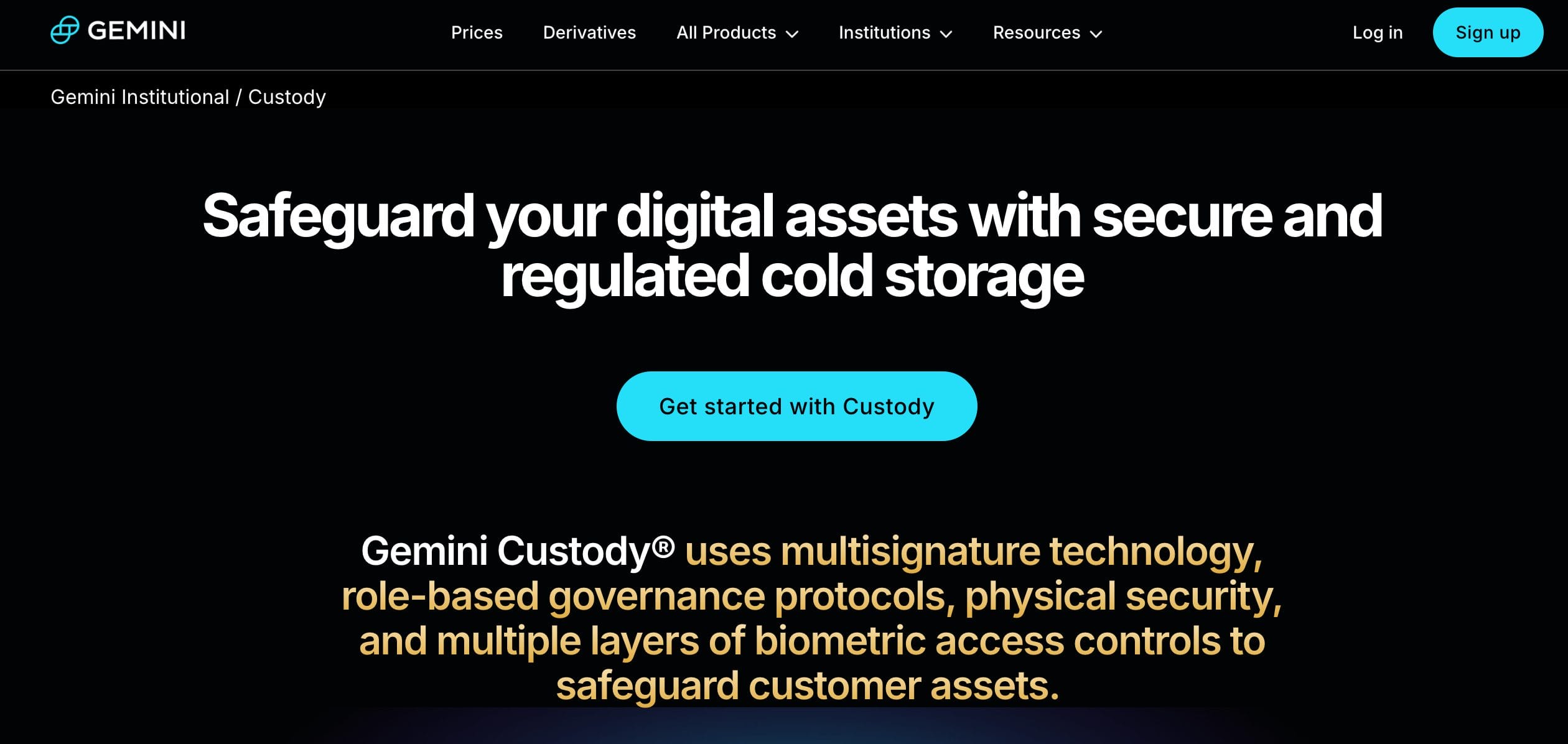
- Fees: 0.4% of the total value of assets under custody or $30 per month per asset, whichever is higher.
Services Provided
- Secure Storage: Utilizes cold storage, multi-signature technology, and role-based governance protocols.
- Compliance and Reporting: Offers comprehensive reporting solutions for regulatory compliance and investment tracking.
- Insurance Coverage: Provides insurance up to $125 million for certain types of losses.
- User Interface: Features an intuitive self-service portal for asset management and transactions.
- Instant Trading: Allows trading directly from cold storage with instant crediting to exchange accounts.
- Support for Multiple Assets: Supports over 100 cryptocurrencies, including Bitcoin and Ethereum.
Coinbase Custody
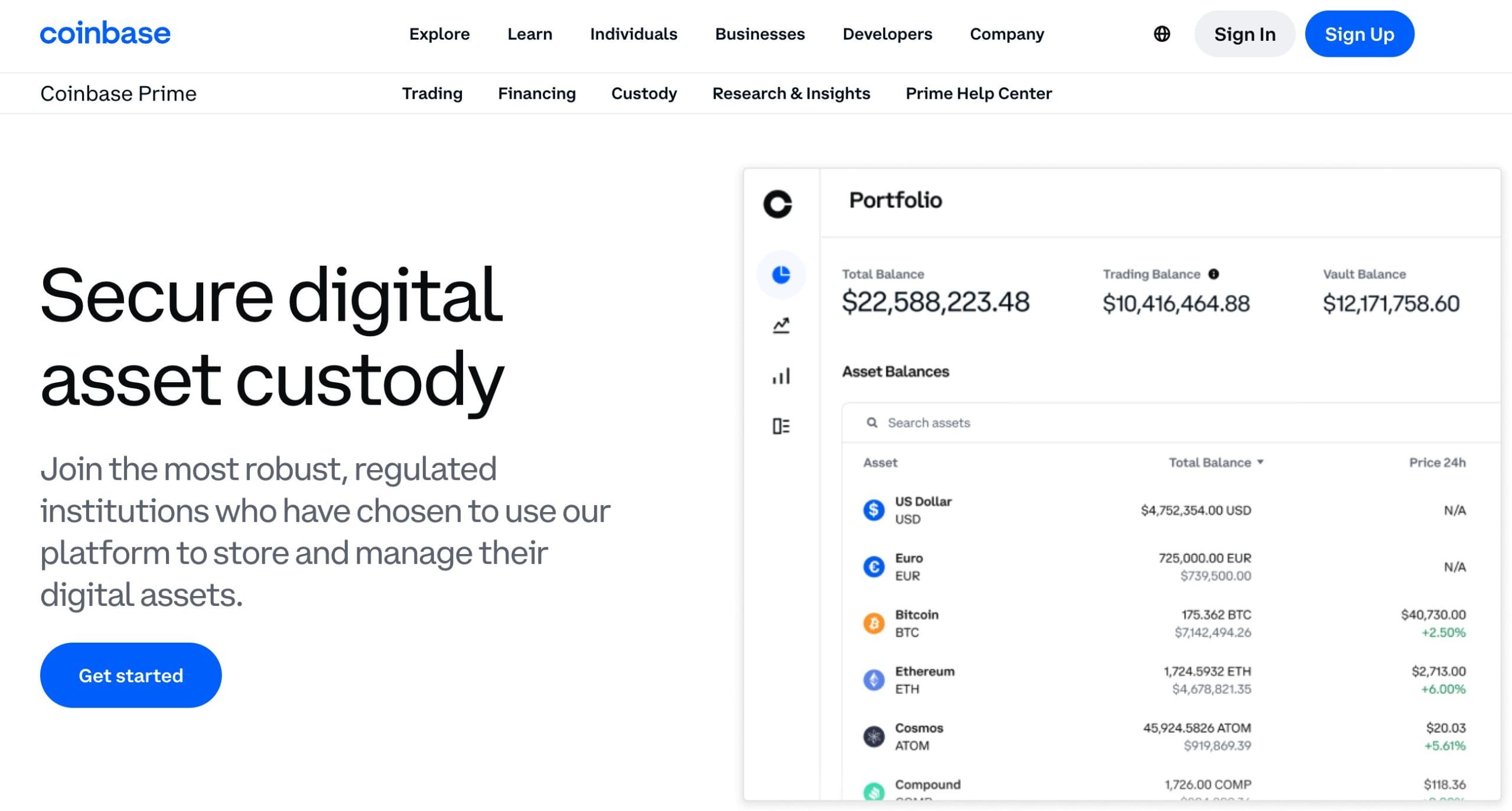
- Fees: Generally around 1% of the total assets under management (AUM).
Services Provided
- Cold Storage: Provides secure, insured cold storage for digital assets.
- Insurance Coverage: Includes insurance coverage for assets held in custody.
- Audit Trails: Maintains detailed audit trails for all transactions to enhance transparency.
- Integration with Coinbase Prime: Access to additional services such as trading, lending, and borrowing.
- Support for Multiple Assets: Supports over 400 different cryptocurrencies.
BitGo

- Fees: Charges are based on an annual model, generally less than 1%.
Services Provided
- Institutional-Grade Security: Implements multi-signature authentication and cold storage solutions.
- Asset Management: Supports over 600 tokens, offering a comprehensive custody solution.
- Trading and Lending Services: Provides integrated trading, lending, and borrowing services.
- Compliance Tools: Offers compliance and reporting tools to meet regulatory requirements.
- Insurance Coverage: Includes insurance for digital assets for added security.
Final Thoughts
Choosing the right crypto custodian is key for keeping your digital money safe and managed. Custodians guard your private keys and help with rules and laws. As more people invest in cryptocurrency, a trusted custodian can help you manage your money easily and feel secure.
Frequently Asked Questions
What does a crypto custodian do?
A crypto custodian is a company that keeps your digital money secure. They protect the keys you need to get to your cryptocurrencies, like Bitcoin and Ethereum. This helps make sure they are not lost or stolen.
What is the difference between hot and cold storage?
How do crypto custodians ensure security?
What are the costs of using a crypto custodian?
Disclaimer: This article is for informational and educational purposes only and is not investment, financial, or legal advice. Crypto assets are highly volatile and you could lose your entire investment. Do your own research and decide carefully.