
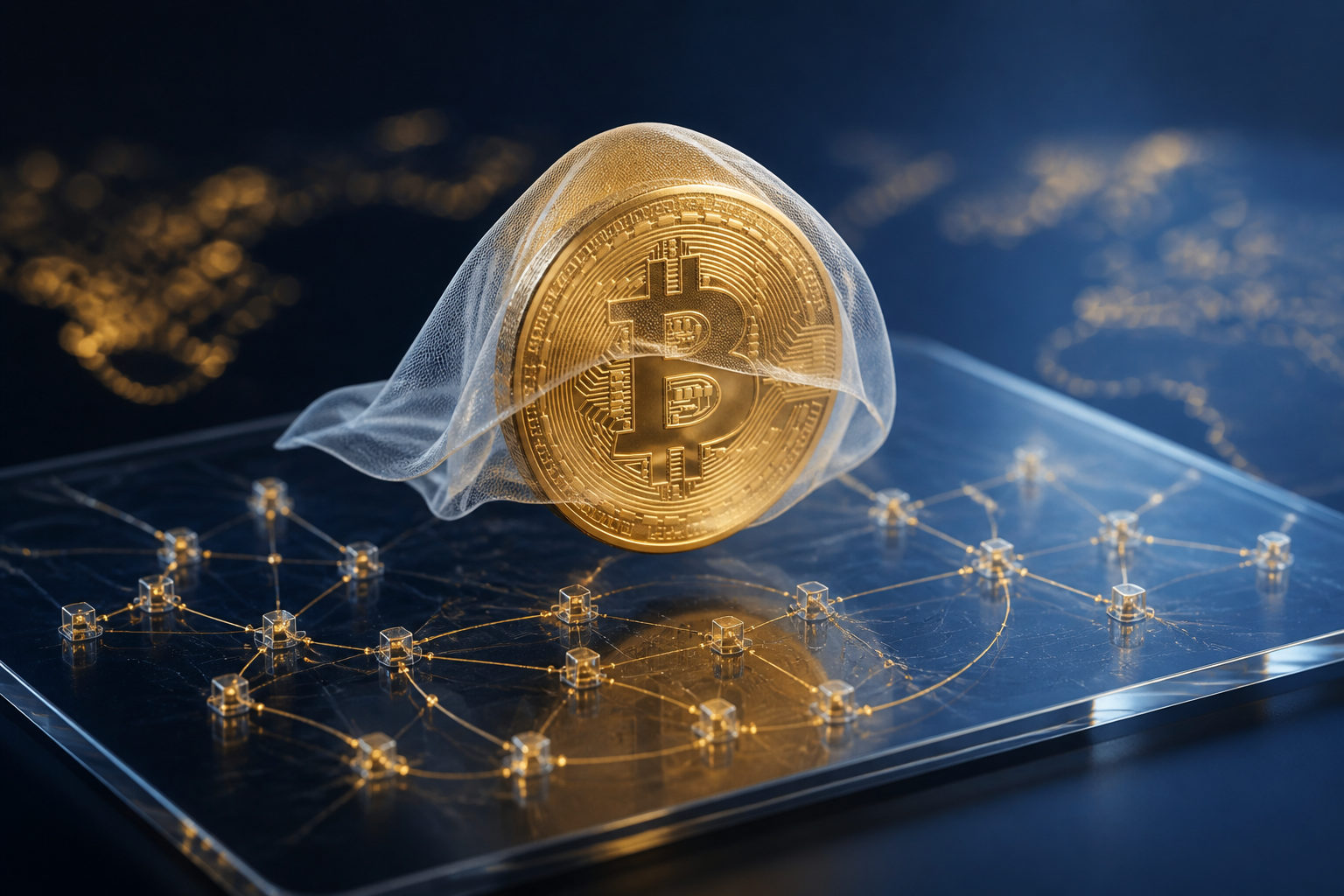
Bitcoin is not truly anonymous. A better description is pseudonymous: the blockchain shows addresses instead of real names, but transactions are public, persistent, and often linkable once an address is tied to a person.
Anonymous and pseudonymous are not the same thing
This is the key distinction. If a system does not display your legal name by default, that does not mean nobody can connect your activity to you. In Bitcoin, the public ledger records which address sent funds to which address. What it does not do automatically is attach a passport name, phone number, or home address to every transaction.
That sounds private at first glance, which is why many beginners assume Bitcoin is anonymous. But the better mental model is a public accounting book filled with aliases. Each alias may look detached from a real person at the start. Once one alias is identified, a larger part of the transaction history can become much easier to read.
Think of a Bitcoin address like a screen name in a public room. People may not know who is behind it right away, yet the actions tied to that screen name remain visible. If you later reveal that the screen name belongs to you, earlier activity does not disappear.
Why people often believe Bitcoin is anonymous
The misunderstanding usually starts with wallet creation. You can generate a Bitcoin address without publishing your real identity on-chain. To a new user, that feels close to anonymity. Add to that the fact that blockchain data looks technical and full of long strings, and many people assume that because it is hard to read, it must be hard to trace.
Those are different ideas. Hard to read is not the same as impossible to analyze. Bitcoin does not hide the flow of funds. It exposes that flow in a standardized, public format. The privacy question is not whether a name appears next to every address. The question is whether someone can connect an address, or a group of addresses, to a real person through behavior, outside records, or public disclosures.
That connection often happens outside the blockchain. A regulated exchange may know which address you withdrew to. A merchant may post a donation address on a website. A freelancer may share a payment address with clients. A user may post a transaction screenshot on social media. One small clue may not reveal much by itself, but several clues together can be enough.
How Bitcoin can be traced in practice
Addresses work like aliases
A Bitcoin address is better understood as an alias than as invisibility. If you use the same address repeatedly, people can see that multiple payments reached the same destination. If you use different addresses but connect them through recognizable transaction patterns or public statements, the separation may be weaker than you expect.
This is why privacy in Bitcoin is not simply a matter of having no name attached on-chain. The visible structure of transactions can still reveal relationships. An address that starts as just a string of characters can pick up meaning over time as it appears in more contexts.
The ledger is public and stays public
Bitcoin transactions are recorded on a public blockchain. Anyone can inspect the movement of funds between addresses. You do not need to own the address to view its transaction history. That feature is part of how the system remains verifiable without a central operator controlling the record.
The long-term nature of the record matters. If an address is not linked to you today, that does not guarantee future privacy. If that same address becomes associated with your identity later, prior transactions may also be interpreted through that lens. In other words, privacy risk is not limited to the moment when you click send.
Outside information is often what completes the picture
Blockchain data by itself does not always tell observers who someone is. The connection often comes from outside information. A centralized exchange account, a public donation page, an online store checkout flow, a forum post, or a payment request sent to a customer can all create a bridge between an address and a real-world identity.
That is why privacy conversations around Bitcoin need to include both on-chain and off-chain behavior. Someone may take care not to reveal their address on the blockchain itself, then undo that effort by posting a screenshot, reusing the same payment address, or combining public business receipts with personal transfers.
Wallet software does not equal automatic anonymity
Many users assume a wallet gives them privacy by default because it manages keys locally. In reality, a wallet's main job is to help you control your private keys and construct transactions. That is not the same as making your transaction history untraceable.
Wallets may also organize transactions in ways a beginner does not expect. Sending one payment can involve multiple inputs and outputs, including change returning to another address you control. You do not need deep technical knowledge to grasp the main point: a simple user interface does not mean the resulting transaction leaves no pattern behind.
Common mistakes that weaken privacy
- Reusing the same receiving address: This makes it easier for others to group incoming payments together.
- Posting addresses in public spaces: A website, social profile, forum, or chat archive can turn an alias into an identified payment endpoint.
- Sharing transaction screenshots: Timestamps, partial addresses, balances, and context can reveal more than people expect.
- Mixing exchange withdrawals with everyday payments: If a regulated platform knows your identity, that can create a direct bridge to the first withdrawal address.
- Assuming small activity means no privacy risk: The problem is often pattern exposure, not just transaction size.
A common beginner belief is that privacy only matters to people doing something wrong. That is not a useful framework. Financial privacy can matter for ordinary reasons: personal safety, business confidentiality, salary discretion, donation sensitivity, or simply the wish not to expose one's spending habits to the public.
What Bitcoin users should understand about privacy
Start from the right default assumption
The safest starting point is to treat Bitcoin as a transparent payment system with pseudonyms, not as a private chat between two parties. Once you accept that baseline, your decisions become more realistic. You become less likely to post an address casually, less likely to reuse payment details, and less likely to mistake convenience for privacy.
Separate identity exposure from asset control
Self-custody is about control over coins. Anonymity is about whether your actions can be linked back to you. These are related topics, but they are not the same. A person can hold their own keys and still leave a highly visible transaction trail.
That distinction matters because many newcomers hear that Bitcoin lets users avoid reliance on banks or platforms, then assume that independence automatically means privacy. It does not. You can control your funds directly while still operating in a highly observable environment.
Reduce unnecessary links between addresses and identity
If an address has already been used in a public context, treat it as exposed. Do not assume it can later serve as a private payment endpoint without consequences. Keeping different uses separate can reduce how easily outside observers connect one part of your financial life to another.
This is not a promise of perfect anonymity. It is a practical way to avoid making the linkage easier than it needs to be. In privacy matters, many losses come from convenience habits rather than from advanced tracking methods.
FAQ
Can people see my real name when I send Bitcoin?
Not by default. What they usually see is the sending and receiving addresses plus the transaction details, but if one of those addresses has already been connected to your identity elsewhere, your name may be inferred.
If I use a new address every time, am I anonymous?
Using new addresses can improve privacy, but it does not guarantee anonymity. Transaction patterns, exchange records, public posts, and other outside information may still connect multiple addresses to the same person.
Is Bitcoin as anonymous as cash?
No. Physical cash in some face-to-face situations does not create a globally visible ledger, while Bitcoin writes transfers to a public blockchain. Both may avoid displaying a name at the point of exchange, but the traceability model is very different.
If I buy Bitcoin on an exchange and withdraw it, does that make me anonymous?
Not automatically. If the exchange verified your identity, it may know the first address you withdrew to. What happens after that depends on later behavior, but withdrawal to a personal wallet should not be confused with full anonymity.
Where should I check the live Bitcoin price?
If you want the current market price, check major market data sites, exchange quote pages, or widely used crypto data platforms. Compare the dollar trading pair and the update time so you do not mistake delayed data for a live price.
If you care about privacy, the most useful habit is not repeatedly asking whether Bitcoin is anonymous. It is pausing before every payment request, screenshot, address post, or public comment and asking what else becomes visible if that address is ever connected to you.