
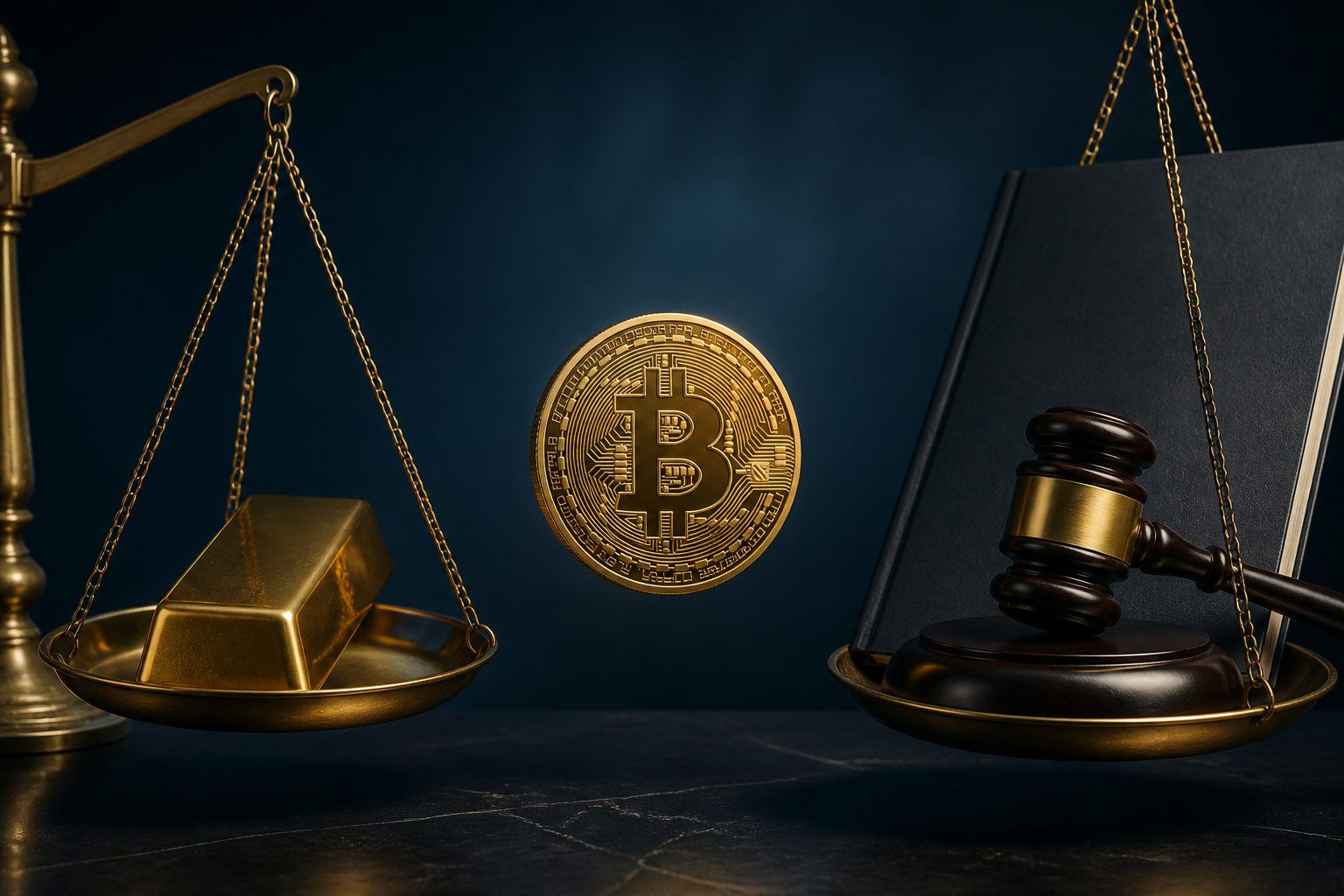
Bitcoin is generally closer to a commodity than a security because owning it does not usually give you rights against a company, an issuer, or a management team.
Start with the difference between a commodity and a security
New readers often assume that any asset people buy for profit must be a security. That is too broad. A commodity is usually understood as something that can be traded in a market and priced by supply and demand, while a security usually involves a clearer legal relationship, such as an issuing entity, investor rights, disclosure duties, or an investment arrangement tied to someone else’s management efforts.
That distinction matters a lot with Bitcoin. Bitcoin is not a share in a company, and it is not a debt instrument. If you hold Bitcoin, you do not automatically get dividend rights, voting rights, or a claim on a firm’s future cash flow. What you hold is the native asset of an open blockchain network.
Why Bitcoin is often viewed as more like a commodity
Bitcoin began with the 2008 white paper, Bitcoin: A Peer-to-Peer Electronic Cash System, and its first block appeared in January 2009. Its creator used the name Satoshi Nakamoto, but the identity remains unknown. For classification purposes, the key point is not the mystery of the founder. The key point is that Bitcoin does not depend on a single operating company that keeps promising value to holders.
The network runs through open rules, independent participants, and distributed verification. Users can hold their own keys, send transactions, and verify activity without needing a central operator to keep the asset alive. That makes Bitcoin very different from a typical stock or bond, where the legal and economic structure clearly points back to an issuer.
Its supply system also follows public rules. New blocks are added about every 10 minutes. The total supply is capped at 21 million coins. The issuance rate is cut in half about every 4 years, or every 210,000 blocks, and halving years include 2012, 2016, 2020, and 2024. Those features describe a transparent issuance schedule. They do not create a right to profits, and they do not turn Bitcoin into a security by themselves.
A common mistake is to think that because people buy Bitcoin as an investment, it must be a security. That does not follow. Gold can be bought as an investment. So can many raw materials and collectible assets. Being used for investment is not the same as being classified as a security. The real question is whether the asset is tied to an issuer and an investment contract-like relationship.
What usually makes something look more like a security
For a beginner, one simple test helps: ask whether buyers are mainly relying on a specific team or company to create returns for them. If the value story depends on a project operator raising funds, building products, promoting adoption, and producing gains for holders, the asset is more likely to be discussed in security terms.
Bitcoin usually does not fit that pattern. There is no company issuing Bitcoin shares to the public. There is no standard promise that a management team will run a business and distribute returns to Bitcoin holders. There is no built-in legal claim on revenue, equity, or repayment. When someone buys Bitcoin, they are buying the asset itself, not a packaged right to someone else’s business performance.
That said, people often mix up Bitcoin itself with products built around Bitcoin. This is where confusion starts. A Bitcoin-backed investment product, a yield product, a fund share, or a custodial arrangement may raise separate legal questions. The fact that a product references Bitcoin does not mean Bitcoin and the product must be classified the same way. The underlying asset and the financial wrapper are not identical.
Common edge cases that confuse beginners
Is Bitcoin money
Bitcoin was introduced as a peer-to-peer electronic cash system, so payment use is part of its original design. In practice, though, people use it in several ways: as a transfer asset, a store of value, a speculative asset, or a settlement tool. None of those uses automatically makes it a security.
Is Bitcoin the same as a token issued by a project team
No. Many tokens are closely linked to a visible team, fundraising plans, a roadmap, and ongoing promotional work. In those cases, buyers may be relying heavily on others to build value. Bitcoin is different because it does not have a single project company acting as the central source of managerial effort for all holders.
What about ETFs, funds, or yield products tied to Bitcoin
Those are products built around Bitcoin, not Bitcoin itself. If you buy a fund or another structured product, you are buying into a legal wrapper with its own rights, obligations, and risks. That wrapper may be regulated differently from the underlying asset.
Does high volatility make Bitcoin a security
No. Price swings can make an asset risky, but risk and legal classification are not the same thing. A volatile asset can still be treated differently from a security if it lacks the usual issuer and investor-rights structure.
How to think about the question in a practical way
If you see headlines arguing about whether Bitcoin is a commodity or a security, do not begin with slogans. Start with structure. Ask who issued it, what legal rights the holder receives, and whether expected returns depend mainly on someone else running an enterprise for investors.
- Look for an issuer: If there is no clear company or team standing behind the asset in the usual way, it is less likely to resemble a traditional security.
- Check the holder’s rights: Owning an asset is different from owning equity, debt, or a profit-sharing claim.
- Ask where returns are supposed to come from: If gains depend mainly on a promoter or management group, the security question gets stronger.
- Watch the sales pitch: Claims that others will generate profits for you should always raise caution.
- Separate the asset from the wrapper: Spot Bitcoin, a fund share, a lending arrangement, and a yield product are not the same thing.
For Bitcoin, the reason many people place it closer to the commodity side is straightforward: it lacks the standard structure of an issuing entity making ongoing promises to investors. If you buy Bitcoin, you face market risk, custody risk, and execution risk. You are not buying a standard legal claim on a company’s future profits.
FAQ
Is Bitcoin generally seen as a commodity or a security?
In basic structural terms, Bitcoin is usually viewed as closer to a commodity. It does not come with the classic features of a security, such as an issuing company, dividend rights, or a claim on business income.
Does buying Bitcoin for profit make it a security?
No. People can buy many assets with the hope of a price gain. That alone does not make the asset a security in legal or regulatory analysis.
Why do some articles blur Bitcoin and Bitcoin-related products?
Because products built on top of Bitcoin can be easier to discuss in broad labels. Still, the distinction matters: Bitcoin itself is one thing, while funds, custodial shares, lending programs, and yield products are separate structures.
If Bitcoin is not a security, does that mean it is safer?
No. Classification does not remove risk. Bitcoin can still involve sharp price moves, self-custody mistakes, platform failures, scams, and poor trade execution.
How should I check the Bitcoin price if I want current data?
Use a major market data platform and compare it with the trading interface you actually plan to use. Check the live price, spread, and market depth instead of relying on screenshots or social posts.
When you hear the question “is bitcoin a commodity or security,” the cleanest way to answer it is to ignore the hype and inspect the structure: issuer, holder rights, and whether returns depend on someone else’s business efforts.
Disclaimer: This article is for informational and educational purposes only and is not investment, financial, or legal advice. Crypto assets are highly volatile and you could lose your entire investment. Do your own research and decide carefully.