
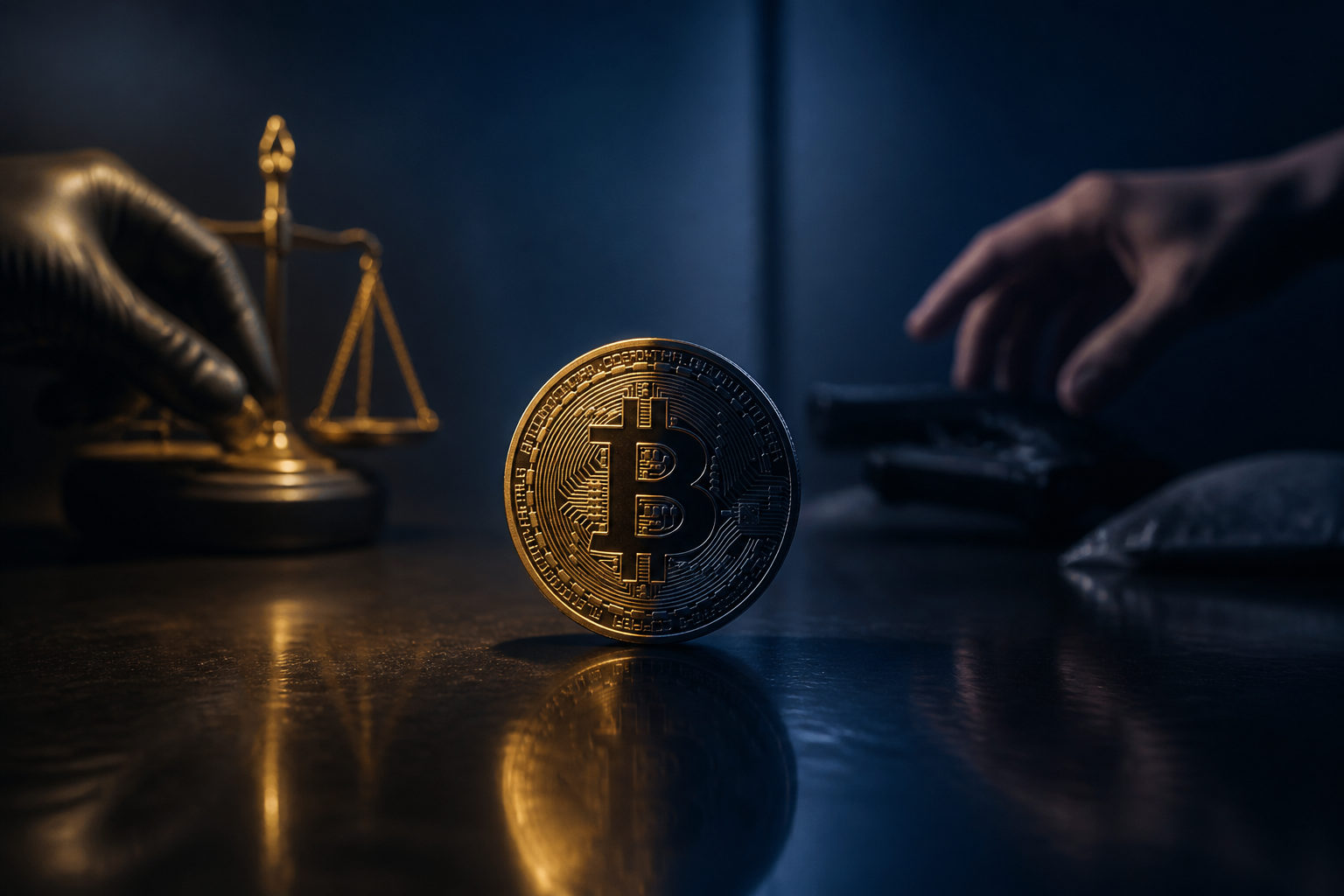
Bitcoin is not inherently evil. A better answer is that it is an open monetary tool with real trade-offs, and most moral arguments about it come from how people use it, market it, and regulate it.
Start with the right question
Calling Bitcoin evil sounds clear, but it often hides several different concerns inside one word. Some people mean crime. Others mean speculation, energy use, fraud, or a belief that money should stay under institutional control. Those are separate issues, and they need separate answers.
Bitcoin is a public system for transferring value without relying on a single gatekeeper. Its white paper, Bitcoin: A Peer-to-Peer Electronic Cash System, was published in 2008, and the genesis block appeared in January 2009. The network follows visible rules: the supply cap is 21 million coins, a block is produced about every 10 minutes, and the subsidy halves about every 4 years, or every 210,000 blocks. The creator used the name Satoshi Nakamoto, though that identity remains unknown.
Those details matter because they show what Bitcoin actually is. It is not a company with a marketing department deciding policy on the fly. It is not a charity, either. It is a rules-based network. That does not make it morally pure, but it does mean the ethical debate should focus on effects, incentives, and uses rather than vague labels.
Why many people see Bitcoin as harmful
Critics are not reacting out of nowhere. Bitcoin is linked, in public memory, to sharp booms and crashes, online scams, aggressive promoters, and stories of people losing money they could not afford to lose. For many readers, that is their first contact with the subject. They do not meet Bitcoin as a payment system. They meet it as a sales pitch.
| Source of concern | What people fear | What should be examined |
|---|---|---|
| Speculation | Extreme price swings can push people into reckless trading | That is a market behavior problem, not proof of malicious code |
| Crime | It can be used for fraud, laundering, or illicit payments | The issue is misuse and enforcement, not the existence of digital cash itself |
| Self-custody | Users can lose keys, send funds to the wrong address, or get phished | More control also means more personal responsibility |
| Mining | Some argue the resource cost is too high for the social value provided | The real debate is whether the security model is worth the cost |
| Early adoption advantage | Early holders may have a structural lead | That is common in many emerging technologies and assets |
The speculation point is powerful because it is visible. People remember headlines about dramatic gains and painful losses. They remember influencers, referral campaigns, and promises that sound less like savings and more like lottery advertising. In that setting, Bitcoin can look like a machine for transferring money from late entrants to early or better-informed participants.
Crime is another major objection. Critics argue that a system outside ordinary banking rails can help bad actors move value more easily. There is some truth in the concern, but it is incomplete. Bitcoin transactions are recorded on a public ledger. The harder parts of many criminal schemes are usually identity deception, social engineering, off-platform contacts, or conversion between crypto and fiat. Saying “criminals can use Bitcoin” is true, but it does not settle the larger moral question.
Mining adds a different kind of criticism. Some people object to the resource demands of proof-of-work on principle. Others think those costs can be justified if they secure a neutral global network that no single institution controls. That dispute is not really about good versus evil. It is about whether the security model and social purpose justify the expense.
Why supporters reject the “evil” label
Supporters usually care about a different set of values: transparent issuance, ownership that can be verified by control of keys, and the ability to send value without asking a central authority for permission. For people who do not trust political or institutional discretion, that matters a lot.
Bitcoin also attracts people who want monetary rules they can inspect. The supply cap is fixed at 21 million. Its smallest unit is one satoshi, equal to one hundred millionth of a BTC. The halving schedule has already occurred in 2012, 2016, 2020, and 2024. To supporters, those features make Bitcoin a system with known constraints rather than one managed by shifting judgment calls. You can disagree with that monetary philosophy and still admit it is different from simple opportunism.
There is also a civil-liberties argument. If a person lives in a place where financial access is limited, payments are heavily restricted, or account access can be cut off without much warning, an open network has practical appeal. Bitcoin may not be the easiest tool in every case, and it is certainly not free of risk, but for some users its value comes from the option it provides when conventional rails fail or exclude them.
Supporters can overstate their case too. Self-custody is hard for many people. Irreversible transactions are unforgiving. Legal obligations do not disappear because value moved on-chain. A person can believe Bitcoin serves a legitimate purpose and still think its advocates often gloss over the burden it places on ordinary users.
The useful moral test: who bears the risk, and for what benefit?
If you want a serious answer to “is bitcoin evil,” the cleanest method is to stop treating the subject as one thing. Break it into layers. Look at the protocol, then the market built around it, then the products and narratives attached to it. A lot of public anger is directed at Bitcoin when the real source of harm is a trading platform, a scammer, a leverage strategy, or a promotional culture built on unrealistic expectations.
| Layer | Main question | Common mistake |
|---|---|---|
| Protocol | Are the rules public, consistent, and verifiable? | Blaming the network for every failure at the platform level |
| User practice | Can the person manage keys, backups, and transaction checks safely? | Assuming decentralization automatically means easier security |
| Market | Is the person prepared for volatility and hype-driven behavior? | Treating upside stories as evidence of low risk |
| Compliance | What reporting, tax, and anti-money-laundering duties apply? | Assuming on-chain activity exists outside ordinary law |
This layered view changes the discussion. A protocol can be neutral while the market around it becomes reckless. A tool can help one person preserve autonomy while another uses it to run a scam. The same feature that gives someone censorship resistance can create fewer safety rails for a beginner who barely understands wallets or private keys.
That is why Bitcoin does not fit neatly into a moral slogan. It can widen financial choice for some people and widen loss exposure for others. It can reward careful users who study custody and risk, and punish people who arrive through hype. It can be used in lawful, ordinary transfers, and it can be misused. None of that is unique to Bitcoin, but the combination of open access, irreversible transfers, and speculative attention makes the stakes feel sharper.
FAQ
Is Bitcoin basically a scam?
No. Bitcoin itself is a public network with known rules. Scams often borrow its name, but the fraud usually sits in fake exchanges, fake support messages, guaranteed-return pitches, or investment schemes built around trust abuse.
Does Bitcoin mainly help criminals?
It can be used by criminals, just as many payment tools can. That does not mean its main function is criminal, and the public ledger means activity leaves records that investigators and compliance teams may analyze.
Is Bitcoin immoral because of mining?
That depends on how you judge the trade-off between resource use and network security. Some people see proof-of-work as too costly. Others see it as the price of maintaining a system that no single party controls.
Should ordinary people avoid Bitcoin on ethical grounds alone?
That depends on which concern matters most to you. If you object to speculation culture, self-custody burden, or mining costs, staying away is a coherent choice. If you are still deciding, study those points separately before making the issue purely moral.
Do I need to understand Bitcoin even if I never plan to buy it?
Yes. Bitcoin is central to debates about digital money, custody, and decentralized systems. Understanding it helps you judge other crypto claims more clearly, especially when newer projects recycle old promises with fresh branding.
If you want a practical way to judge Bitcoin, separate the protocol from the hype around it, separate the network from the companies built on top of it, and separate moral discomfort from risk you may simply be unwilling to bear.
Disclaimer: This article is for informational and educational purposes only and is not investment, financial, or legal advice. Crypto assets are highly volatile and you could lose your entire investment. Do your own research and decide carefully.