
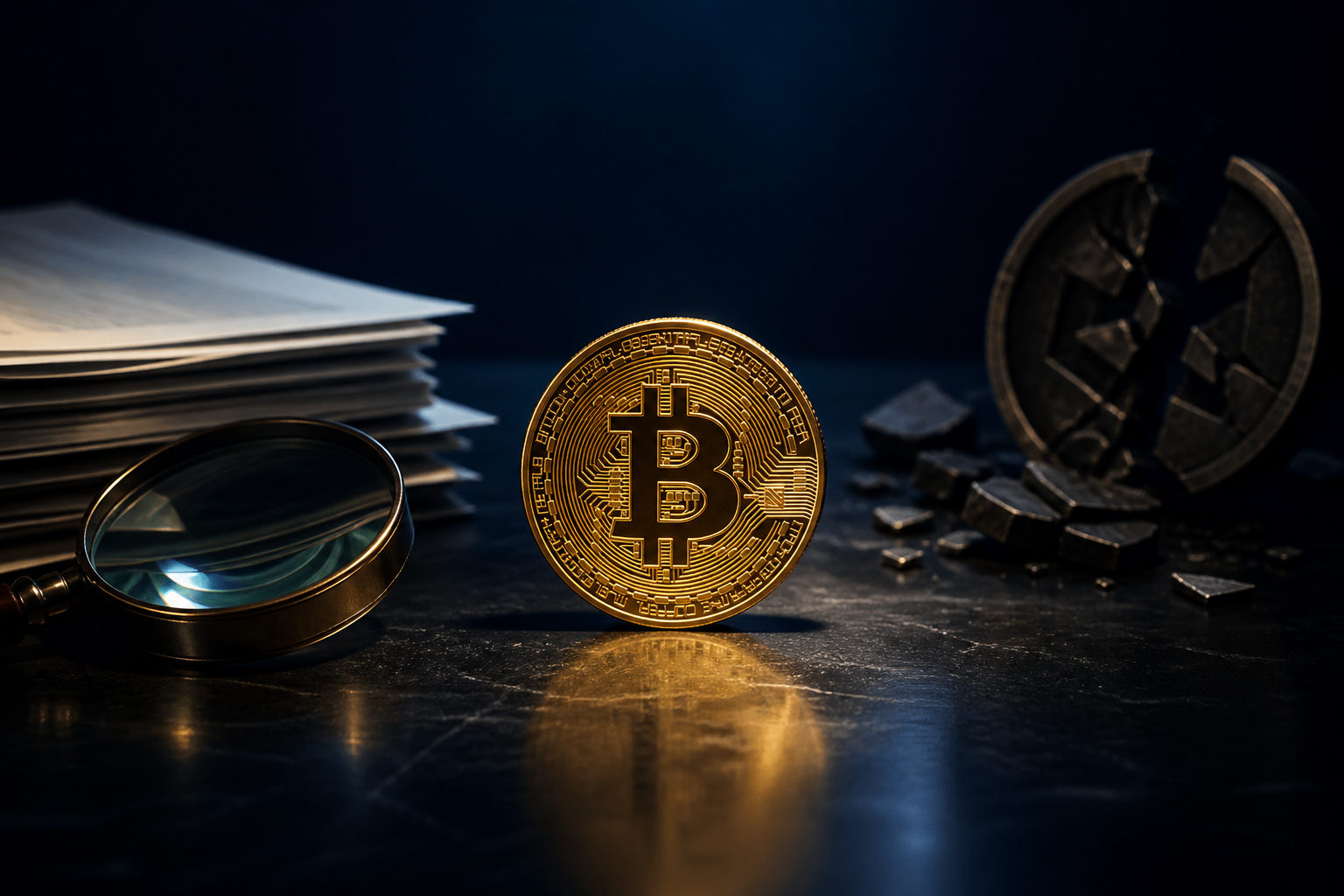
Bitcoin itself is not a scam. It is a decentralized digital asset. The scams usually appear around it: fake exchanges, account managers, recovery fraud, and promises of easy profit.
Why people often confuse Bitcoin with fraud
Most beginners do not meet Bitcoin through technical documentation. They meet it through social posts, chat groups, or someone claiming to have a special method. That first contact shapes the impression, so a bad pitch often makes the whole subject look dishonest.
It helps to separate the asset from the scheme. Bitcoin has public rules, a supply cap of 21 million coins, a genesis block created in January 2009, and a smallest unit called a satoshi. A scam depends on hidden terms, pressure, fake authority, and control over your money.
Bitcoin is not a scam, but many Bitcoin-related offers are
A lot of losses come from handing control to another person. Someone says they will trade for you, stake for you, recover your coins, or double your funds if you transfer first. The wording changes, but the structure is usually the same: you send assets out, and your options shrink fast.
Common setups include fake exchanges that accept deposits but block withdrawals, fake wallet apps that ask for your seed phrase, and account managers who want your login details or remote access to your device. There are also referral-heavy operations that look like investment clubs but work more like recruiting machines. In those cases, the sales story matters more than the product.
Another source of confusion is volatility. People lose money during market drops and call the asset a scam. Losses can be real and severe, but price risk is different from fraud. To judge whether something is a scam, look at the conduct: false promises, blocked withdrawals, misuse of assets, or demands for secret wallet credentials.
Red flags that deserve immediate caution
If you are asking whether “is bitcoin scam” is the right concern, focus on behavior, not slogans. Fraud patterns tend to repeat. When several warning signs show up at once, walking away is usually the safest move.
- Guaranteed returns: no one can promise fixed profit from a volatile asset.
- Pressure to act now: scammers try to remove your time to verify.
- Requests to send coins first: once funds leave your wallet, recovery may be hard or impossible.
- No clear withdrawal rules: if the platform is vague on how you get money out, that matters.
- Seed phrase or private key requests: legitimate support should not need them.
- Only screenshots, no process: profit images are easy to stage; rules and custody matter more.
- Heavy focus on referrals: if income depends mainly on bringing in others, be careful.
There is also a softer warning sign: emotional management. A manipulator may act like a mentor, romantic interest, or patient guide, then steer you toward one app, one exchange, or one wallet. The moment trust becomes a tool for moving funds, the risk changes.
What to do before you buy or transfer any Bitcoin
Start with the basics. Learn the difference between an exchange account, a wallet, an on-chain address, a private key, and a seed phrase. If you do not know who controls the assets at each step, you are not ready to move meaningful funds.
Use tools you can verify on your own. Be careful with app names, login pages, and software sent through chat. Do not let a stranger guide your screen or ask you to install something outside a source you trust. Convenience is not a reason to skip verification.
Test the full process with a small amount first. Buy, move, and withdraw on your own. If you cannot complete each step without help from a salesperson or group admin, that is useful information. It means you should slow down, not add more money.
Set hard rules before emotion enters the picture. No guaranteed return offers. No sharing your seed phrase. No sending funds to a person who will “manage” them. No changing your plan because a chat room says an opportunity is closing. Written rules are easier to follow than improvised ones.
| Situation | More likely normal risk | More likely scam signal |
|---|---|---|
| Price swings | Open market moves up and down | Volatility used to sell “safe profit” |
| Withdrawals | Clear steps and stated limits | Extra fees keep appearing with no payout |
| Advice | General views, you keep control | You are told to transfer coins to a manager |
| Wallet setup | You are told to keep keys private | You are asked for your seed phrase |
FAQ
Is Bitcoin itself fraudulent
No. Bitcoin as a network and asset is not the same thing as a fraudulent offer built around it. The risk comes from volatility and from third parties who misuse its name.
Why do so many people say Bitcoin is a scam
Some people mix up market losses with fraud. Others first encountered Bitcoin through fake platforms or aggressive sales pitches, so the bad experience shaped the label.
Are Bitcoin investment managers usually safe
You should be very careful. If someone wants custody of your coins, account access, or remote control of your device, that is a serious warning sign.
If I lost money on Bitcoin, does that mean I was scammed
Not always. A loss can come from normal market movement. It looks more like a scam when there were false guarantees, blocked withdrawals, hidden terms, or misuse of your assets.
How can beginners avoid fake Bitcoin platforms
Check the process before the promise. If deposits are easy but withdrawals are unclear, support is evasive, or the whole pitch depends on urgency and referral rewards, step back.
Before you touch Bitcoin, check three things: who holds the keys, how you withdraw, and whether you understand the full path of your funds. If any part stays vague, do not send the coins.
Disclaimer: This article is for informational and educational purposes only and is not investment, financial, or legal advice. Crypto assets are highly volatile and you could lose your entire investment. Do your own research and decide carefully.