
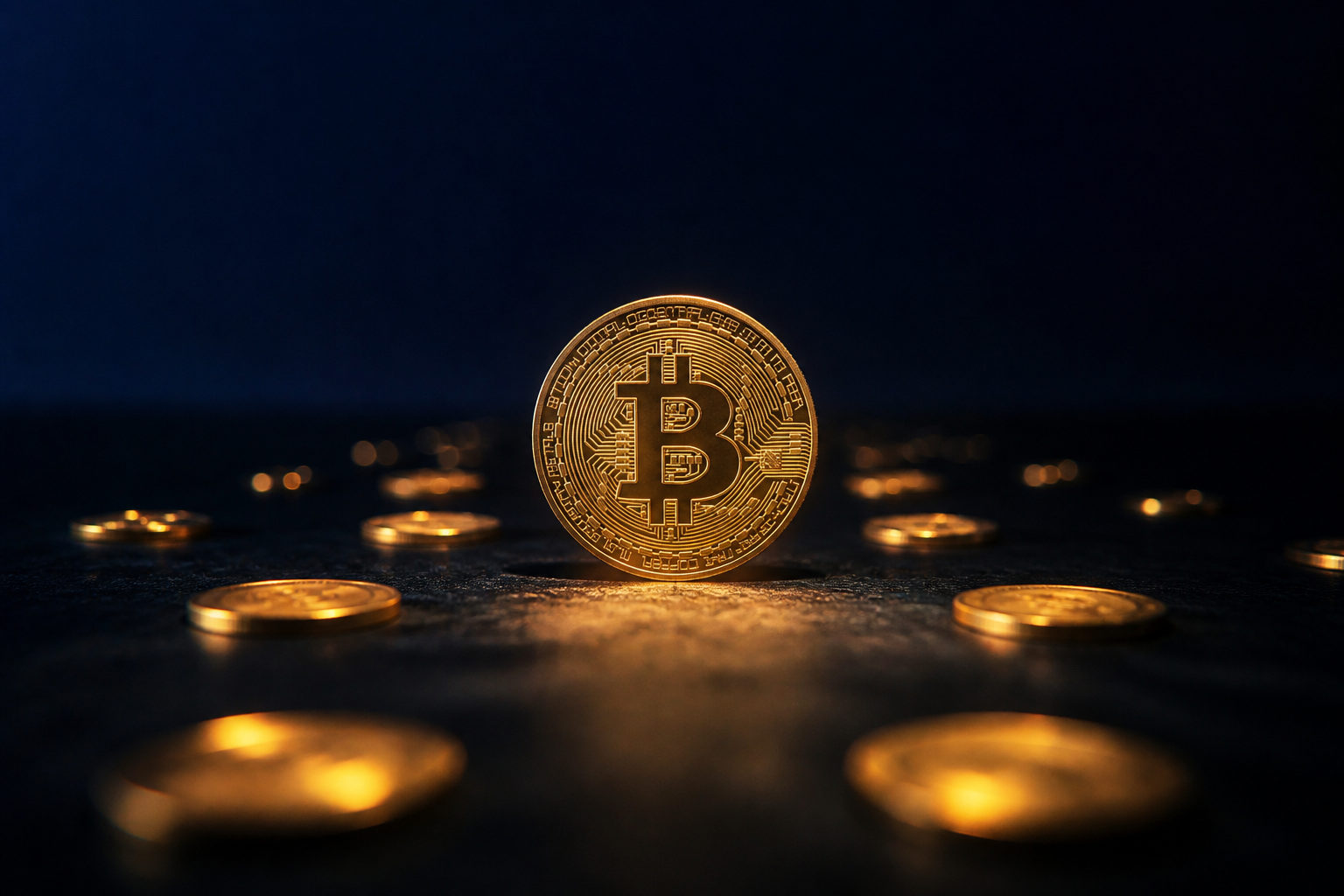
Are bitcoins rare? Yes, in a very specific sense: Bitcoin has a fixed supply cap of 21,000,000 BTC, and new issuance slows over time. That makes it scarce by design. It does not mean the price can only go up.
Why people call Bitcoin scarce
When people ask whether bitcoins are rare, they usually mean one thing: can more of them be created whenever demand rises? With Bitcoin, the answer is no. The supply schedule is built into the protocol, visible in advance, and not something a single company or founder can simply change on a whim.
That matters because scarcity is not just about “having a small amount.” It is about supply being hard to expand. Bitcoin sets a hard ceiling at 21,000,000 BTC, with full issuance stretching out to about 2140. New coins still enter circulation today, but at a pace that keeps slowing.
The slowdown is not vague. It follows a rule. The block reward is cut in half every 210,000 blocks, roughly every 4 years. That has already happened on 2012-11-28, 2016-07-09, 2020-05-11, and 2024-04-19. After the latest halving, the current block reward is 3.125 BTC, and with a target of about 10 minutes per block, the network adds about 450 BTC per day.
So yes, Bitcoin is scarce in a rule-based way. That is the key point. The system does not respond to higher demand by minting extra supply.
Scarcity in Bitcoin means more than “there will only be 21 million”
A lot of beginners stop at the headline number. It is important, but it is not the whole picture. To judge scarcity properly, you need to look at three layers together: the cap, the issuance rate, and the credibility of the rules behind both.
| Factor | Bitcoin | Why it matters |
|---|---|---|
| Supply cap | Fixed at 21,000,000 BTC | Prevents unlimited expansion |
| Issuance rate | Reward halves every 210,000 blocks | New supply slows over time |
| Current issuance | About 450 BTC per day network-wide | Shows new coins still arrive, but under tight rules |
| Rule credibility | Enforced by protocol and network consensus | Makes the scarcity claim testable |
| Divisibility | 1 satoshi = 0.00000001 BTC | Lets users transact in tiny units |
That last row gets missed all the time. People hear “only 21 million” and think there may not be enough to go around. But one bitcoin is divisible into one hundred million satoshis. The smallest unit is 0.00000001 BTC. So scarcity does not make Bitcoin unusable for smaller holders or smaller payments.
There is also a trust angle here. Bitcoin’s white paper, published by Satoshi Nakamoto on 2008-10-31, laid out the basic framework before the genesis block arrived on 2009-01-03. The identity of Satoshi remains unknown. The rules, though, are public. Anyone can inspect the issuance logic, the halving dates, and the unit structure.
Why market scarcity is not the same as total supply
Here is where the conversation gets more practical. Total supply and available supply are not the same thing. Some holders buy and sit on their coins for years. Some move them into cold storage and rarely touch them. Some coins are likely out of circulation because the private keys are gone. The result is simple: the amount actively available for trading can be much smaller than the theoretical supply.
There is no need to force a fake precision on that point. Tradable supply changes, and any exact count depends on method and timing. What matters is the framework. Bitcoin can be scarce at the protocol level and even tighter at the market level if a large share of coins is not moving.
This is also where people mix up scarcity and security. They are related, but they are not the same. Scarcity answers whether the asset can be diluted easily. Security is about network consensus, node distribution, mining competition, wallet storage, and user behavior. A scarce asset can still be handled badly by its owner. That part never disappears.
How Bitcoin scarcity differs from ordinary scarce goods
Most scarce goods in the physical world react to price. If prices climb high enough, producers often try to expand output, open new supply sources, or switch to substitutes. Bitcoin behaves differently. Even if demand surges, the protocol does not suddenly create more than the schedule allows.
Miners can compete harder. They can deploy more machines. They can chase the same reward with more effort. But that does not change how many new bitcoins the entire network issues that day. After the 2024-04-19 halving, the block reward is 3.125 BTC. The target block interval remains about 10 minutes. That is why daily new issuance is still only about 450 BTC across the whole network.
| Type of scarcity | Typical physical good | Bitcoin |
|---|---|---|
| Response to higher prices | Output may increase | Supply schedule does not expand |
| Supply path | Depends on firms, resources, policy | Set by protocol and visible in advance |
| Divisibility | Depends on the good itself | Divisible to 1 satoshi |
| New supply rhythm | Can vary widely | About 10 minutes per block, with halving cycles |
That difference is why Bitcoin gets described as digitally scarce. Not because it is physically rare. Because its supply is constrained in code and in network rules.
Still, do not overread that. Scarcity shapes the supply side. Price is set by both supply and demand, and demand can change fast. Sentiment shifts. Regulation changes. Risk appetite dries up. Markets can fall hard even when long-term supply is capped.
FAQ
Why can I still buy bitcoin if the supply is limited?
Because limited does not mean exhausted. Bitcoin has a hard cap of 21,000,000 BTC, but full issuance stretches to about 2140, and existing holders can keep selling to other buyers at any time.
Does Bitcoin’s scarcity mean it is guaranteed to hold value?
No. Scarcity can support the long-term supply story, but value still depends on market demand, adoption, and how investors respond to volatility. A capped asset can still experience deep drawdowns.
Why does halving make Bitcoin feel rarer?
Because halving reduces the flow of new supply. Since 2024-04-19, the block reward has been 3.125 BTC, which puts network-wide daily issuance at about 450 BTC instead of the faster pace from the prior era.
Do I need a whole bitcoin for scarcity to matter to me?
No. Bitcoin is divisible down to 1 satoshi, or 0.00000001 BTC. You can hold a fraction of a coin and still own bitcoin directly.
Does Bitcoin Pizza Day prove bitcoins are rare?
Not directly. Pizza Day marks an early real-world purchase: on 2010-05-22, Laszlo Hanyecz used 10,000 BTC to buy two pizzas. It shows Bitcoin entering commerce, not a formula for measuring scarcity.
What to check if you want a clear answer
If you want to judge whether bitcoins are rare, focus on three things: the 21,000,000 BTC cap, the halving schedule, and the gap between total supply and coins actually moving in the market. Those three together tell you far more than a slogan ever will.
In practice, read the issuance rules first, then check halving progress and live market depth where you trade. Bitcoin scarcity is real. It just lives on the supply side, and it does not remove market risk for anyone.
Disclaimer: This article is for informational and educational purposes only and is not investment, financial, or legal advice. Crypto assets are highly volatile and you could lose your entire investment. Do your own research and decide carefully.