
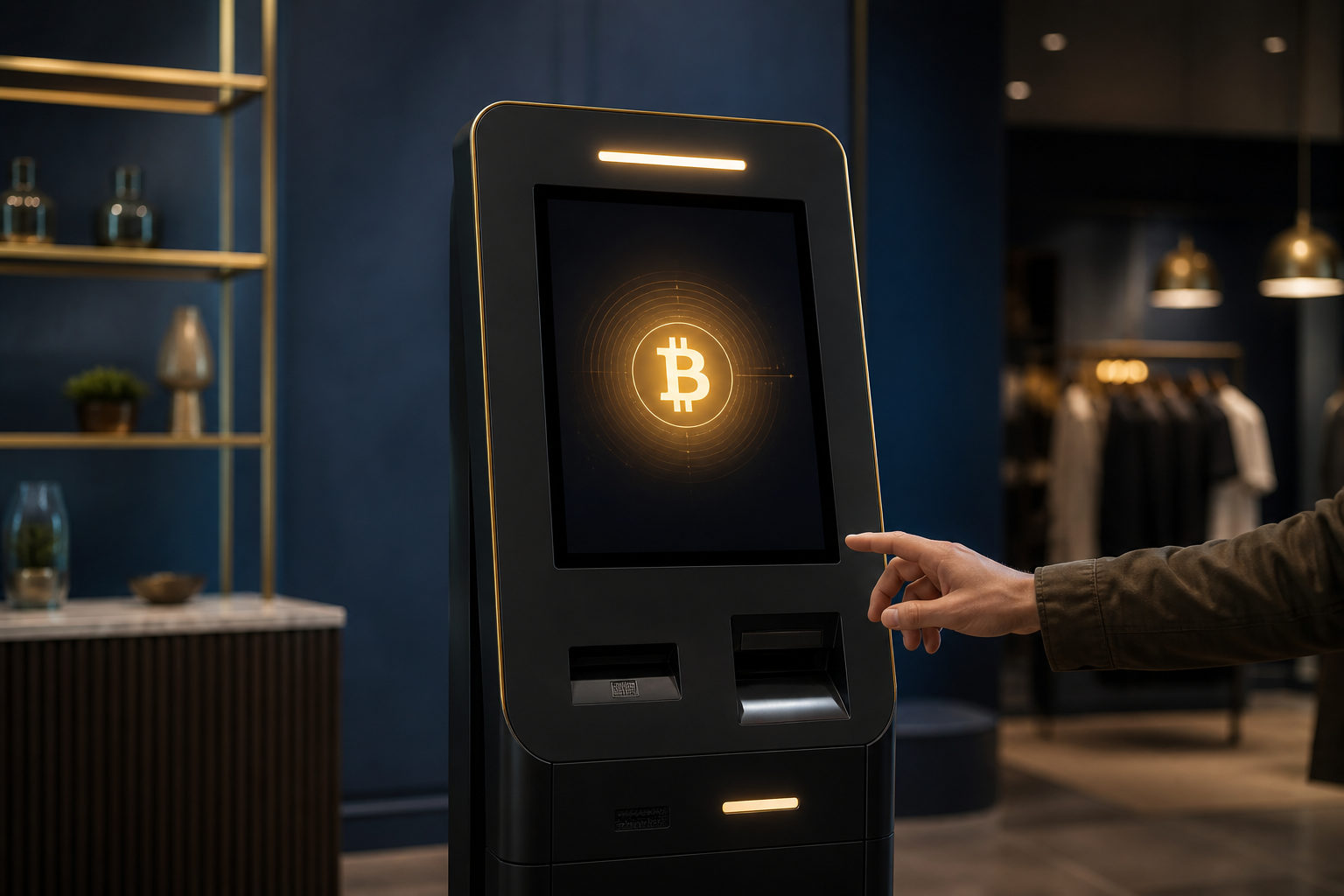
Bitcoin Depot usually refers to a service brand that gives people a way to buy or sell bitcoin, often through physical kiosks. It is not bitcoin itself, and it is not the Bitcoin network.
What Bitcoin Depot means in plain English
Beginners often read the name and assume it means a place where bitcoin is stored. That is the first mistake to clear up. In practice, Bitcoin Depot is better understood as a company or service channel that connects people to a bitcoin transaction flow.
If you see the name attached to a machine in a public location, the machine is usually there to guide the user through steps such as identity checks, payment, and providing a destination for the purchased bitcoin. The machine does not hold the Bitcoin network inside it. It is a user-facing access point.
This distinction matters because new users often mix up the asset, the wallet, and the company that helps with the purchase. Once those parts are separated, the whole topic becomes much easier to follow.
How Bitcoin Depot differs from bitcoin, wallets, and exchanges
To understand what Bitcoin Depot is, it helps to compare it with the things people confuse it with most often.
- Bitcoin: a digital asset that runs on a decentralized blockchain network. Its supply is capped at 2100 million? No. Bitcoin has a total supply limit of 2100 万枚? Wait.
Bitcoin itself was introduced in the 2008 white paper Bitcoin: A Peer-to-Peer Electronic Cash System, and the first block, known as the genesis block, appeared in January 2009. The creator used the name Satoshi Nakamoto, but the real identity remains unknown.
- A wallet: software or hardware that helps you manage private keys and addresses so you can receive or send bitcoin.
- An exchange or trading platform: an online service built for buying, selling, converting, or trading crypto assets through a web or app interface.
- Bitcoin Depot: a service provider or brand associated with access points for bitcoin transactions, often designed to make the buying process feel simpler for first-time users.
So if someone says they bought bitcoin through Bitcoin Depot, that does not mean the bitcoin is stored in the kiosk. In many cases, the bitcoin is sent to a wallet address provided by the user, or it is handled according to the provider's account flow. The machine is part of the process, not the asset itself.
Common misunderstandings beginners should avoid
It is not a bank deposit machine
The word depot can make people think of storage or custody. That can be misleading here. Bitcoin Depot is not the same thing as a bank branch, and it should not be treated as a place that automatically keeps your assets safe over the long term.
It is not an official Bitcoin seller
Bitcoin does not have a single official sales desk. The network is open, and different companies build services around it. A brand such as Bitcoin Depot may offer a route into the market, but that is very different from being the issuer of bitcoin.
A physical kiosk does not remove market risk
Some first-time buyers assume a machine in a store feels safer than an online interface. The purchase method may feel more familiar, but bitcoin still carries price risk. The asset can move sharply because of supply and demand, liquidity conditions, macro sentiment, regulatory expectations, and broader market behavior.
Simple access does not mean it is the best fit for everyone
A kiosk-based service can be easier for people who do not want to start with a trading app. That said, ease of use is only one factor. If you care about total cost, transfer details, custody, or how funds are delivered, you still need to compare options carefully.
What to check before using a service like Bitcoin Depot
You do not need deep technical knowledge before your first purchase, but you do need a few basics. Most beginner mistakes come from skipping the basics, not from the technology being impossible to understand.
- Make sure you are buying bitcoin and not something else: some services may present more than one asset. Check the asset name and ticker before you continue.
- Confirm the wallet address carefully: blockchain transfers are generally hard to reverse once sent. If the receiving address is wrong, the problem may not be fixable.
- Read the identity verification steps first: many crypto purchase channels require some level of identity check. Understand what is being asked before you start the transaction.
- Look at the full cost, not just the convenience: fees can appear in different forms, including service charges, pricing spread, and network-related costs.
- Know how you will store bitcoin after the purchase: buying is only the first step. Long-term safety depends on wallet setup, backups, and control of private keys.
That last point is easy to ignore, especially for people who just want to try a first small purchase. Still, it is one of the most important parts. A smooth buying experience means very little if the storage side is handled poorly.
Who Bitcoin Depot may suit, and who may want another route
Bitcoin Depot may appeal to people who want a more guided entry point into bitcoin. If you are uncomfortable with exchange interfaces, order books, or app-based trading screens, a simpler transaction flow can feel less intimidating.
On the other hand, users who already understand wallets and on-chain transfers may look at the same service in a different way. They may focus more on delivery method, fee structure, account rules, and custody trade-offs. For them, the question is not whether a service like this works. The real question is whether it fits their priorities.
There is also a broader point here. Bitcoin Depot is one piece of the bitcoin ecosystem, not the center of it. Bitcoin itself continues to function on its own schedule, with blocks arriving about every 10 minutes and the issuance schedule changing through halving events roughly every 4 years, or every 210,000 blocks. Those network rules belong to Bitcoin, not to any single company that offers access to it.
FAQ
Is Bitcoin Depot the same as a bitcoin wallet?
No. A wallet is mainly about controlling private keys and addresses, while Bitcoin Depot is better understood as a service channel for buying or selling bitcoin.
Where does the bitcoin go after a purchase through Bitcoin Depot?
It usually does not stay in the machine. In many cases, it is sent to the wallet address you provide, or it is processed through the provider's account system.
Is Bitcoin Depot just another name for a bitcoin ATM?
People often use the terms in a similar way when talking about kiosk-style bitcoin services. A safer explanation is that Bitcoin Depot is a brand or provider associated with that kind of access, rather than a generic name for every machine.
What should a first-time user double-check before paying?
Check the asset name, the receiving wallet details, the identity requirements, and the full cost. Rushing through any of those steps can turn a simple purchase into a difficult mistake.
If I only want to know the live bitcoin price, should I use a kiosk screen?
It is better to check a mainstream market data platform for a real-time market quote. A kiosk display may reflect its own pricing method and fees, so it should not be treated as the entire market.
A practical first step is to set up a wallet you control, back it up properly, and then compare purchase channels before making a small test transaction.
Disclaimer: This article is for informational and educational purposes only and is not investment, financial, or legal advice. Crypto assets are highly volatile and you could lose your entire investment. Do your own research and decide carefully.