
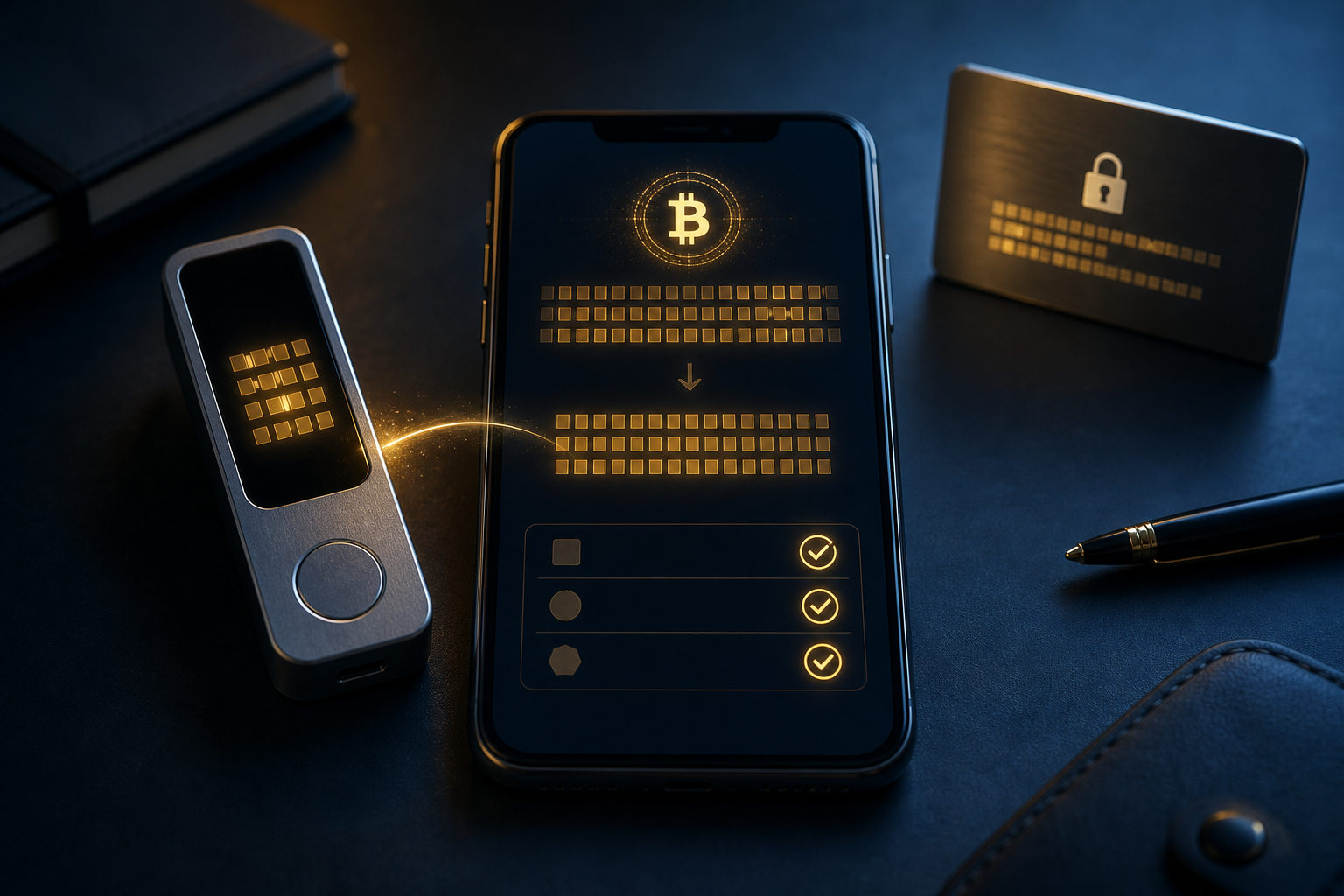
What does bitcoin address look like? In simple terms, it looks like a long string of letters and numbers used to receive BTC. It is not the same as a private key, and if you send funds to the wrong address or network, the transfer usually cannot be reversed.
What a Bitcoin address usually looks like
For most people, a Bitcoin address looks more like a system code than a payment account. It does not resemble a bank number, a username, or an email-style identifier. Instead, it appears as a long alphanumeric string generated by wallet software.
Not every Bitcoin address starts the same way. Some begin with “1”, some begin with “3”, and many modern ones begin with “bc1”. The exact length can vary, so there is no single fixed character count you need to memorize. What matters more is recognizing that different prefixes can still belong to valid Bitcoin receiving addresses.
There is another detail beginners often miss: Bitcoin addresses are designed to reduce visual confusion. That means some easily mistaken characters are typically avoided. So if a supposed address includes odd spacing, extra punctuation, or pasted commentary mixed into the string, stop and verify before doing anything else.
Address, wallet, and private key are not the same thing
This is where many costly mistakes begin. A wallet is the tool you use to manage Bitcoin, an address is where you receive it, and a private key is what controls access to the funds. Mixing up those roles can expose you to serious loss.
You can usually share your Bitcoin address with someone who needs to pay you. That is normal. You should never share your private key or seed phrase, because those are the credentials that can give another person control over your Bitcoin.
One wallet can also generate more than one receiving address. That is not a bug, and it does not mean your balance moved somewhere else. In many wallets, fresh addresses are part of normal account management and can help with privacy.
The key warning is simple: Bitcoin transfers are usually irreversible. There is no standard chargeback process, and support teams cannot simply pull a completed on-chain transfer back for you.
How to recognize common address formats
You do not need deep technical knowledge to spot the usual patterns. For practical use, the easiest first check is the prefix shown at the start of the address, followed by a confirmation that both sides are using the BTC network.
- Starts with “1”: an older format that many services still recognize.
- Starts with “3”: also common and still widely supported.
- Starts with “bc1”: very common in newer wallet setups, and easy to miscopy if you skip the prefix.
Still, visual recognition is only a first step. An address can look valid while the transfer setup is wrong in some other way. Before you send anything, make sure the recipient expects Bitcoin, your wallet or exchange clearly shows BTC, and the full receiving string matches exactly.
If the platform asks you to choose a network, confirm account details, or follow a deposit note, read each field carefully. Many transfer mistakes happen because users rush through the screen after seeing something that looks like a Bitcoin address.
A practical checklist before you send BTC
The safest approach is not guesswork. Use a repeatable checklist every time, especially when the amount matters.
- Confirm the asset: the recipient is asking for BTC, not another token.
- Confirm the network: the sending side and receiving side must match.
- Do not type the address by hand: copy and paste it, or use a QR code.
- Check the beginning and end: compare the first part and last part before sending.
- Check device safety: avoid unknown apps, risky browser extensions, and shared devices.
- Send a test transaction first: this is a smart move when the amount is meaningful.
- Confirm address support: some platforms have their own deposit requirements.
Clipboard replacement malware is a real operational risk. You copy one address, paste it, and a malicious program swaps in a different one without making the change obvious. If you do not compare the pasted result, you may send funds to an attacker.
That is why the final review matters. Right before you confirm, look again at the address, confirm the network, and make sure the source of the address is trustworthy.
Things that may look like a Bitcoin address but should not be used blindly
Not every long string on a crypto platform is a Bitcoin receiving address. Some are internal account references, deposit page identifiers, or other system labels that only make sense inside a specific service flow.
You may also see a platform generate a fresh receiving address after you select BTC on the deposit page. In that case, do not rely on an old screenshot or a string copied from a previous session. Use the address shown in the current interface for the current transfer.
If someone drops a string in a chat, comment section, or direct message and tells you to send BTC right away, pause first. Verify who they are, verify why you are paying, and then verify that the string is actually the correct Bitcoin receiving address.
FAQ
What does a Bitcoin wallet address usually look like
It usually appears as a long string of letters and numbers. Common versions begin with “1”, “3”, or “bc1”, depending on the address format your wallet uses.
Does one wallet have only one Bitcoin address
No. Many wallets can generate multiple receiving addresses for the same account. Seeing a new address does not automatically mean you are using a different wallet.
Is it safe to share a Bitcoin address with someone
In normal payment use, yes, because the address is meant to receive BTC. The sensitive items are the private key and seed phrase, which should never be shared.
Are addresses with different prefixes still Bitcoin addresses
They can be. Addresses starting with “1”, “3”, or “bc1” are all common, but you still need to confirm that both sides are using the BTC network before sending.
What happens if I enter the address incorrectly
Some invalid entries may be rejected by the wallet or exchange, but you should not rely on that. The safer habit is to avoid manual typing, paste carefully, and review the full address before you approve the transfer.
Before every transfer, keep three checks in front of you: confirm it is BTC, confirm the network matches, and confirm the address itself. If the amount is important, send a test first and treat the private key as strictly off-limits.