
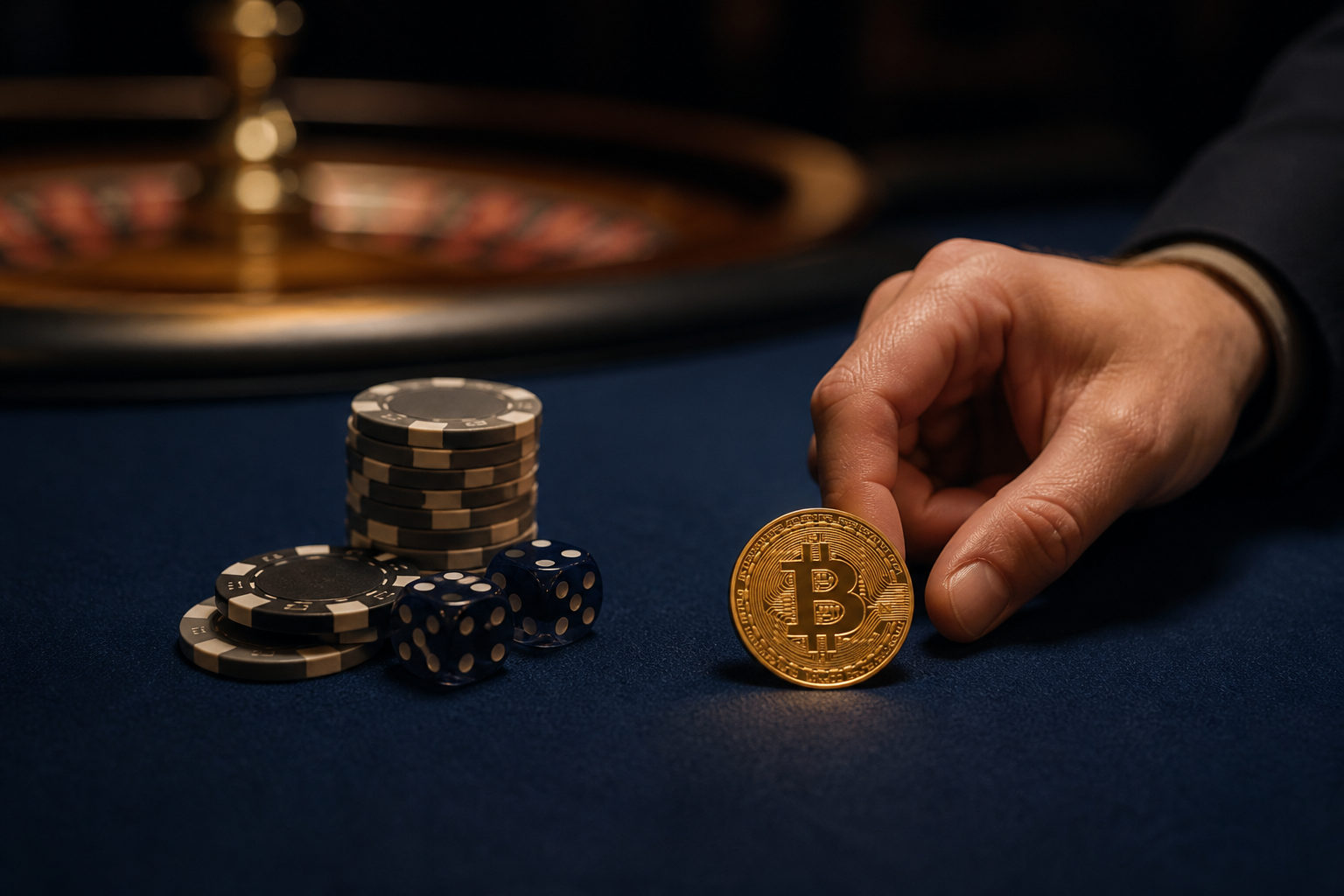
Bitcoin gambling means using bitcoin to place bets, fund an account, settle wagers, or withdraw winnings in a gambling activity. The key question is not the asset itself, but whether it is being used in a game of chance or a wager with winners and losers.
What counts as bitcoin gambling
Beginners often mix up paying with bitcoin and gambling with bitcoin. The easiest test is to look at the activity: if bitcoin is sent into a system with bets, odds, draws, house rules, or payout logic tied to an uncertain result, that usually falls under bitcoin gambling.
This can show up in online casinos, sports betting sites, dice games, raffle-style products, prediction pages, and some on-chain apps. A site may present itself as entertainment or a game, yet the real issue is whether money goes in and a variable return comes out based on chance or a stated outcome.
| Scenario | Usually bitcoin gambling? | Main reason |
|---|---|---|
| Buying a product with bitcoin | No | You receive a defined good or service, not a wager-based payout |
| Betting on a match with bitcoin | Yes | The result and odds decide the return |
| Depositing bitcoin into an online casino | Yes | The funds are used for gambling activity |
| Using bitcoin in a dice or raffle game | Usually yes | The outcome depends on chance |
| Holding bitcoin in a wallet | No | There is no bet |
How it differs from regular online gambling
In substance, bitcoin gambling is still gambling. What changes is the payment rail, the way funds move, and the user experience around deposits and withdrawals. That difference matters because many people assume a crypto payment method changes the legal or practical nature of the activity. It does not.
Bitcoin transfers can feel faster and more private than traditional payments, which is why many platforms market them aggressively. That feeling can be misleading. Blockchain transfers are not the same as total anonymity, and a user may still face account checks, withdrawal reviews, spending limits, or platform-side controls that are hard to challenge later.
| Point of comparison | Bitcoin gambling | Regular online gambling |
|---|---|---|
| Payment method | Bitcoin or other crypto assets | Cards, bank transfers, e-wallets |
| Transfer feature | On-chain transfers are usually irreversible | Traditional payment channels may have dispute paths |
| User perception | Often marketed as fast and private | Usually more familiar to mainstream users |
| Extra exposure | Platform risk plus bitcoin price swings and wallet errors | Platform risk plus payment restrictions |
| Recovery after a problem | Often harder once funds are sent | Sometimes easier to dispute through payment providers |
Common misunderstandings
Does using bitcoin make it something other than gambling?
No. The payment tool does not change the underlying activity. If you are staking value on an uncertain outcome for a possible payout, the fact that the stake is in bitcoin does not turn it into ordinary investing or normal shopping.
If the blockchain is public, is the game automatically fair?
Not automatically. Public records may show some transfers or parts of the rules, but fairness depends on more than visible transactions. A platform can still shape the user interface, control access, delay withdrawals, or rely on terms that are hard for a beginner to notice until there is a problem.
If a site calls it a game or entertainment, does that avoid the gambling label?
Not necessarily. Some products soften the language and avoid words like casino or betting. A different label does not change the economic design. If users put in bitcoin for a chance at a larger return based on luck, probability, or a win-loss event, the gambling element is still there.
| Claim you may see | Why it can mislead | Better question to ask |
|---|---|---|
| Entertainment platform | It sounds like a harmless game | Is there a stake and a payout tied to chance? |
| Instant withdrawals | It suggests funds are always available | What checks, limits, or conditions apply? |
| Anonymous play | It implies no trail is left behind | What data exists on-chain or on the platform? |
| Fair algorithm | It sounds like outcomes are fully trustworthy | Which parts are actually verifiable by users? |
Main risks beginners should understand
One risk is legal and compliance exposure. Gambling rules differ across jurisdictions, and crypto rules add another layer. A user may think they are trying a crypto product, while regulators may view the same activity through gambling, payments, tax, or anti-money-laundering rules.
Another risk sits with the platform itself. Many services make deposits easy and withdrawals hard. A polished interface does not tell you how disputes are handled, whether terms can change without much notice, or how much control the operator has over account access.
There is also a two-layer money risk. If you gamble with bitcoin, you are exposed to the result of the wager and to changes in bitcoin’s market value while you hold or move funds. That can make gains and losses harder to judge, especially for newcomers who focus only on whether the bet won or lost.
Security risk is separate and often missed. Users may connect wallets, sign approvals, copy addresses, or install software without slowing down to review what the site is asking for. Any page that asks for a seed phrase or private key should be treated as dangerous. Those details should never be handed to a platform or support agent.
| Risk type | What it can look like | Why beginners miss it |
|---|---|---|
| Legal risk | Local gambling or payment rules may apply | Crypto branding can make the activity look outside normal rules |
| Platform risk | Withdrawal blocks, account checks, changing terms | Marketing pages look cleaner than the actual user agreement |
| Asset risk | Bet losses combine with bitcoin price moves | Users focus on the game result and ignore the asset exposure |
| Security risk | Fake sites, bad approvals, address mistakes | Wallet interactions add technical steps that feel unfamiliar |
FAQ
Is buying bitcoin the same as bitcoin gambling?
No. Buying bitcoin is an asset purchase or holding decision. Bitcoin gambling starts when that bitcoin is used in a betting activity with uncertain outcomes and payout rules.
Does bitcoin make online gambling safer because transfers are fast?
Speed does not equal safety. Faster transfers can also mean less time to catch a wrong address, a bad platform, or an approval you did not fully understand.
Are on-chain gambling apps more transparent than regular sites?
They can be more transparent in some parts, such as visible transfers or published contract logic. That still does not answer every trust question, because the interface, access controls, and operating choices may sit outside what a user can easily verify.
If a platform asks me to connect a wallet, is that always a red flag?
Not always, but it does require extra care. Check what permissions are being requested, whether you are only signing a message or approving asset movement, and whether the site asks for information that should never be shared.
What is the fastest way to tell whether a service is bitcoin gambling?
Look for three things: a stake, an uncertain outcome, and a payout structure. If bitcoin is being deposited or committed to that process, you are likely looking at bitcoin gambling rather than ordinary use of bitcoin.
If you only need a practical rule of thumb, use this: first identify whether there is a wager, then check how bitcoin enters and leaves the system, and finally see whether the platform controls your withdrawal or wallet permissions.
Responsible Gambling Notice: This article is for informational and educational purposes only and is not gambling, investment, or legal advice. Gambling carries a risk of losing your funds and is not legal in every jurisdiction. Check your local laws, be of legal age, and gamble responsibly; seek professional help if gambling becomes a problem.
Disclaimer: This article is for informational and educational purposes only and is not investment, financial, or legal advice. Crypto assets are highly volatile and you could lose your entire investment. Do your own research and decide carefully.