
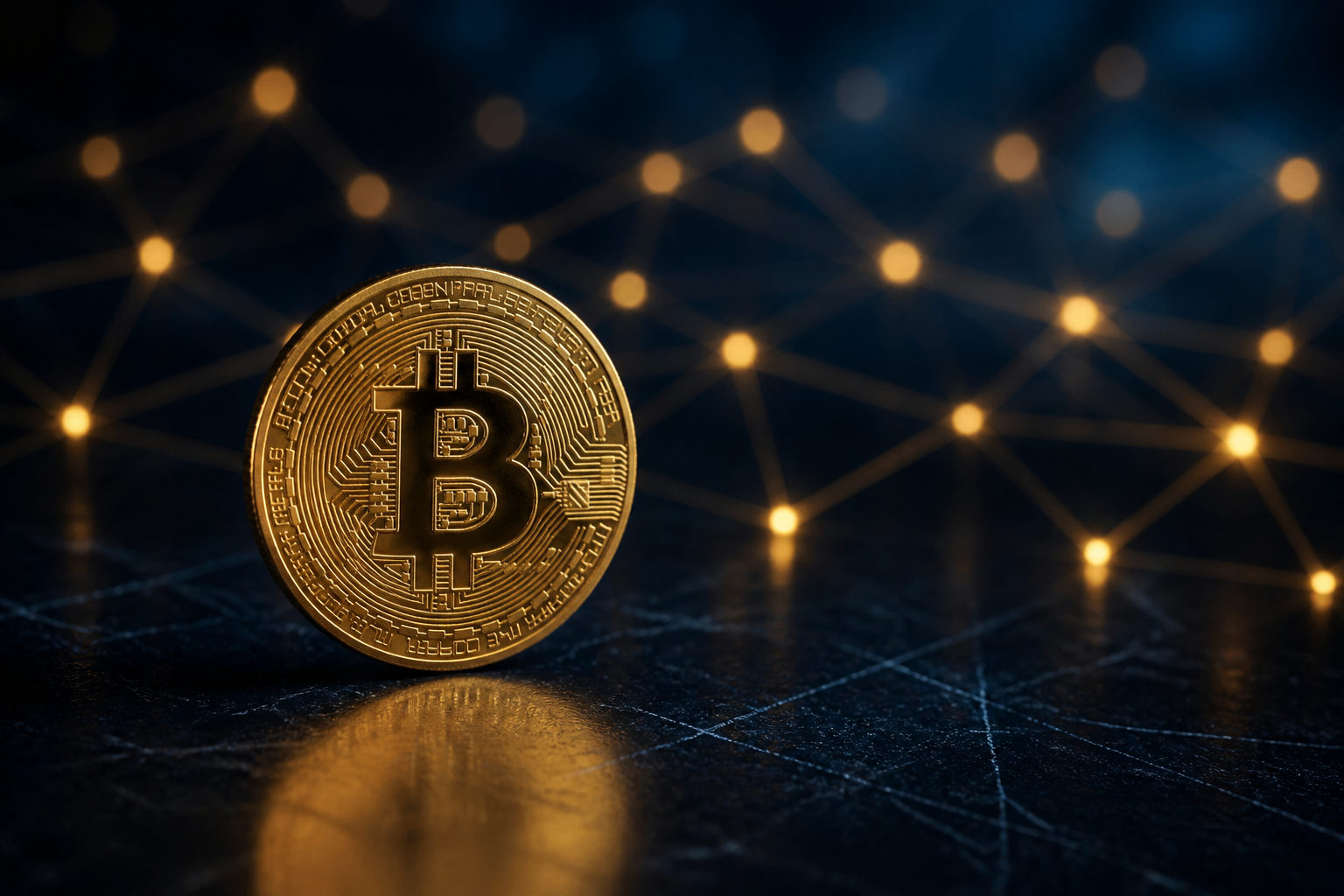
Bitcoin is a digital currency that runs on a blockchain network. It can be sent, received, and divided into very small units, yet many people also treat it as a scarce digital asset rather than a day-to-day payment tool.
Why people ask whether Bitcoin is a currency
The keyword “a bitcoin moeda” points to a simple question with a less simple answer: is Bitcoin really money? In practice, Bitcoin does have monetary features. It can move value between users, it can be used for payment in some situations, and it can serve as a unit people hold and compare against other assets.
Still, Bitcoin does not work like government-issued money. A fiat currency is tied to a legal and banking framework, while Bitcoin runs through an open network that follows protocol rules. That difference shapes how people use it, how they price it, and how much stability they expect from it.
| Feature | Bitcoin | Fiat money |
|---|---|---|
| Issuer | No single central issuer | Issued within a sovereign monetary system |
| Ledger | Public blockchain record | Bank and payment system records |
| Supply rule | Fixed cap of 21,000,000 BTC | Usually no hard supply cap |
| Transfer model | Users can send on-chain transactions | Transfers often go through financial intermediaries |
| Price behavior | Can be highly volatile | Usually more stable for daily spending |
What makes Bitcoin money-like
A thing does not need to look like cash to have money-like properties. Bitcoin is divisible, portable, verifiable, and transferable across a global network. Its smallest unit is 1 satoshi, equal to 0.00000001 BTC, so it can represent tiny fractions of value.
Its supply rules are also public and predictable. Satoshi Nakamoto released the white paper, Bitcoin: A Peer-to-Peer Electronic Cash System, on 2008-10-31. The genesis block followed on 2009-01-03. From there, the system began issuing new bitcoin through block rewards paid to miners who add valid blocks to the chain.
Bitcoin targets a new block about every 10 minutes. Every 210,000 blocks, which works out to roughly 4 years, the block reward is cut in half. The halving dates so far are 2012-11-28, 2016-07-09, 2020-05-11, and 2024-04-19. After the 2024 halving, the current block reward is 3.125 BTC, and that stays in place until the next halving around 2028. At that issuance rate, the network adds about 450 BTC per day in total. The hard cap is 21,000,000 BTC, with issuance expected to continue until around 2140.
Those rules matter because they make Bitcoin different from currencies whose supply can change under policy decisions. Even people who do not use Bitcoin for purchases often see monetary value in a system with a known issuance schedule.
How Bitcoin is used in the real world
Bitcoin can be used as money, but that is only part of the picture. Some holders use it to move value across platforms or borders. Some keep it as a long-term digital asset. Others see it as one piece of a broader portfolio. Payment use exists, though acceptance is uneven and the user experience depends on timing, fees, and the recipient’s setup.
| Use case | What it means | Main limitation |
|---|---|---|
| Holding | Keeping BTC as a digital asset | Sharp price swings can be hard to tolerate |
| Transfer | Sending value on-chain to another address | Transactions are hard to reverse after broadcast |
| Payment | Using BTC with merchants or individuals who accept it | Acceptance is not universal |
| Allocation | Adding BTC to a broader asset mix | Position sizing requires risk control |
A useful historical example is Bitcoin Pizza Day. On 2010-05-22, Laszlo Hanyecz used 10,000 BTC to buy two pizzas. The story is famous because it showed that bitcoin could function as a medium of exchange for a real-world good. Today, that payment angle remains relevant, but the market also treats Bitcoin as a scarce digital asset with a monetary role.
How the Bitcoin system actually works
People often imagine bitcoin as a file stored inside an app. That is not how the system works. What changes hands is control over value recorded on the blockchain. If you control the private key linked to a given address, you can authorize the movement of the BTC assigned to that address.
Several parts work together to make this possible. A wallet helps generate addresses and manage keys. Nodes validate and store blockchain data. Miners gather valid transactions into blocks and compete to add those blocks to the chain. Because the rules are shared across the network, participants can verify the ledger without needing a single operator to approve every transfer.
| Term | Meaning | Common misunderstanding |
|---|---|---|
| Wallet | Tool for managing addresses and keys | Thinking the wallet literally stores coins inside the device |
| Private key | Credential that gives spending control | Assuming it can always be reset like a web account password |
| Address | Public destination for receiving BTC | Treating it like a username on a platform |
| Blockchain | Public, verifiable transaction record | Assuming it is just one company’s database |
This is why custody matters so much. If you use self-custody, you control the keys and take on the backup burden yourself. If you use a custodial service, you gain convenience but depend on that service’s security, withdrawal rules, and account controls. Neither path is automatically right for everyone.
What Bitcoin is not
Bitcoin is not the same thing as a bank balance, even though both appear on a screen as numbers. A bank balance is part of an account system managed by institutions. Bitcoin is an asset tracked on a public ledger and controlled through cryptographic keys.
It is also not a stable currency in the everyday sense. People can and do spend it, but its market price can move sharply. That makes it less comfortable than fiat for routine budgeting, even when its transfer properties are useful.
It is not an anonymous magic payment rail either. Bitcoin transactions are recorded on a public chain, and privacy depends on user behavior, wallet design, and how addresses are managed. Treating it as automatically private leads to bad assumptions.
FAQ
What does one bitcoin actually represent?
One bitcoin represents a unit of value recognized by the Bitcoin network. If you own BTC, what you really control is the ability to authorize spending from addresses tied to your keys.
Is Bitcoin the same as digital money in a banking app?
No. Money in a banking app is still fiat money inside a regulated account system. Bitcoin exists on its own network, with supply and transaction validation handled by protocol rules and distributed participants.
Can Bitcoin be used to buy things?
Yes, but only where the other side accepts it and the transaction method fits the situation. It was designed for peer-to-peer electronic cash, though today many users also hold it as an asset rather than spending it regularly.
Why do some people call Bitcoin a store of value?
A major reason is its fixed supply cap of 21,000,000 BTC and its scheduled halvings. Because new issuance slows over time, many holders focus on scarcity and long-term holding rather than daily payments.
Can people still mine Bitcoin today?
Yes. New blocks still produce rewards, and the current reward is 3.125 BTC per block after the 2024 halving. Whether mining makes sense for any individual depends on hardware, electricity costs, technical setup, and competition.
If your goal is to understand whether Bitcoin counts as a currency, start with three ideas: it can transfer value, it follows fixed issuance rules, and it trades with far more volatility than everyday money. That framework makes it easier to judge Bitcoin as both a monetary network and a digital asset.
Disclaimer: This article is for informational and educational purposes only and is not investment, financial, or legal advice. Crypto assets are highly volatile and you could lose your entire investment. Do your own research and decide carefully.