
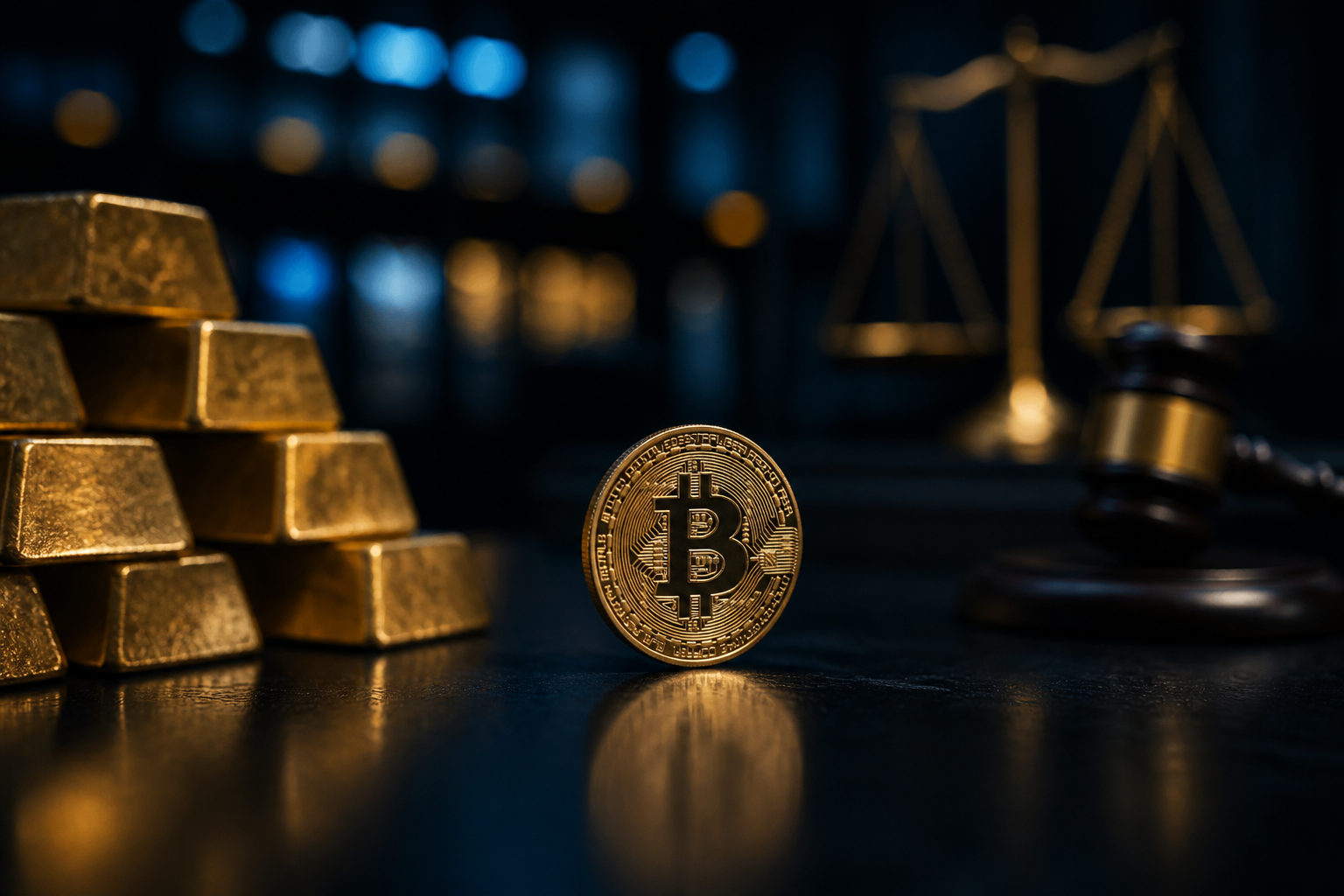
Bitcoin is commonly understood as a tradable digital commodity, but that label does not explain everything. In practice, it may also be discussed as property, an asset, or a payment tool depending on the situation.
What “commodity” means in the Bitcoin context
Many beginners hear the word commodity and think of oil, wheat, or metals. In market and legal discussion, the term is often broader. It can refer to something that can be bought, sold, priced, held, and transferred without giving the holder an ownership stake in a company.
That is why people often place Bitcoin in the commodity bucket. You can trade it on open markets, its price is set by buyers and sellers, and holding it does not give you a claim on corporate profits. When someone buys Bitcoin, they are usually gaining exposure to a scarce digital asset rather than buying part of a business.
How Bitcoin differs from stocks, money, and collectibles
Confusion starts when people expect one label to cover every feature. Bitcoin shares some traits with money, some with commodities, and some with long-term stores of value. It still helps to separate the categories.
| Item | What the holder has | What usually drives value | Common mistake |
|---|---|---|---|
| Bitcoin | Control over a transferable digital asset on a network | Supply and demand, liquidity, policy expectations, market sentiment | Treating it as if it were identical to state-issued money |
| Stock | Equity or related rights in a company | Business performance, valuation, industry outlook | Assuming buying Bitcoin is like buying shares |
| Fiat currency | Legal tender status within a national monetary system | Monetary policy, payment usage, economic conditions | Assuming Bitcoin automatically serves every currency function |
| Collectible | Ownership or possession of a specific item | Scarcity, buyer preference, market interest | Ignoring Bitcoin's divisibility and transfer function |
Stocks are the easiest contrast. A stock is tied to a company. Bitcoin is not. There is no issuer promising revenue, no board making capital allocation decisions for holders, and no shareholder rights attached to ownership.
Bitcoin also differs from fiat currency. It is not issued by a central bank and does not derive its role from legal tender laws. At the same time, calling it a collectible is too narrow. Bitcoin was introduced through the 2008 white paper titled Bitcoin: A Peer-to-Peer Electronic Cash System, and the network began with the genesis block in January 2009. Its design centers on moving value across a peer-to-peer system.
Its structure supports that use. Bitcoin can be divided into smaller units, with 1 satoshi equal to one hundred millionth of 1 BTC. That divisibility matters because it makes the asset usable across different transaction sizes, which is not how people think about a painting, a rare watch, or another typical collectible.
Why many people describe Bitcoin as a commodity
Scarcity is one reason. Bitcoin has a hard cap of 21 million coins, and new issuance follows protocol rules rather than the decision of a single company or government office. That makes commodity language feel natural to many market participants.
Its issuance schedule also reinforces the point. New blocks are produced about every 10 minutes, and the block subsidy halves about every 4 years, or every 210,000 blocks. The halving years are 2012, 2016, 2020, and 2024. People who compare Bitcoin to scarce commodities often focus on that predictable supply path.
Another reason is the way Bitcoin is analyzed. With stocks, investors study earnings, margins, management execution, and competitive position. With Bitcoin, they tend to focus on supply conditions, market liquidity, adoption, custody choices, and investor demand. That does not mean the commodity label is perfect. It means the stock framework is often the wrong starting point.
There is also a market structure angle. Bitcoin trades continuously, has spot markets, and is used as an underlying asset in other financial products. Once an item is widely quoted and traded, people naturally discuss it in commodity or asset terms.
Where the commodity label helps, and where it falls short
For a beginner, the label is useful because it prevents category errors. If you treat Bitcoin like a stock, you may waste time looking for a business model that does not exist. If you treat it like cash in a bank account, you may overlook price volatility and the responsibility that can come with self-custody.
| Question | What the commodity view explains well | What it does not settle on its own |
|---|---|---|
| Pricing | Bitcoin trades in markets and its price is not fixed by an authority | Why the price can swing sharply in short periods |
| Ownership | It can be held like a scarce digital asset | How custody choices affect security and access |
| Regulation | Why some regulators and market participants discuss it in commodity terms | How each jurisdiction applies its own rules |
| Use case | Why it can be bought, sold, and transferred | Whether a merchant or platform will accept it for payment |
| Valuation | Why supply matters in market discussion | What a fair price should be at any given moment |
That last point matters. Calling Bitcoin a commodity does not give it a built-in floor price. The label helps explain scarcity and tradability, but it does not tell you what Bitcoin is worth today. Price still depends on demand, liquidity, expectations, risk appetite, and access to trading venues. If you need a live quote, check a major market data platform rather than trying to infer a price from classification alone.
FAQ
Does calling Bitcoin a commodity mean it is not money?
Not exactly. One asset can be described in different ways depending on the question being asked. Bitcoin can be traded like a commodity and also used by some people to transfer value, while still not being the same thing as fiat currency.
Is Bitcoin basically the same as gold?
The comparison is useful at a high level because both are often discussed in terms of scarcity. Still, they differ in custody, transfer method, divisibility, and network use, so the analogy should stay limited.
If Bitcoin is not a stock, why do people invest in it?
People invest in many assets that are not company shares. In Bitcoin's case, the investment thesis usually relates to scarcity, demand, market structure, and adoption rather than business earnings.
Can Bitcoin be both a commodity and an asset?
Yes. Commodity highlights tradability and market pricing. Asset highlights the fact that it can be owned and has economic value. Those descriptions can coexist.
What is the most practical takeaway for a beginner?
Start by understanding what you actually hold. If you see Bitcoin as a tradable digital commodity, you are less likely to confuse it with a bank deposit, a company share, or a loyalty point system.
If you want the shortest useful answer, Bitcoin is commonly treated as a digital commodity for market purposes. Before you buy, sell, or store it, the more practical next step is to check how your platform, wallet setup, and local rules handle it in real use.
Disclaimer: This article is for informational and educational purposes only and is not investment, financial, or legal advice. Crypto assets are highly volatile and you could lose your entire investment. Do your own research and decide carefully.