
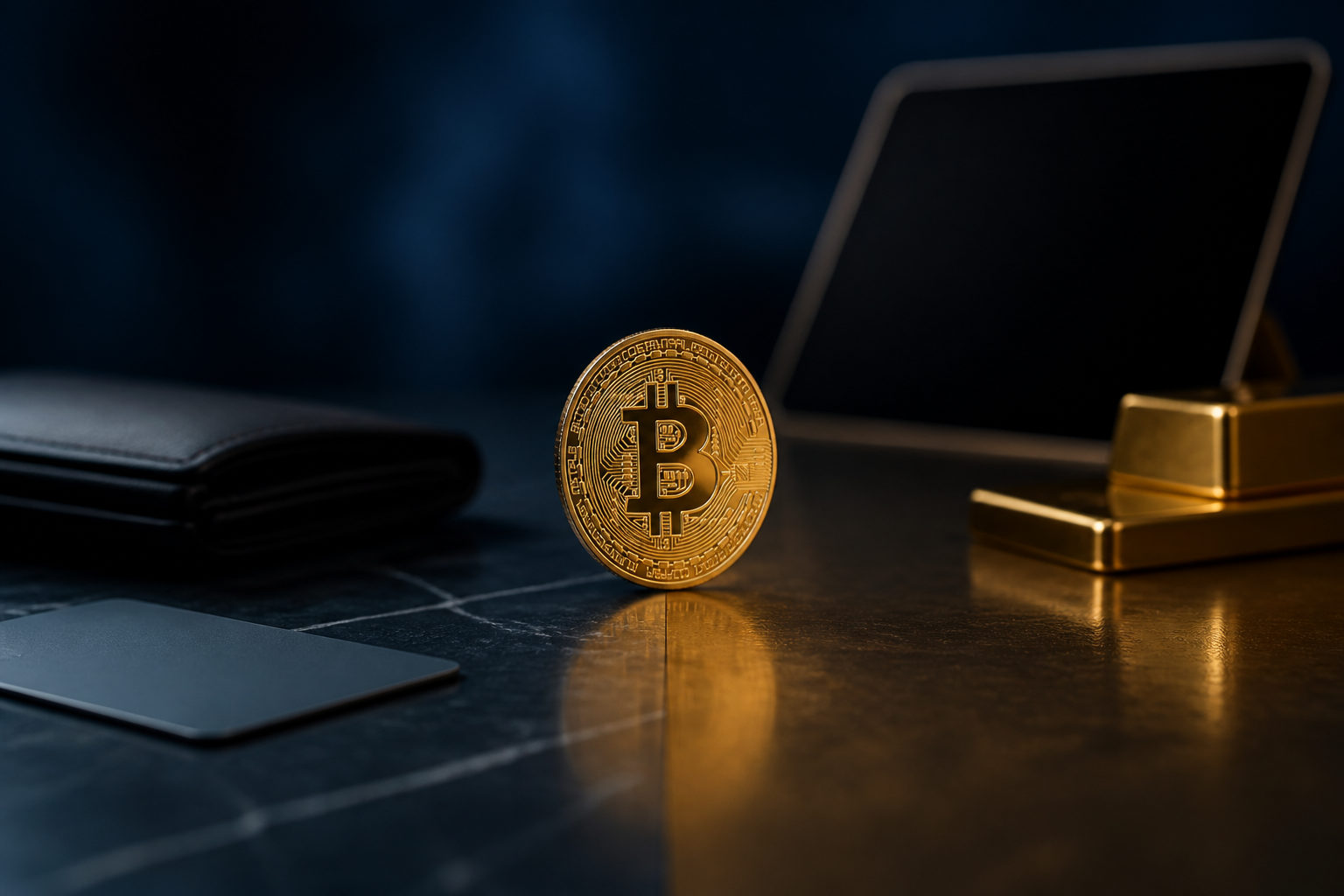
Is bitcoin money? The clearest answer is that it can function as money in some settings, but for most people it behaves more like a volatile digital asset than everyday cash.
Why the answer depends on what you mean by money
People use the word money in different ways. Some mean legal tender issued by a government. Others mean anything that can be used to pay, store value, and measure prices. Bitcoin does not fit each definition equally well, which is why the debate never really goes away.
If you judge it by economic function, bitcoin checks part of the box. It can be transferred between users, held over time, and divided into very small units. If you judge it by legal status, the picture is different, because bitcoin is generally not the same thing as a national currency used for taxes, payroll, and ordinary settlement.
What makes bitcoin look like money
Bitcoin was introduced in the 2008 white paper Bitcoin: A Peer-to-Peer Electronic Cash System, and the genesis block arrived in January 2009. From the start, the idea was to let people send value across a network without relying on one central issuer or bank to approve each transfer.
That design gives bitcoin some money-like traits. It can be sent, received, and stored. It is divisible down to 1 satoshi, which is one hundred millionth of 1 BTC. The system also has a fixed supply cap of 21 million coins, a feature that many holders see as part of its appeal as a store of value.
Bitcoin also runs on a schedule rather than on discretionary issuance. A new block is produced about every 10 minutes, and the block subsidy halves about every 4 years, or every 210,000 blocks. The halving years so far are 2012, 2016, 2020, and 2024. Those rules make bitcoin feel very different from state-issued currency.
Why many people still say bitcoin is not really money
Being usable for payment is not the same as being widely used as money. A currency usually works as a medium of exchange, a unit of account, and a store of value. Bitcoin does reasonably well in the first and attracts strong opinions in the third, but it is weaker as a unit of account.
Most goods and services are still priced in dollars first, then converted if someone wants to pay in BTC. That matters. When people think, budget, and keep records in another unit, bitcoin becomes something they can pay with rather than the money they naturally live in.
Price volatility is another reason. A person may hesitate to spend bitcoin on routine purchases if its purchasing power can shift sharply. Merchants may accept it, yet still prefer to track revenue in dollars. In practice, that pushes bitcoin toward the role of an asset that can also settle payments, not a full replacement for ordinary money.
Three common misunderstandings
- If it has a market price, it must be money: plenty of assets have prices without becoming everyday currency.
- If it can be transferred, it is the same as cash: transferability helps, but cash and bitcoin operate under very different systems.
- If it is scarce, it will automatically be stable: scarcity and price stability are not the same thing.
A practical way to judge whether bitcoin is money
Instead of arguing in absolutes, it helps to test bitcoin against three questions. This gives a more useful answer than a simple yes or no.
- Can it be used to pay? Yes, where the other side accepts it.
- Is it the normal unit used to quote prices? Usually no, at least not in most daily transactions.
- Can it store value over time? Many people think so, but that comes with sharp swings in market value.
Under that framework, bitcoin has monetary features, but it does not behave like standard everyday money in most people's lives. That is why both sides of the argument can point to something real. Bitcoin is not just a speculative object, yet it is also not simply the digital version of cash.
How ordinary users should think about it
If your question is practical rather than academic, start with use case. If you want censorship-resistant transfer, self-custody, or long-term holding, bitcoin may be relevant for reasons that have little to do with buying groceries. If you want a stable spending tool, bitcoin may feel less convenient because acceptance, fees, confirmation times, and price moves all shape the experience.
It also helps to remember that bitcoin is not a company balance, a bank deposit, or a rewards point system. Control is tied to private keys. If a user mishandles wallet backups or key storage, the risk is personal and direct. That changes how people treat it: many end up viewing bitcoin as a serious bearer asset first, and money second.
FAQ
Is bitcoin real money or just a digital asset?
It can be both, depending on the context. Bitcoin can settle payments, but most users and businesses still treat it more as a digital asset than as their default spending money.
Are bitcoins used like normal currency in daily life?
Sometimes, but not on the same scale as ordinary fiat currency. Daily pricing, wages, and routine bills are still usually handled in dollars rather than BTC.
Can bitcoin be spent in small amounts?
Yes. Bitcoin is highly divisible, and 1 satoshi equals one hundred millionth of 1 BTC. That makes small transfers possible at the protocol level, even if real-world usability varies by situation.
Why do people compare bitcoin to money in the first place?
Because it was designed to move value between users without a central issuer. That puts it closer to money than many other digital assets, even though it does not match the legal role of fiat currency.
If bitcoin is not legal tender in most places, why do people hold it?
Some value its fixed supply rules, portability, and self-custody features. Others hold it as a high-risk asset with monetary traits rather than as everyday spending cash.
Before you use bitcoin, separate two questions
Ask whether you mean “can bitcoin be used as payment” or whether you mean “is bitcoin the same as legal tender.” Those are different questions, and mixing them causes most of the confusion. After that, check your wallet backup plan, key storage habits, and tolerance for volatility before deciding whether bitcoin belongs in your payment routine or only in your watchlist.
Disclaimer: This article is for informational and educational purposes only and is not investment, financial, or legal advice. Crypto assets are highly volatile and you could lose your entire investment. Do your own research and decide carefully.