
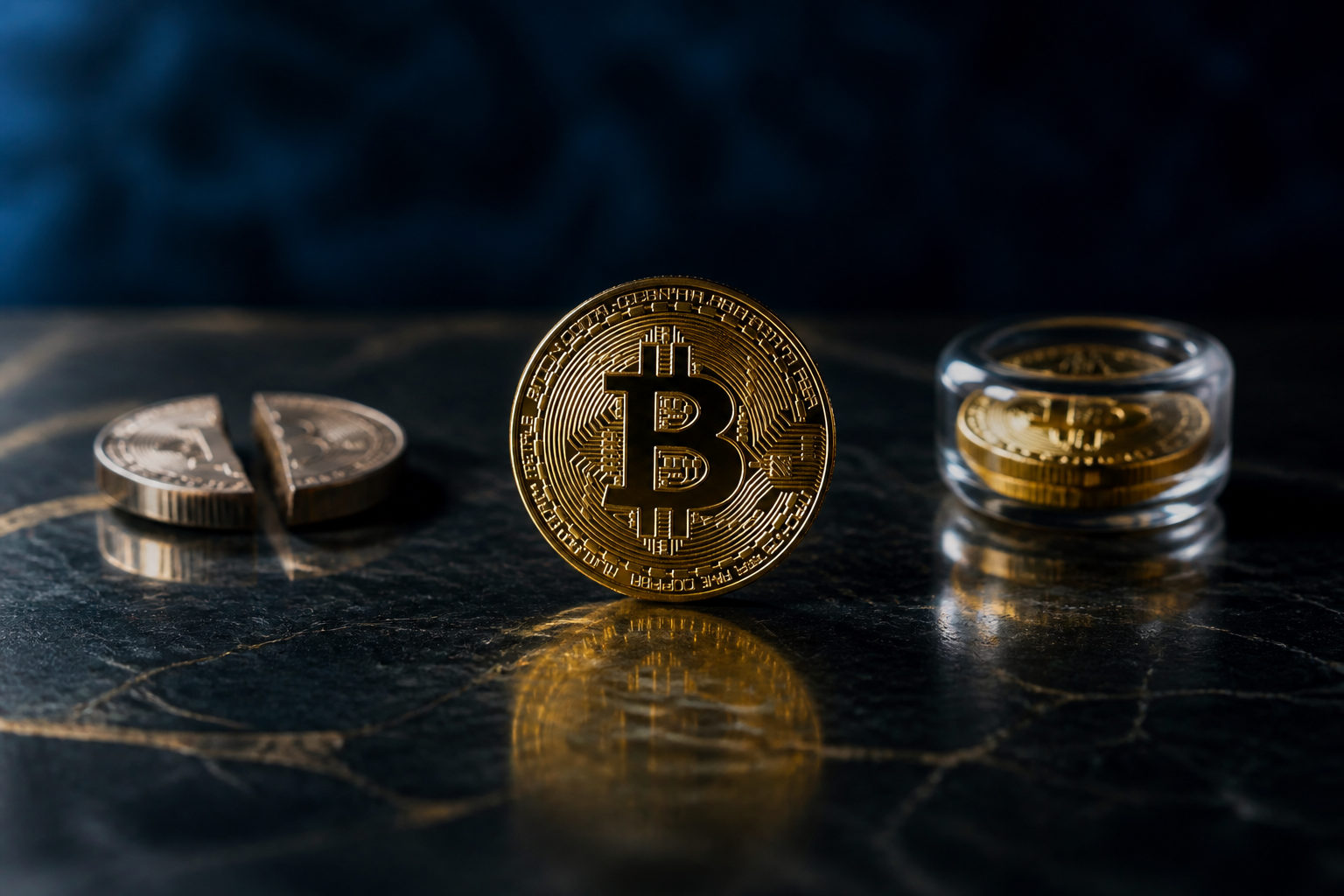
If you ask how many kinds of bitcoins there are, the clearest answer is this: there is only one native Bitcoin, BTC. The confusion starts when people use “Bitcoin” as a loose label for forked coins, wrapped versions on other chains, and tokens with similar names.
Why the question sounds simple but is not
The word Bitcoin gets used in more than one way. In the strict sense, it refers to the network introduced by Satoshi Nakamoto and the native asset recorded on that network, BTC. That system traces back to the 2008 white paper, Bitcoin: A Peer-to-Peer Electronic Cash System, and the chain began with the genesis block in 2009.
In everyday conversation, though, people often stretch the word. They may use it for anything connected to the Bitcoin brand, anything derived from Bitcoin code, or anything designed to track BTC in another system. Once that happens, one question turns into several different questions: Are you counting native assets, related assets, or branded lookalikes?
That is why two people can answer the same question and both sound confident while talking about different things.
The main categories people mix together
For a reader trying to make sense of the topic, the easiest way is to sort the “Bitcoin” label into practical buckets. Some are directly tied to the Bitcoin chain. Others only borrow the name or represent BTC in an indirect way.
| Category | What it is | Native to the Bitcoin blockchain | What to check first |
|---|---|---|---|
| BTC | The original asset recorded on the Bitcoin network | Yes | Whether the wallet or exchange is using the Bitcoin chain itself |
| Forked coins | Separate assets created from a split in code or chain history | No | They run under their own rules and markets |
| Wrapped bitcoin | Tokens on other blockchains that represent BTC | No | Whether there is custody, redemption, or a bridge behind it |
| Platform balances | Bitcoin-denominated balances shown inside an exchange or app | Not always | Whether you can actually withdraw to the Bitcoin network |
| Lookalike tokens | Assets with Bitcoin or BTC in the name | No | Name similarity does not prove asset identity |
For most users, this is the core distinction that matters: Are you dealing with BTC itself, or with something related to BTC? That one check clears up most of the confusion behind the phrase “different kinds of bitcoin.”
Where these other “bitcoin” versions come from
One source is chain splits. When groups disagree on technical direction, transaction handling, or design choices, a separate network can emerge. The result is a forked coin. It may share part of Bitcoin’s history, but after the split it follows its own rules and stands as a different asset.
Another source is cross-chain use. The Bitcoin network has its own design, yet some users want BTC value to move into other blockchain ecosystems for trading, lending, or other applications. That leads to wrapped bitcoin. A simple way to picture it is this: the original BTC is held somewhere, and a token representing it circulates elsewhere.
A third source is naming. Bitcoin is the best-known cryptocurrency, so some projects lean on that familiarity. They use similar names, abbreviations, or branding to look connected. That can create the impression that these assets are just alternative forms of Bitcoin, even when the relationship is weak.
So when someone says there are “many kinds of bitcoin,” they may be bundling together very different things with very different risk profiles.
How to tell what you are actually looking at
You do not need a deep technical background to sort this out. A short checklist is often enough.
| Step | What to examine | Why it matters |
|---|---|---|
| Check the ticker | Is it BTC or a different symbol? | A different ticker usually means a different asset |
| Check the network | What chain is used for deposit and withdrawal? | The same label on a different chain can mean a different structure |
| Read the asset description | Does it say wrapped, pegged, mapped, or forked? | This tells you whether it is original or representative |
| Review redemption mechanics | Can it be redeemed into BTC on the Bitcoin chain? | This shows whether you hold the asset itself or a claim on it |
| Inspect custody and settlement | Does it depend on a custodian, bridge, or internal ledger? | More layers usually mean more points of failure |
A simple analogy helps. BTC is like the original document. A forked coin is like a copied file that someone edited into a separate version. Wrapped bitcoin is closer to a receipt issued after the original document is stored somewhere else. All three may point back to the same source idea, but they are not identical objects.
This matters most when you buy, transfer, or store assets. If you only read the name and ignore the network or structure, you can end up holding something very different from what you intended.
Does splitting BTC into smaller units create different kinds?
No. Divisibility does not create new categories of Bitcoin. One BTC can be divided into smaller units, and the smallest unit is one satoshi, equal to one hundred millionth of a BTC. That tells you the precision of the asset, not the existence of a separate asset class.
The easiest comparison is cash. Breaking a larger amount into smaller denominations does not create a new currency. In the same way, seeing BTC displayed in tiny fractions, or hearing people talk in satoshis, does not mean there are multiple native forms of Bitcoin.
This is one of the most common beginner mistakes: mixing up unit, network, and asset type. They are different layers, and keeping them separate makes the topic much easier to understand.
FAQ
Do all coins with Bitcoin in the name count as Bitcoin?
No. A name can suggest a connection, but it does not prove that the asset is BTC. You need to check the ticker, the chain it lives on, and how it is issued.
Are forked coins basically the same as BTC?
No. Forked coins become separate assets with their own rules and trading markets. They may share earlier history with Bitcoin, but they do not remain the same asset afterward.
Is wrapped bitcoin real Bitcoin?
It is usually better to think of it as a token that represents BTC rather than native BTC itself. The important issue is whether there is custody, redemption, or bridge risk behind that representation.
Is a satoshi a different kind of Bitcoin?
No. A satoshi is just the smallest unit of BTC. It changes the measurement scale, not the asset type.
How can I avoid buying a Bitcoin lookalike by mistake?
Check the ticker first, then confirm the network used for deposits and withdrawals. If the asset description mentions wrapped, pegged, mapped, or forked versions, treat it as something distinct from native BTC.
If I only want the original form of Bitcoin, what should I verify?
Make sure the asset is BTC on the Bitcoin blockchain and that it can be received and withdrawn on that chain. That tells you far more than the marketing name alone.
The next time someone asks how many kinds of bitcoins there are, start by asking what exactly is being counted. If you separate native BTC from forked coins, wrapped versions, and exchange balances, the answer becomes much clearer.
Disclaimer: This article is for informational and educational purposes only and is not investment, financial, or legal advice. Crypto assets are highly volatile and you could lose your entire investment. Do your own research and decide carefully.