
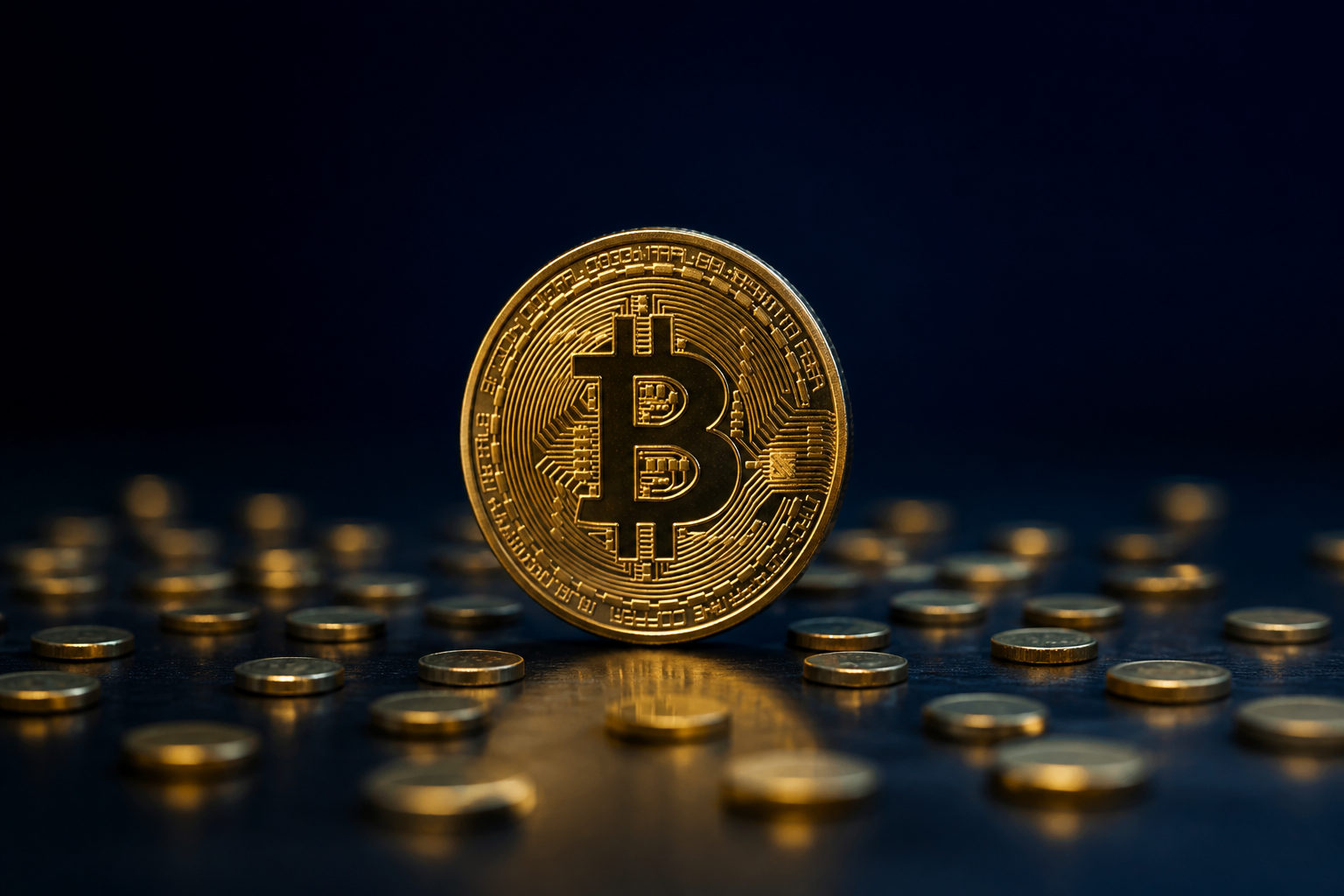
The phrase “a coin that's worth bitcoin” usually points to a misunderstanding, not a single clear asset. Bitcoin is already a coin, and whether another token is worth the same as one BTC depends on live market pricing, token design, and how that asset is issued and traded.
Why this question gets confused so often
People often mix up three different ideas: the name of an asset, the price of one unit, and the value of the whole network or token supply. Once those ideas get bundled together, it starts to sound like any token with a unit price close to Bitcoin must somehow be equal to Bitcoin.
That shortcut leads to bad comparisons. Bitcoin has its own chain, its own monetary rules, and its own history. The genesis block appeared in January 2009, the name attached to its creation is Satoshi Nakamoto, and the identity behind that name remains unknown.
Bitcoin is also divisible. The smallest unit is a satoshi, and 1 satoshi equals one hundred millionth of 1 BTC. That matters because many people asking about “a coin that's worth bitcoin” are really trying to solve a practical issue: they assume they need to buy a full coin, then start searching for some other asset that looks more attainable.
In practice, unit price by itself says very little. A token can look cheap or expensive per coin simply because its supply was structured differently. If one project has a very large supply and another has a tighter one, the sticker price of a single token can end up worlds apart even when neither asset belongs in the same category.
What people may actually mean by “worth bitcoin”
A token whose unit price is close to 1 BTC
This is the most literal reading. Under that meaning, the answer can only come from a live market quote. Without current price data, there is no honest way to name a token and say it is worth the same as Bitcoin at this moment.
Even if a token trades near the price of one BTC for a period of time, that does not create a stable relationship. Crypto prices move continuously, and a temporary match in price can disappear quickly once liquidity shifts, sentiment changes, or volume dries up.
An asset designed to represent Bitcoin exposure
Sometimes the question is really about a wrapped, bridged, or custodial token that claims to represent a quantity of BTC. In that case, the issue is not whether the token has “bitcoin” in its branding. The issue is whether it is backed, how issuance works, who holds the underlying asset, and whether redemption is available.
A token that tracks or represents BTC exposure still differs from native Bitcoin. The holder may be relying on a custodian, a smart contract, a bridge, or a platform ledger. That adds risks that do not come from Bitcoin’s market price alone.
An alternative for someone who cannot buy a full BTC
This is another common meaning. Many beginners assume that owning Bitcoin means owning exactly 1 BTC, so they search for some other coin that is “worth bitcoin” or somehow stands in for a complete coin. That assumption is unnecessary because Bitcoin can be bought in fractions.
Once that is clear, the search changes. The useful question becomes how to buy a small amount efficiently, where to store it, and what fees apply. Chasing a low-priced token because one whole unit looks affordable is often a unit illusion, not a sound comparison.
Why a similar unit price does not make a token similar to Bitcoin
Start with supply rules. Bitcoin has a hard cap of 21 million coins. New issuance follows rules written into the protocol, blocks are produced about every 10 minutes, and the block subsidy halves about every 4 years, or every 210,000 blocks. The halving years so far are 2012, 2016, 2020, and 2024.
Those details matter because another token can trade near the price of one BTC while running on entirely different monetary logic. It may have discretionary issuance, governance control, treasury releases, or token unlocks that change supply conditions over time.
Then there is the role of the asset itself. Bitcoin’s white paper, Bitcoin: A Peer-to-Peer Electronic Cash System, was released in 2008. Over time, Bitcoin came to be discussed both as a peer-to-peer payment system and as a scarce digital asset. Other tokens may function as governance units, gas tokens, staking receipts, wrapped representations, or platform credits. A similar unit price does not erase those differences.
Security assumptions also differ. Bitcoin runs on its own blockchain and network of miners and nodes. Another token may depend on a separate chain, a contract system, or a centralized issuer. If that token breaks, freezes, depegs, or loses redemption support, the holder faces a risk profile that has little to do with Bitcoin’s own chain rules.
Liquidity is another blind spot. A token can show an attractive quoted price and still be hard to trade at that price in meaningful size. Thin order books, wide spreads, or limited venue access can turn a visible quote into an unusable reference point.
How to check whether a coin is “worth one bitcoin”
First, decide what you are comparing. If you want to know whether an asset trades near a one-for-one relationship with BTC, look at the BTC trading pair. If you want to know whether the dollar price of one unit is close to Bitcoin’s dollar price, check each asset against USD separately. Those are different questions.
Second, identify the asset type. Is it a native coin, a wrapped token, a bridged asset, a synthetic exposure product, or just a token with branding that references Bitcoin? That single distinction changes what you need to verify next.
Third, inspect redemption and backing if the token claims to represent Bitcoin. Who holds the underlying BTC, if any? Can holders redeem? Is there on-chain transparency? Are issuance and reserves verifiable? Once a third party sits in the middle, the holder is taking on trust risk in addition to price risk.
Fourth, avoid unit bias. If your budget is limited, the practical variables are purchase minimums, fees, spread, and custody method. Whether you can own “one whole coin” is often the least useful metric in the decision.
| What you want to know | What to check | Common mistake |
|---|---|---|
| Is any coin priced like BTC | Live market quote | Treating a short match as a lasting relationship |
| Does a token represent 1 BTC | Custody, issuance, redemption terms | Ignoring third-party trust risk |
| Can I buy Bitcoin with a small budget | Fractional purchase rules and fees | Assuming a full coin is required |
| Is this asset comparable to Bitcoin | Asset role, liquidity, and structure | Judging by name or unit price alone |
FAQ
Is there a coin that is always worth exactly one Bitcoin?
There is no general rule that makes a token permanently equal in price to one BTC. If an asset claims to track or represent Bitcoin, you still need to review how that link is maintained and whether redemption is real.
Do I need to buy a full Bitcoin to own Bitcoin?
No. Bitcoin is divisible down to satoshis, so you can buy a fraction instead of a full coin. For many buyers, that removes the need to search for a substitute asset in the first place.
Are coins with BTC in the name basically the same as Bitcoin?
No. The name may hint at a theme or structure, but it does not prove anything about backing, custody, or chain design. Always check what the asset actually is before comparing it with BTC.
Does a high price per coin mean a token is stronger?
Not by itself. Unit price can be shaped by supply design, so it is a weak measure on its own. The more useful checks are issuance rules, liquidity, use case, and risk exposure.
Where should I look if I want to compare a token with Bitcoin?
Use major market data sites or regulated trading platforms and look at the relevant trading pair, quoted price, and market depth. A promotional page without clear trading information is not enough for price comparison.
If your real goal is simply to get Bitcoin exposure with limited funds, focus on fractional buying, fee structure, and custody choices. If your goal is to find an asset that represents BTC, spend your time on backing and redemption terms rather than on the sticker price of one token.
Disclaimer: This article is for informational and educational purposes only and is not investment, financial, or legal advice. Crypto assets are highly volatile and you could lose your entire investment. Do your own research and decide carefully.