
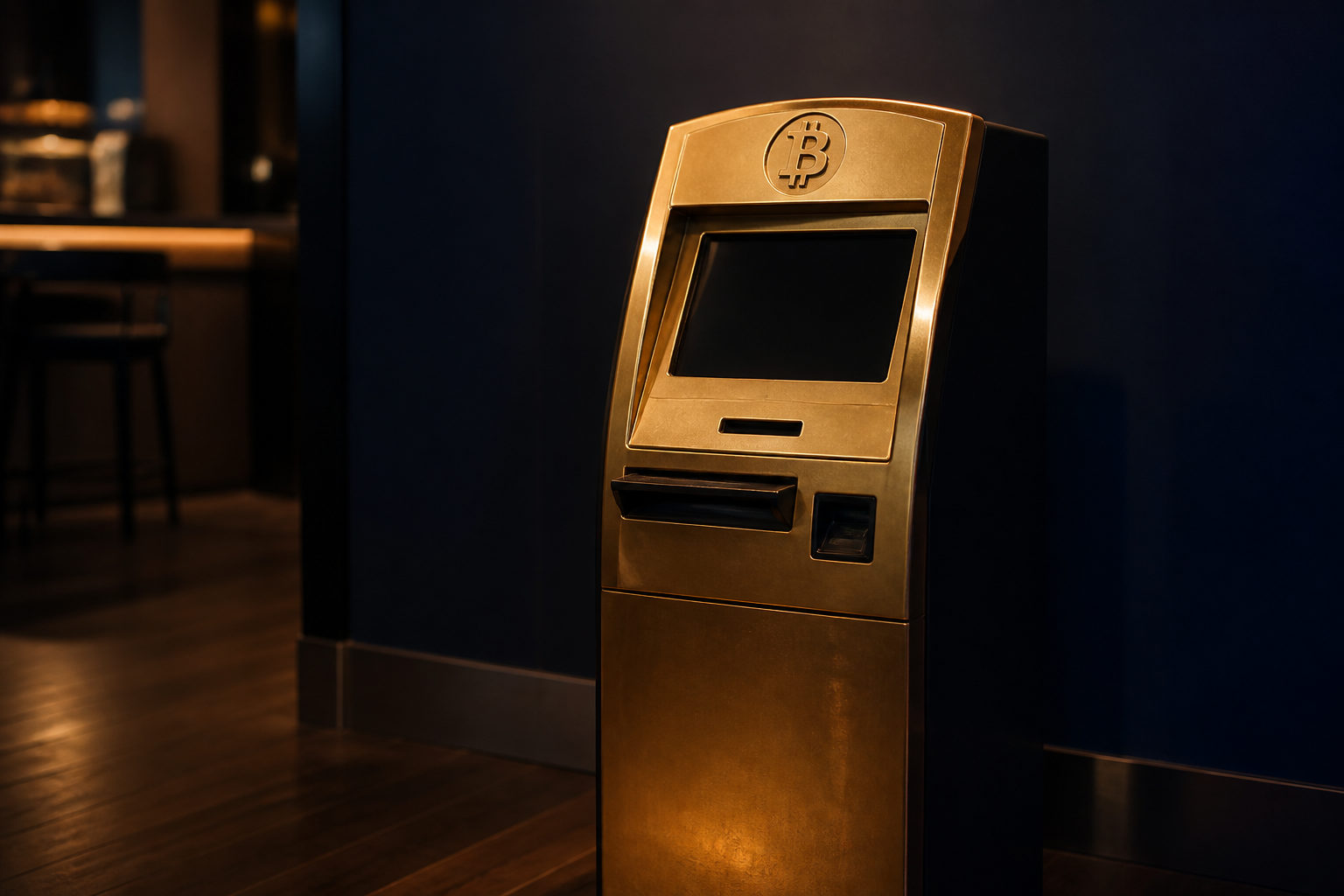
The first Bitcoin ATM was installed in 2013. The harder part is not the year itself, but separating installation from public launch, early demos, and later growth, since many articles blur those into one story.
Start by defining what “first” actually means
If you search for when the first Bitcoin ATM was installed, your first move should be to narrow the question. Are you looking for the first machine physically placed in a real location, the first one opened to the public, or the first one widely covered in the press? Those are related events, but they are not interchangeable.
This matters because Bitcoin history is often retold in compressed form. A detailed sequence can turn into a headline with a single phrase such as “the first Bitcoin ATM appeared,” while the article itself never explains what standard it is using. Once that context is removed, readers start treating different claims as contradictions even when they refer to different stages.
A simple check helps here. Whenever you see “first,” “earliest,” or “original,” look for the definition that follows. If the source does not explain whether the machine was installed, usable, or open to ordinary customers, the statement is incomplete.
How to verify why the answer points to 2013
Step one: check whether the source is talking about installation
Look closely at the verbs. If a source says a machine was proposed, shown, tested, or introduced, that does not automatically mean it was installed. Installation suggests a physical machine placed in a real venue, not just a concept or a preview.
The reason to begin here is simple. Early Bitcoin hardware projects attracted attention before they became part of public use. In retellings, that earlier stage often gets flattened into a cleaner and more dramatic claim, which makes the timeline sound simpler than it was.
Be careful with short clips, forum screenshots, and quote cards. They often strip away location, timing, and operating status. Without those details, they are weak evidence.
Step two: ask whether the machine was available to the public
A machine can exist before it becomes part of normal public use. When people ask about the first Bitcoin ATM, many of them are really asking when an ordinary person could walk up to one and complete a Bitcoin-related transaction on site.
That distinction matters because the term ATM carries a strong everyday meaning. Most readers picture a machine that is not only present but functional. If a source proves only that a device was there, it may be answering a hardware question rather than a public access question.
Watch for vague wording such as “supported Bitcoin.” That phrase can hide a lot. It may refer to a narrow function, a limited test setup, or something less than the experience a reader imagines.
Step three: separate the first machine from the first wave of adoption
Another source of confusion shows up when an article answers the first-installation question and then shifts straight into later expansion. Once the piece starts talking about additional machines, wider awareness, or regional growth, it is covering a different topic.
The first machine needs a starting point. Adoption is a broader story with its own variables, including regulation, consumer demand, and the design of later machines. Combining both topics can make an article feel full, but it can also weaken precision.
When you read a piece like that, treat the initial answer and the background material separately. Keep the core date distinct from the later growth narrative.
Step four: make sure the article still means Bitcoin ATM, not a wider crypto category
Some pages quietly switch from “Bitcoin ATM” to “crypto ATM” and then circle back as if those terms were identical. That can change the scope of the question without warning.
Bitcoin is part of the broader cryptocurrency category, but the two labels are not exact substitutes. If the headline asks about Bitcoin and the body drifts into a larger device category, the article may be broadening the frame to support a stronger “first” claim.
One practical habit helps: scan the title, image captions, comparison tables, and body text for consistent terminology. If the labels keep shifting, confidence should drop.
What to look at next if you want more than the date
Once you know the answer points to 2013, the useful follow-up is not chasing more trivia. A better path is to understand what Bitcoin ATMs actually do, how they differ from bank machines, and where readers get misled.
Focus on functions, not slogans
Different Bitcoin ATMs do not always offer the same experience. When you read a guide or a historical summary, pay attention to whether it mentions identity checks, cash handling, wallet address entry, receipts, or transaction confirmation prompts. Specific process details usually signal that the writer understands how the machine is used in practice.
This is worth doing because low-quality content often jumps straight to easy phrases such as “fast” or “works like a regular ATM.” Those lines sound reassuring, but they leave out the steps that matter most when money is involved.
If a description makes the process sound frictionless and skips verification or confirmation, treat that as a warning sign. Missing steps are often more revealing than the steps that are listed.
Do not import bank ATM assumptions
The word ATM nudges many readers toward a bank-machine mental model. That can create the wrong expectations around customer support, reversibility, and responsibility when something goes wrong.
Bitcoin transactions follow a different logic from card or bank networks. Even if the machine looks familiar, the underlying asset transfer does not behave the same way. A source that compares the experience too closely to cash withdrawal may be oversimplifying the risk.
Ask a basic question whenever you see that comparison: which part is similar, and which part is not? If the source cannot answer clearly, it should not be trusted on operational detail.
Keep location stories separate from factual proof
Stories about the first Bitcoin ATM often spend a lot of time on the venue, neighborhood, or city. Those details can make the story memorable, but they are not the same as evidence.
Use location as background, not as the main basis for belief. The stronger indicators remain the timing, the operating status of the machine, whether the public could use it, and whether the article is internally consistent.
If a piece leans heavily on scene-setting while giving very little space to definitions and machine status, it is probably optimized for storytelling rather than clarity.
Why this history question also matters for scam awareness
At first glance, the first Bitcoin ATM sounds like a piece of niche history. In practice, “early Bitcoin history” is often used to build trust around machines, in-person exchange services, or paid education offers. That is where this topic stops being trivia.
Watch for authority borrowed from history
Some promoters tell old Bitcoin stories in great detail and then imply that their current service is safer because they are connected to the early days. Historical knowledge does not prove current reliability, fair fees, clean data handling, or proper support.
If someone uses history to sell credibility, bring the conversation back to the present. Ask who operates the machine, how fees are disclosed, what happens if a transaction fails, and how personal data is stored. If the answers stay vague while the storytelling stays polished, walk away.
Knowing that the first Bitcoin ATM was installed in 2013 does not make a seller trustworthy. It only shows that they can repeat a date.
Be cautious when someone offers to “help” at the machine
A common risk appears in assisted-use scenarios. A stranger may say first-time users make mistakes, then offer to enter the wallet address, scan a code, hold the receipt, or move funds through a wallet they control “just for the demonstration.”
The danger in that moment is not the machine alone. It is the transfer of control. Once Bitcoin is sent, your options are usually limited, so any setup that asks you to hand over address entry, QR handling, or temporary custody should be treated as unsafe.
If your goal is education, use independent instructions and learn the flow before any transfer. Slow learning is fine. Rushed sending is not.
Do not assume offline cash deals are safer
Some people use Bitcoin ATM discussions as a bridge into face-to-face exchange offers. The pitch often sounds like this: cash is safer, in-person is easier, and a physical meeting reduces risk. That message plays on fear of online fraud.
Moving offline does not erase risk. It changes the shape of risk. Fake machines, fake support staff, swapped QR codes, and impersonation can all show up in physical settings too.
If you started with a history question, there is no reason to let the conversation turn into a transaction proposal. Keep research and money decisions separate.
FAQ
What year was the first Bitcoin ATM installed?
The widely accepted answer is 2013. When checking sources, make sure they are talking about installation rather than a demo, a test setup, or later public rollout.
Is a Bitcoin ATM basically the same as a bank ATM?
No. The familiar shape and name can be misleading. Transaction handling, error recovery, and the limits of customer support differ from the banking experience many users expect.
Why do different articles give different answers?
Most disagreements come from different definitions. One source may mean the first installed machine, another may mean first public use, and another may widen the topic to crypto ATMs in general.
What is the easiest mistake to make when reading this topic?
The most common mistake is trusting the headline without checking the standard used in the body text. Another is letting a strong location story stand in for proof about timing and machine status.
What should I check if someone cites early Bitcoin ATM history to sell a service?
Check present-day facts, not historical storytelling. Fee disclosure, verification steps, operator identity, and error handling matter more than how confidently someone talks about the early years.
If you continue researching Bitcoin ATMs, use one repeatable method: define the claim, confirm the machine status, check whether public use is clear, and look for missing risk information. That process is far more useful than memorizing extra trivia.