
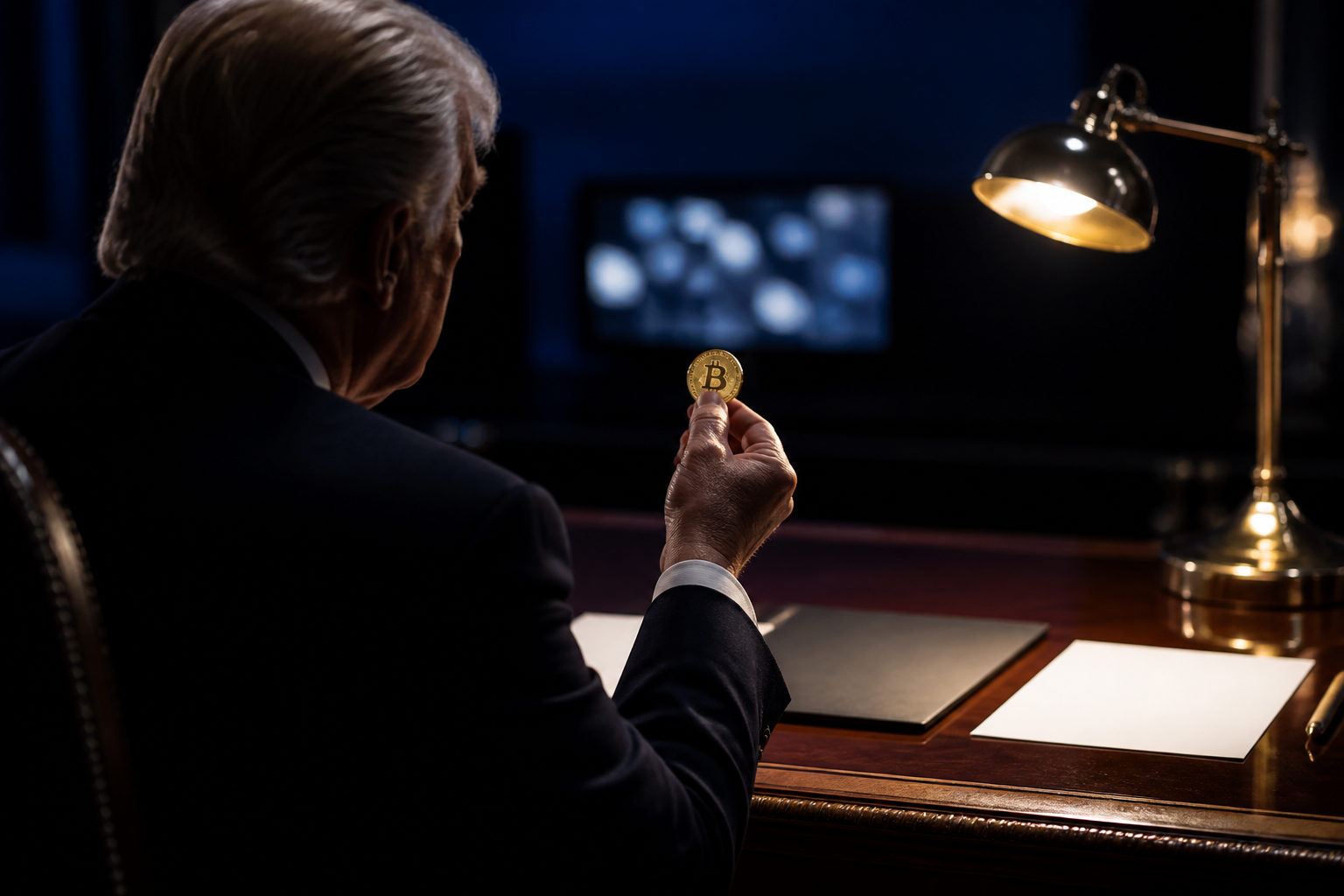
For the question “does Donald Trump own bitcoin,” the honest answer is that public chatter alone does not let most readers verify personal ownership, current holdings, or whether any past holdings still exist today.
Why this question is harder than it looks
Bitcoin addresses are public, but they do not come with a built-in real name. A blockchain record can show that a wallet received or sent funds, yet it cannot identify the owner unless that address is tied to a person through reliable evidence.
That gap matters because public discussion often blends very different ideas: speaking about bitcoin, accepting crypto-related payments in a business context, being linked to a digital asset project, and personally owning bitcoin. Those are separate claims. Treating them as the same thing is where most confusion starts.
What kind of evidence actually matters
If you want a careful answer, it helps to rank sources by evidentiary value instead of reading every headline as if it carries the same weight. A direct statement, a formal financial disclosure, and an unattributed social post do not deserve equal trust.
| Evidence type | What it can show | Main limitation |
|---|---|---|
| Direct public statement | Shows what the person said or claimed at that time | May not be a full asset picture, and views can change |
| Formal financial disclosure | Closer to something readers can check | Reporting categories, scope, and timing can affect interpretation |
| Wallet address circulating online | Shows on-chain activity for that address | Without verified ownership, it does not prove whose wallet it is |
| Media report | Can add context and chronology | If sourcing is vague, the report may only repeat a claim |
| Related business activity | Shows contact with crypto markets or payment rails | Does not prove personal bitcoin holdings |
This is the core filter to use. Ask two questions each time: is there evidence, and how strong is it? Many stories fail on the second question even when they look persuasive at first glance.
Common ways readers get misled
Public figures attract attention, and crypto stories spread fast. A short clip, a screenshot, or a marketing tie-in can move from “possible connection” to “confirmed holder” in a few reposts, even when no hard proof was ever shown.
| Common situation | How it is often read | Safer interpretation |
|---|---|---|
| Comments about bitcoin or crypto policy | Seen as proof of support and ownership | Start by reading it as a public position, not a wallet disclosure |
| Sale of digital collectibles or related products | Assumed to mean deep personal crypto exposure | May only show a business model using crypto-adjacent tools |
| Frequent online pairing of a person’s name with a token or wallet | Taken as investment proof | Could be branding, rumor, or promotion without verified ownership |
| Reports using broad terms like digital assets or crypto assets | Read as if they specifically mean bitcoin | Check whether the source names bitcoin or BTC directly |
That distinction is easy to miss. Readers searching “does Donald Trump own bitcoin” usually want a clean yes-or-no answer, but the source material often only speaks to a broader crypto connection, not bitcoin ownership itself.
How to verify a claim yourself
Start with primary material wherever possible. Look for direct statements, official filings, original interviews, or reporting that quotes source documents rather than anonymous chatter. If an article offers a conclusion without showing where it came from, treat it as incomplete.
Next, check the time frame. Even if a document shows that a person once held some kind of digital asset, that does not tell you whether the asset is still held now. The reverse is also true: an older skeptical remark does not prove no later exposure ever existed.
Then examine the asset label and the ownership label. “Crypto assets” is broader than bitcoin. “Personal holdings” is different from assets held by a company, a family member, or a business entity connected to the person’s brand.
| Verification step | What to check | Frequent mistake |
|---|---|---|
| Find the original source | Statement, filing, or full interview | Relying on reposted summaries |
| Check the date and scope | When the information applied | Using old material as if it describes the present |
| Read the asset category carefully | Whether it names bitcoin or BTC | Turning all crypto exposure into bitcoin exposure |
| Identify the holder | Person, family member, company, or brand affiliate | Assigning related-party assets to the individual |
| Look for cross-verification | Whether multiple reliable sources align | Accepting a single screenshot as proof |
What readers usually mean when they ask this
Many people are not asking out of curiosity alone. They want to know whether a prominent political figure’s personal exposure to bitcoin might shape public sentiment, policy talk, or market attention. That is a fair line of interest, but it still does not turn a rumor into evidence.
Even if a public figure does own bitcoin, that fact should not be treated as an investment signal by itself. Bitcoin reacts to many forces, including liquidity, risk appetite, regulatory direction, and broad market mood. Celebrity ownership stories tend to matter more for headlines than for durable analysis.
FAQ
Does a public comment about bitcoin mean Trump personally owns it
No. A public comment can show interest, opposition, or political messaging, but it does not work as proof of personal holdings unless it is backed by stronger documentation.
Can a wallet screenshot online prove the wallet belongs to Trump
Usually not. A screenshot without a clear origin, verified attribution, and supporting evidence is weak. Readers should ask who published it first and how ownership was established.
If a report says crypto assets, should I assume that includes bitcoin
You should not assume that. Crypto assets can refer to many different holdings. For this keyword, the key question is whether the source names bitcoin or BTC specifically.
Why do these stories spread so quickly
Because public figures attract attention and crypto topics travel fast on social platforms. Once a claim fits a popular narrative, repetition can make it feel proven even when the source remains thin.
What is the fastest way to judge whether a claim is worth taking seriously
Check for a primary source first. If the claim rests on reposts, clipped video, or an image without a clear chain of attribution, it deserves caution rather than confidence.
If you keep following stories like this, use a short checklist every time: source, date, asset type, and owner identity. When any one of those is unclear, the safest answer is that the claim has not been firmly verified.
Disclaimer: This article is for informational and educational purposes only and is not investment, financial, or legal advice. Crypto assets are highly volatile and you could lose your entire investment. Do your own research and decide carefully.