
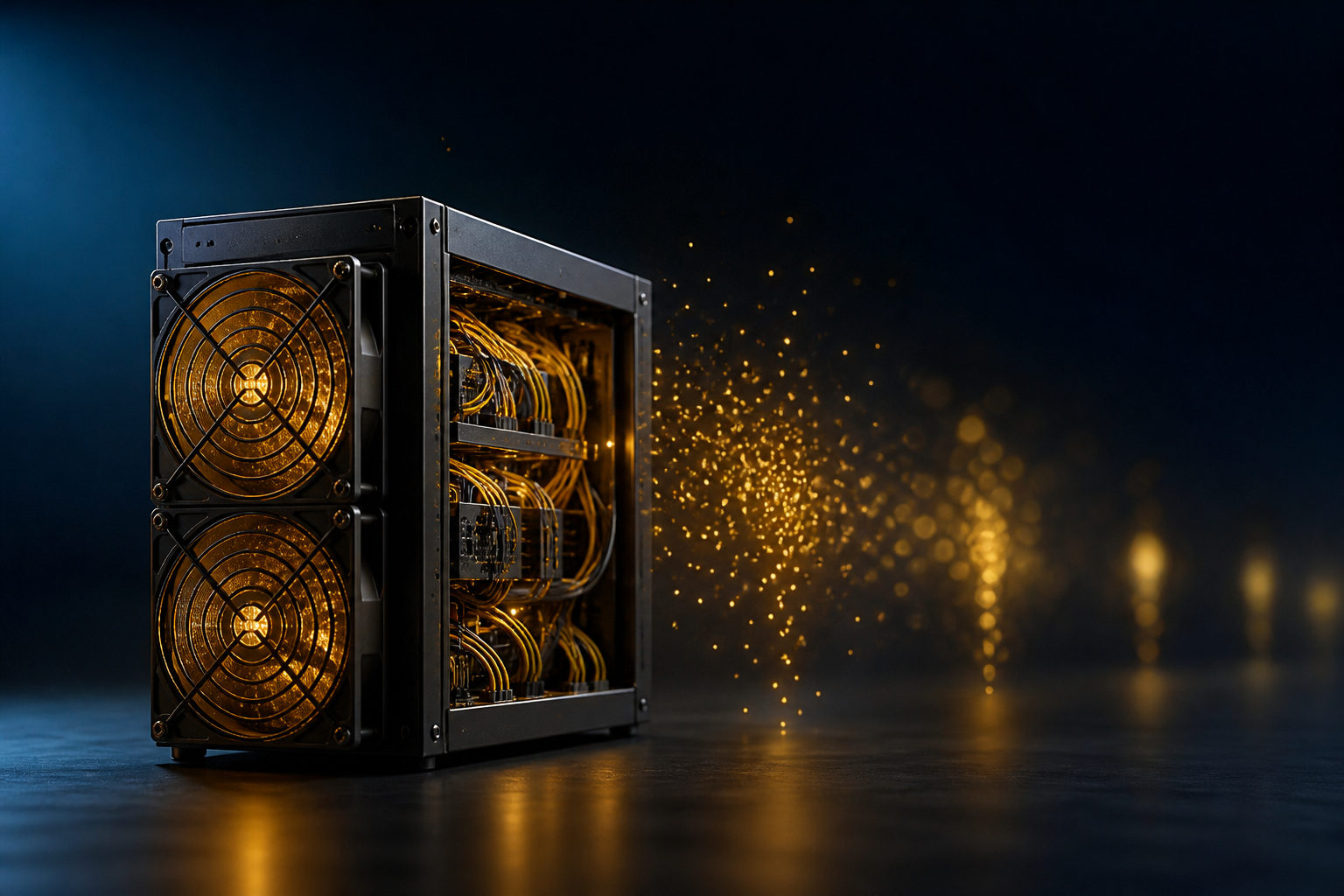
All bitcoins will not be mined anytime soon. The better way to think about it is this: bitcoin mining is a competition to write the next page of a public ledger, and the new supply released through that contest keeps shrinking over time.
Why all bitcoins are not mined quickly
Picture the Bitcoin network as a shared record book. Miners around the world compete for the right to add the next block, and the winner gets to confirm a batch of transactions and receive the block reward set by the protocol.
That reward is how new bitcoin enters circulation. It does not appear all at once, and it does not expand on demand. Bitcoin has a fixed maximum supply of 21 million coins, while blocks are added about every 10 minutes, so issuance is paced by network rules rather than by a central authority.
This is why the question “how long till all bitcoins are mined” has a long answer. The supply schedule stretches across many eras of the network, and the later stages move much more slowly than the early ones.
How halving slows the final stretch
The key mechanism is the halving. Every 210,000 blocks, roughly every 4 years, the block reward is cut in half. Bitcoin has already gone through halvings in 2012, 2016, 2020, and 2024, and each one reduced the flow of newly issued coins.
A simple analogy helps: imagine a race where the water stations keep getting smaller. Runners still move forward, but each stop gives out less. Bitcoin works in a similar way. Blocks keep arriving, yet each block releases less new supply after each halving cycle.
That design is what makes the last portion take so long. When people ask how long till all bitcoins are mined, they are often focused on the cap alone. The schedule matters just as much. A hard cap with a slowing issuance curve means the tail end takes a very long time to complete.
What mining is actually doing
Many beginners hear the word mining and imagine coins being dug out of a machine. In practice, miners are competing to solve a proof-of-work puzzle so they can propose the next valid block. Their work helps order transactions, package them into blocks, and keep the chain moving forward without a central bookkeeper.
Bitcoin started with the genesis block in January 2009. Its white paper, Bitcoin: A Peer-to-Peer Electronic Cash System, was published in 2008 under the name Satoshi Nakamoto, whose real identity remains unknown. The system was built so trust comes from open rules and distributed verification, not from a single operator.
The smallest unit of bitcoin is 1 satoshi, equal to one hundred millionth of a BTC. That detail matters because even as new issuance slows, the system can still account for value in very small units.
Can regular people still take part in mining?
Yes, but that does not mean it is practical for most people. Modern bitcoin mining usually involves specialized hardware, steady power access, cooling, monitoring, and tolerance for machine downtime. The gap between “possible” and “sensible” is large.
Most participants either run their own equipment or join a mining pool. Running machines directly means dealing with setup, noise, heat, maintenance, and network reliability. Joining a pool changes how rewards are shared, but it does not erase the physical and operating demands behind the scenes.
If your goal is simply to understand Bitcoin, you do not need to start by buying mining hardware. Learning how blocks are produced, why halving matters, and how wallets store access to your coins will give you a clearer picture than chasing the idea of mining as an easy entry point.
FAQ
Is Bitcoin close to being fully mined?
No. New issuance keeps getting smaller after each halving, which makes the remaining supply come out more slowly over time. The process is long by design.
Does mining stop once all bitcoins are mined?
No. Blocks still need to be produced so transactions can be confirmed and the network can keep operating. At that stage, miner incentives would lean more on transaction fees than on new coin issuance.
Can I mine bitcoin with a home computer?
In theory, any device can attempt the required calculations. In real competition, specialized mining hardware dominates, so a standard home computer is usually not a practical option.
Why does the “all bitcoins mined” question matter?
It helps people understand that Bitcoin supply is governed by rules, not by discretionary issuance. The answer also shows why scarcity in Bitcoin is tied to both the cap and the pace of release.
Where can I check the live bitcoin price?
You can check it on major exchanges or market data platforms. When you do, look beyond the headline number and compare spreads and trading activity across venues.
If you are thinking about mining, list the real inputs first: hardware, electricity, cooling, noise, and maintenance. If you only want to understand how long till all bitcoins are mined, focus on three rules: the 21 million cap, blocks about every 10 minutes, and the halving about every 4 years.