
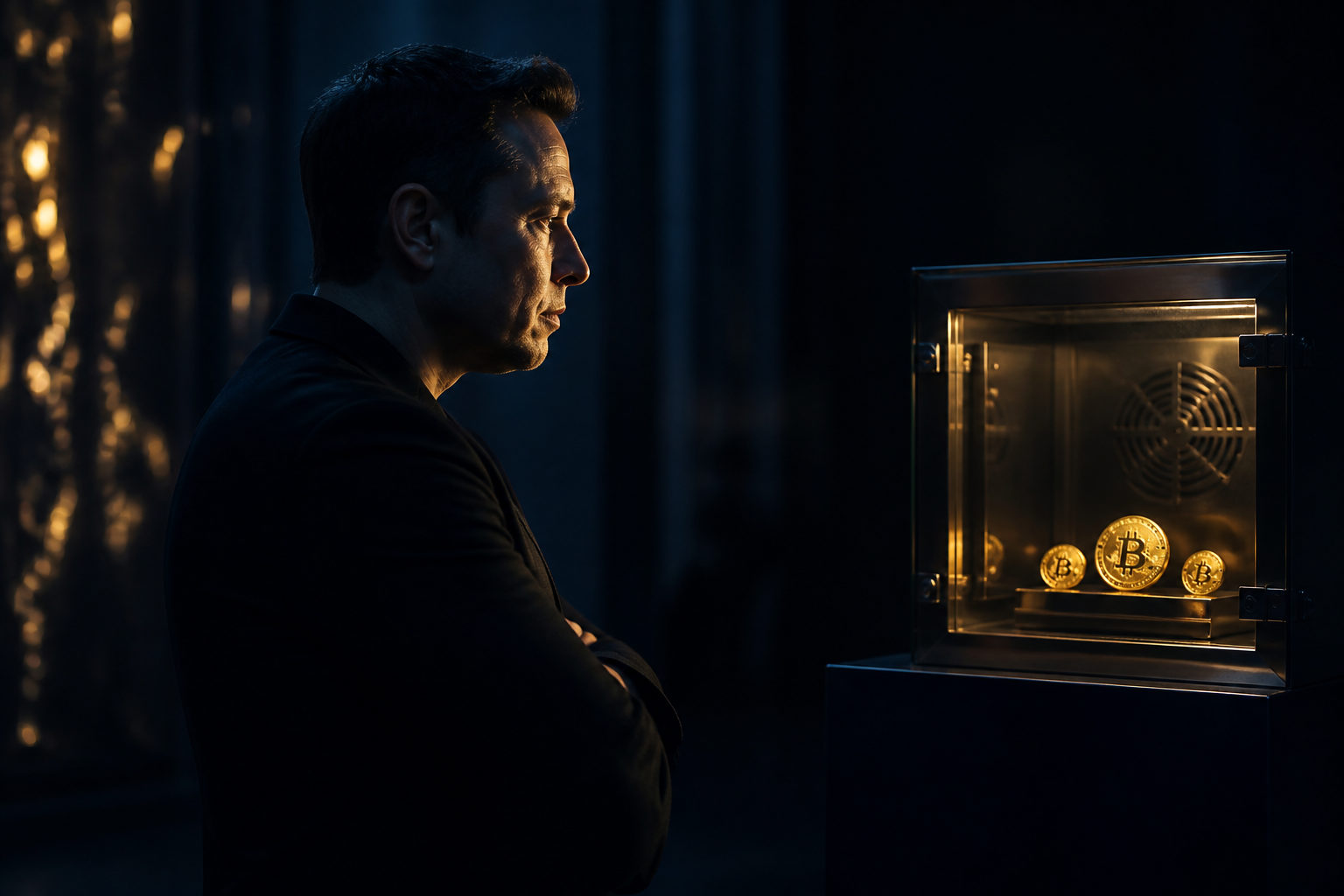
If you want a direct answer to “how many bitcoin elon musk have,” public information does not provide a complete, verifiable number. What can be said with care is that Elon Musk has publicly indicated that he owns bitcoin, but the exact size of his personal holdings is not fully disclosed.
Why there is no solid public number
This question sounds simple, yet the evidence standard is the real issue. Bitcoin addresses are public, but identity is not automatically attached to an address. Unless a person openly shares a wallet address, confirms ownership of it, or lists holdings in a formal disclosure, outsiders usually see discussion rather than proof.
That is the first distinction to make when reading any article on this topic: saying someone owns bitcoin is not the same as proving how much bitcoin that person owns. The first claim may come from an interview, a public remark, or a social media post. The second claim needs much stronger support.
There is also a recurring mix-up between personal holdings, company holdings, and company policy on bitcoin payments. Musk is tied to several businesses, so it is easy for headlines to blur those lines. A company treasury decision does not equal a personal wallet balance, and a payment option does not reveal personal ownership either.
Personal BTC, corporate BTC, and public comments are different things
Most weak articles on this subject fail because they merge separate buckets of information into one story. If a company buys bitcoin, that tells you something about corporate treasury management. If a company accepts bitcoin for some purpose, that tells you something about payment policy. If a founder comments on bitcoin, that tells you something about his view. None of those points, on their own, answer how much bitcoin he personally has.
That distinction matters a lot in Musk-related searches because readers often come in through a celebrity angle, then run into company-related information and assume it all points to the same conclusion. It does not. The subject of the sentence matters: Elon Musk the person is different from any company associated with him.
Another practical issue is that public figures may hold digital assets through different custody methods. Some holdings might sit on an exchange account, some in self-custody, and some under structures that are not visible to the public. Without a full disclosure from the person involved, outsiders only see fragments.
A simple way to check the quality of a claim
- Who is the subject? Is the article about Musk personally or about a company linked to him?
- What is the evidence? Is there a formal disclosure, or just a quote?
- What is the actual claim? Is it saying he owns bitcoin, or that a specific amount is known?
Once you apply that filter, most content on this topic turns out to support only the first half of the story, not the exact balance that searchers want.
What public information actually supports
The part that is broadly supportable is narrow. Musk has publicly signaled that he owns bitcoin. That means he has not only commented from the sidelines; he has presented himself as someone with at least some direct exposure to BTC.
What public information does not support is a full, current, verifiable number for his personal holdings. That missing step is the key one. Without it, any exact figure should be treated with skepticism, especially if the article does not show where the number came from and whether the source was direct.
Time also matters. Even if a public figure says at one point that he owns bitcoin, that does not tell you whether the balance stayed the same later. Bitcoin can be bought, sold, moved, or left untouched. If there is no updated disclosure, an old statement cannot safely be turned into a current holding amount.
So the careful answer is not dramatic, but it is accurate: public information supports the idea that he has said he owns bitcoin, while it does not let outsiders verify his present personal BTC total.
Why people keep searching for Elon Musk’s bitcoin holdings
The search interest is easy to understand. Musk is one of the most watched business figures in the world, and bitcoin is highly sensitive to public narratives. People want to know whether he is only a casual participant or someone with meaningful skin in the game.
Still, that curiosity can push readers toward low-quality content. A very specific number feels satisfying, especially in a headline, but specificity without evidence is not useful. In fact, it is often a warning sign.
For most readers, the stronger questions are different. What has he publicly said about bitcoin? What actions have companies linked to him taken? Are those actions separate from his personal portfolio? Those questions lead to cleaner analysis than trying to force an exact personal number out of incomplete public information.
There is also a practical investing point here. Even if the market knew a celebrity’s exact BTC balance, that would not automatically make it useful for your own decisions. A public figure’s risk tolerance, liquidity needs, custody setup, and time horizon are usually very different from those of an individual investor.
How to avoid weak or misleading answers
When you search for “how many bitcoins does elon musk have,” you will often see articles that sound certain but do not show a real evidence trail. Some recycle old remarks as if they describe his current position. Some blend company bitcoin activity into his personal story. Some repeat social speculation until it looks like a fact.
A better approach is to work backward from the claim. If an article gives a number, ask where that number came from. Was it from Musk directly? Was it from a formal filing? Was the statement current, or was it old? If those questions are not answered, the number should not be treated as verified.
You should also watch for missing time markers. “He owns bitcoin” is a broad statement. “He currently owns a specific amount” is much stronger and needs stronger evidence. Good content makes that difference clear instead of hiding it inside vague wording.
- Look for primary-source statements: direct remarks are better than secondhand summaries.
- Separate the person from the company: corporate treasury activity is not personal ownership.
- Be wary of exact figures with no proof: precision without documentation is a red flag.
- Check the time frame: a past statement does not guarantee a current balance.
If an article cannot pass those tests, it may still be useful as a discussion piece, but not as a factual answer.
FAQ
Has Elon Musk publicly disclosed his exact bitcoin holdings?
Publicly available information does not show a full, verifiable personal BTC balance. The safer statement is that he has said he owns bitcoin, while the exact amount of his personal holdings is not fully disclosed.
Can blockchain data reveal how much bitcoin Musk has?
Blockchain records are public, but that only helps if a wallet address is reliably linked to him. Without a direct confirmation from Musk or a formal disclosure, outsiders cannot safely assign a specific address to his identity.
If a company linked to Musk holds bitcoin, does that count as his personal bitcoin?
No. Company assets belong to the company, not automatically to the founder or executive associated with it. Personal ownership and corporate ownership should be treated separately.
Why do some sites give a very specific number anyway?
Often because they are blending old comments, market gossip, and company-related information into one neat claim. A precise figure can attract clicks, but without direct evidence it should not be treated as confirmed.
Is a celebrity’s bitcoin balance useful for ordinary investors?
It may be interesting, but it is not a strong basis for action on its own. For most people, risk control, custody habits, and a clear understanding of bitcoin matter more than trying to mirror a public figure’s position.
If you only need the short answer, here it is: public information does not confirm exactly how much bitcoin Elon Musk currently has. The most reliable way to read this topic is to separate verified personal statements from speculation, and to treat any exact number with caution unless it is backed by direct disclosure.