
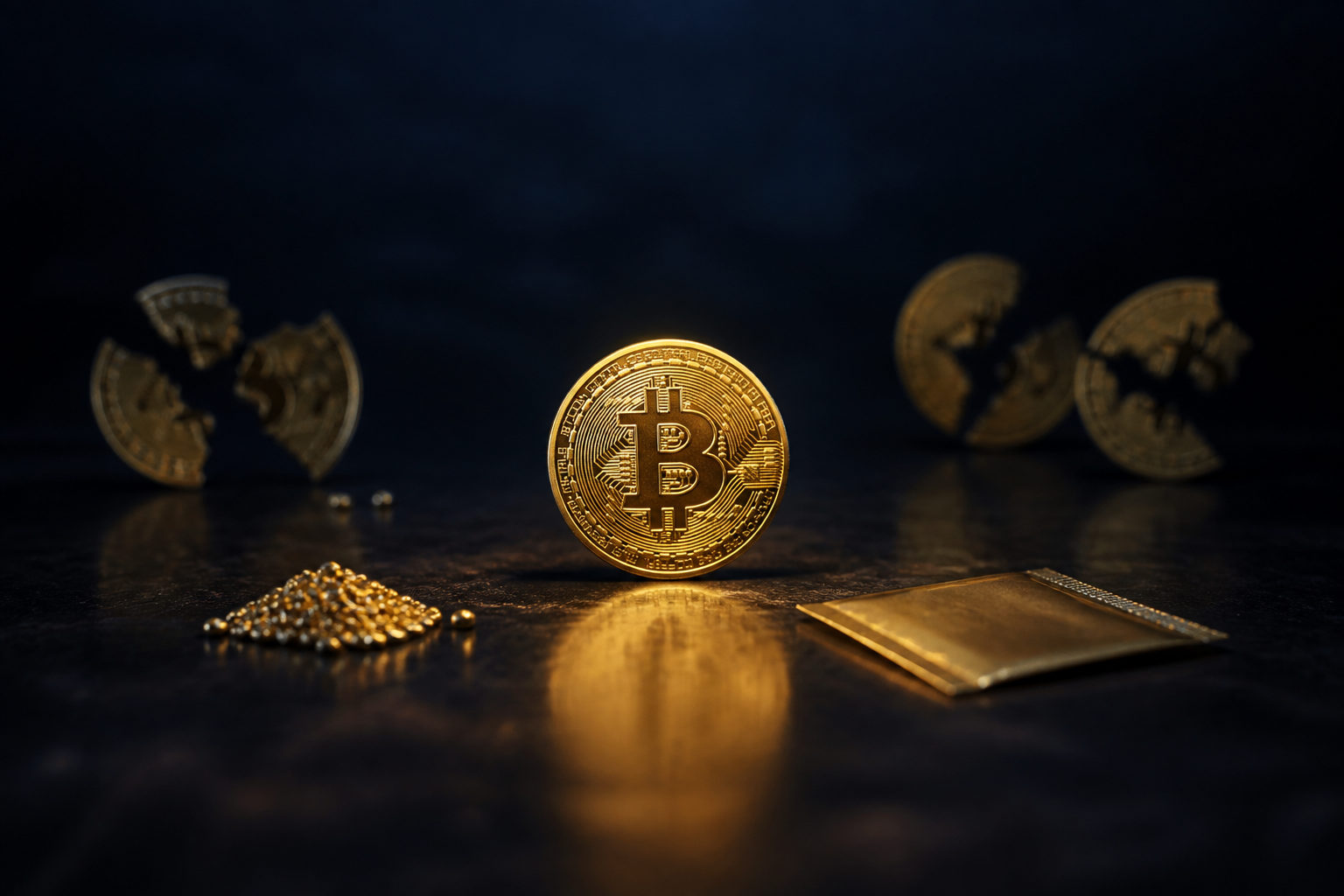
If you ask how many different bitcoins are there in the world, the clear answer is this: there is only one real Bitcoin, but people often confuse its units, holding formats, and similarly named forked coins with separate assets.
Why this question comes up so often
The word “Bitcoin” gets used in several ways at once. Some people mean the BTC asset, some mean the Bitcoin network, some mean the balance shown inside an exchange account, and some include other coins whose names contain the word Bitcoin.
That mix creates the impression that there must be many kinds of Bitcoin. In practice, most of what looks different is just another way to display, store, or package exposure to the same asset. Once you separate the asset from the wrapper around it, the topic gets much easier.
| What people see | What it really refers to | Is it a different Bitcoin? |
|---|---|---|
| BTC | The native asset of the Bitcoin network | No, this is Bitcoin itself |
| Satoshis | A smaller unit of Bitcoin | No, only a unit change |
| Exchange Bitcoin balance | A platform record of your holdings | No, if it represents BTC |
| A fund share or similar product | A financial wrapper tied to Bitcoin exposure | No, not a new Bitcoin |
| A coin with Bitcoin in the name | A separate asset on another network | Yes, if it is independent from BTC |
There is one Bitcoin because there is one Bitcoin network
The main test is not the name. The real test is whether the asset belongs to the Bitcoin network people usually mean when they say Bitcoin: the system associated with Satoshi Nakamoto, the chain whose genesis block appeared in January 2009, and the asset with a supply cap of 21 million coins.
If an asset is BTC on that network, it is the same Bitcoin whether you hold a whole coin, a small fraction, or a balance shown in an app. The form can change while the asset stays the same. A simple comparison helps: measuring a road in miles or meters does not create two roads.
This is where many beginners get tripped up. They see different decimal places, different wallet screens, or different account layouts and assume the asset itself must be different. Usually it is not. It is still the same Bitcoin viewed through different tools.
A simple three-step check
- Check the ticker. If it is not BTC, do not assume it is Bitcoin itself.
- Check the network. A similar name does not matter if the asset lives on a separate chain.
- Check the holding format. Owning BTC directly is different from holding a claim, a custodial balance, or a product tied to Bitcoin.
Different units do not mean different Bitcoins
One of the easiest sources of confusion is denomination. Bitcoin can be shown as a whole BTC amount or in much smaller units. Its smallest unit is the satoshi, and 1 satoshi equals one hundred millionth of 1 BTC. That does not create another class of Bitcoin any more than cents create a second kind of dollar.
This matters because many interfaces choose the unit that feels most readable for the user. A wallet may show a small purchase in satoshis, while another app may show the same amount as a decimal BTC balance. The visual difference can be large even when the underlying value is exactly the same asset.
For that reason, it helps to treat “BTC” and “sats” as two ways to count the same thing. One is broader, one is more granular. Neither changes what you own.
| Display choice | What changes | What stays the same |
|---|---|---|
| BTC | The amount is shown in whole and fractional BTC | The asset is Bitcoin |
| Satoshis | The amount is shown in smaller units | The asset is Bitcoin |
| More decimal places | The screen shows finer precision | The asset is Bitcoin |
Holding format can change without creating a new coin
Another source of confusion is custody. Bitcoin held in a self-custody wallet and Bitcoin shown in an exchange account can feel very different to the user. One gives you direct control over access and movement. The other depends on a platform’s internal records and withdrawal process.
That difference is important, but it still does not mean there are multiple Bitcoins. It means the same BTC can be held in different arrangements. In one case, you control the wallet. In another, a service holds the asset and shows you a balance. The legal and operational setup changes, yet the underlying asset may still be BTC.
The same applies to products that give you Bitcoin exposure through a fund, account structure, or other financial vehicle. Those wrappers may track Bitcoin or represent a claim connected to Bitcoin, but they are not new species of Bitcoin. The useful question is what exactly you hold and what rights come with it.
| Format | What you actually hold | Does this create a different Bitcoin? |
|---|---|---|
| Self-custody wallet | Direct control of BTC access | No |
| Exchange balance | A custodial platform record tied to BTC | No |
| Financial product | A share, claim, or packaged Bitcoin exposure | No |
When it really is a different asset: forks and lookalike names
A separate coin becomes a separate asset when it runs on its own network with its own rules and history. At that point, a familiar name is not enough to make it Bitcoin. This is the part many readers are actually trying to sort out when they ask how many “different bitcoins” there are.
A forked coin or a project with Bitcoin in the name may have some shared origin, branding overlap, or conceptual link. That still does not place it inside the same asset identity as BTC. Once the network splits or a project launches independently, the asset should be treated on its own terms.
For a buyer or sender, this is more than a technical detail. If you confuse a separate coin with BTC, you may end up purchasing the wrong asset, selecting the wrong network, or misunderstanding what your wallet or exchange supports.
| Question | BTC | Forked or lookalike coin |
|---|---|---|
| Same network as Bitcoin? | Yes | Not necessarily |
| Same asset identity? | Yes | No |
| Can a similar name settle the issue? | No need | No |
| Should it be treated as the same coin? | Yes | No |
What matters most for ordinary users
For everyday use, the most practical way to handle this topic is to stop asking how many kinds there are in the abstract and ask three direct questions instead. Am I looking at BTC? Which unit is being shown? Do I hold the coin itself, or do I hold a balance or product linked to it?
- Confirm the ticker: BTC is the first filter.
- Confirm the network: the asset should match the Bitcoin network if you want actual Bitcoin.
- Confirm the structure: direct holdings, custodial balances, and packaged exposure do not work the same way.
Once those three checks become habit, most of the confusion disappears. The world does not have many real Bitcoins. It has one Bitcoin, plus many ways to describe it, divide it into units, or wrap it inside services and products.
FAQ
Are BTC and satoshis two different kinds of Bitcoin?
No. A satoshi is just the smallest unit of Bitcoin. Changing the unit changes the way the amount is written, not the asset you own.
Do all coins with “Bitcoin” in the name count as Bitcoin?
No. You need to check whether the asset is actually BTC on the Bitcoin network. A similar name alone does not make it the same coin.
Is Bitcoin on an exchange different from Bitcoin in a wallet?
If both refer to BTC, the asset can be the same while the custody setup is different. A wallet points to direct control, while an exchange balance depends on the platform’s account system.
Why do some apps show long decimals and others show sats?
That is a display choice. Some interfaces prefer BTC with decimals, while others use smaller units that are easier for small amounts.
How can I tell if I am buying real Bitcoin?
Check the ticker, check the network, and check whether the service supports Bitcoin deposits and withdrawals under Bitcoin rules. That process usually clears up the issue before you trade or transfer.
Before you buy, send, or receive Bitcoin, pause and verify the ticker, network, and unit on the screen. That small check prevents the most common mistake in this topic: confusing a different asset or a different unit for a different Bitcoin.