
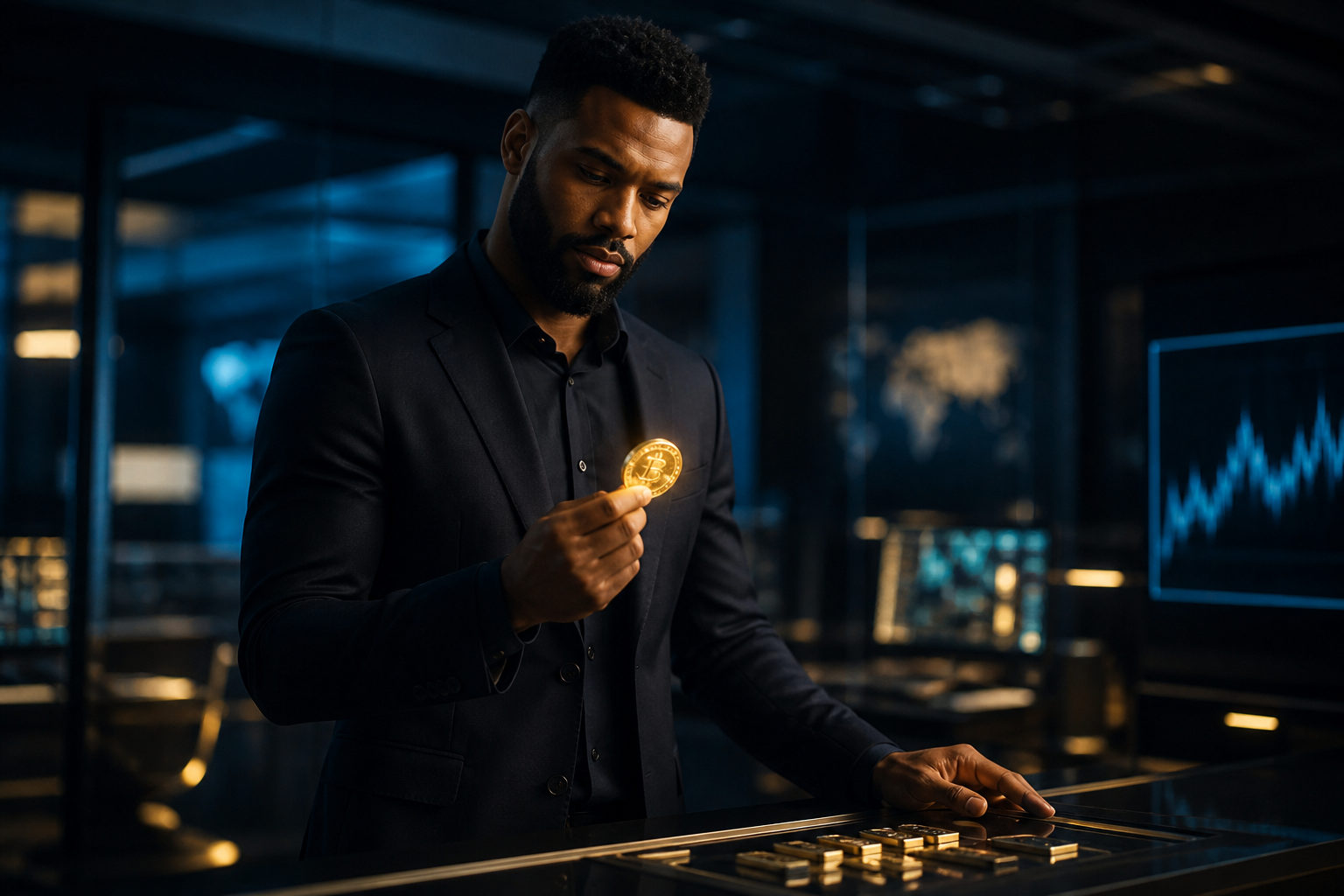
There is no public, verifiable number for how much bitcoin Kevin Durant owns. The clean answer is simple: he has been linked to crypto-related investing, but that does not tell us his personal BTC holdings.
Why no one can confirm a BTC figure for Durant
Bitcoin is public in one sense and private in another. Transactions live on an open ledger, yet wallet ownership usually does not come with a real name attached. Unless Durant himself discloses a holding, or a reliable public record ties a wallet or account to him, any exact claim about his bitcoin position is guesswork dressed up as certainty.
That distinction matters more than it sounds. Reports about public figures often blur several separate things: interest in crypto, an investment in a company connected to crypto, a marketing tie-in, or actual ownership of bitcoin. Those are not interchangeable. They get treated that way all the time anyway.
| Type of public signal | What it can suggest | What it cannot prove |
|---|---|---|
| Interview comments | He follows or likes the sector | How much bitcoin he personally owns |
| Investment in a crypto company | He has business or financial exposure | That he directly bought BTC |
| Social media discussion | He is part of the conversation | Wallet size, entry point, or cost basis |
| On-chain speculation | An unverified theory | A reliable link to his identity |
Crypto exposure is not the same as owning bitcoin
This is where most readers get tripped up. Someone can invest in a crypto startup, a service provider, a fund, or a broader digital asset business and still hold little bitcoin personally. They also might hold none at all. That is not unusual. It is just a different kind of bet.
Direct bitcoin ownership tracks bitcoin much more closely. Equity in a company does not. A company has managers, products, expenses, competition, legal risk, and execution risk. So when people ask how much bitcoin Kevin Durant owns, they often smuggle in a second assumption: if he backed crypto-related ventures, he must also have a meaningful BTC stack. Public information does not support that leap.
| Form of exposure | Main thing being bet on | What it tells you |
|---|---|---|
| Direct bitcoin ownership | The price of BTC itself | Personal holdings would rise and fall with bitcoin |
| Investment in a crypto company | The firm's business performance | He may have sector exposure without holding BTC |
| Fund participation | The manager's portfolio choices | Any bitcoin exposure could be indirect |
| Brand or promotional deal | A commercial arrangement | It says little about personal asset allocation |
How to read celebrity bitcoin claims without getting misled
Celebrity-plus-bitcoin is clickbait fuel. Always has been. The safer way to read these stories is to strip them down to three checks. First: did the person clearly say it? Second: is there a public record that backs it up? Third: is the article talking about bitcoin ownership, or merely involvement in the crypto industry?
If the wording leans on phrases like rumor, speculation, or people familiar with the matter, slow down. If a story never shows where the claim started, slow down again. And if the headline promises a neat answer but the article only points to general crypto ties, you already have your answer: it does not know either.
| Check | What to look for | Red flag |
|---|---|---|
| Source | Direct disclosure, formal filing, original reporting | Long chains of reposts with no primary source |
| Language | A clear statement about owning bitcoin | Switching from “crypto involvement” to “bitcoin holdings” |
| Evidence | Something that can be independently checked | Screenshots, anonymous claims, vague summaries |
| Conclusion | Respect for uncertainty | A precise BTC number with no proof |
What people are really asking with this search
Most readers are not chasing Durant's wallet for its own sake. They are trying to read a signal. If a famous athlete is close to crypto, does that mean bitcoin deserves attention? Fair question. Still, celebrity behavior is a weak substitute for research. Public figures do not invest under ordinary conditions, and their incentives are rarely identical to yours.
The more useful move is to step back and study bitcoin itself. Bitcoin began with the 2008 white paper titled Bitcoin: A Peer-to-Peer Electronic Cash System, credited to Satoshi Nakamoto, and the network launched with the genesis block in January 2009. Its supply is capped at 21 million coins. Its smallest unit is the satoshi, and 1 satoshi equals one hundred millionth of a BTC. Those facts tell you more about why people hold bitcoin than any rumor about a celebrity portfolio.
So if this search started as curiosity about Kevin Durant, fine. Let it end with a better filter. Public crypto involvement is one thing. Personal bitcoin ownership is another. Exact holdings require proof.
FAQ
Has Kevin Durant publicly revealed how much BTC he owns?
Based on public, verifiable information, no exact amount has been confirmed. If he ever states it directly in a credible public setting, that would change the answer.
Does investing in crypto companies mean he probably owns bitcoin too?
No. It may mean he has exposure to the sector, but it does not prove direct BTC ownership. Those are related ideas, not the same fact.
Why can't blockchain data settle this question?
Because wallet addresses do not usually come labeled with a person's identity. Without a trustworthy link between an address and Durant, the chain alone cannot confirm his holdings.
Is there any value in tracking celebrity bitcoin rumors?
A little, if you want to understand market narratives and media cycles. It is much less useful as a basis for personal investment decisions.
Where should I check the live bitcoin price?
Use major market data sites or large trading platforms with real-time quote pages. It helps to compare update times and pricing across more than one source instead of relying on a single screen.
If you came here for a hard number, there is none that can be responsibly confirmed in public. The practical takeaway is to separate verified facts from crypto-adjacent headlines, then decide whether bitcoin itself deserves more of your attention.
Disclaimer: This article is for informational and educational purposes only and is not investment, financial, or legal advice. Crypto assets are highly volatile and you could lose your entire investment. Do your own research and decide carefully.