
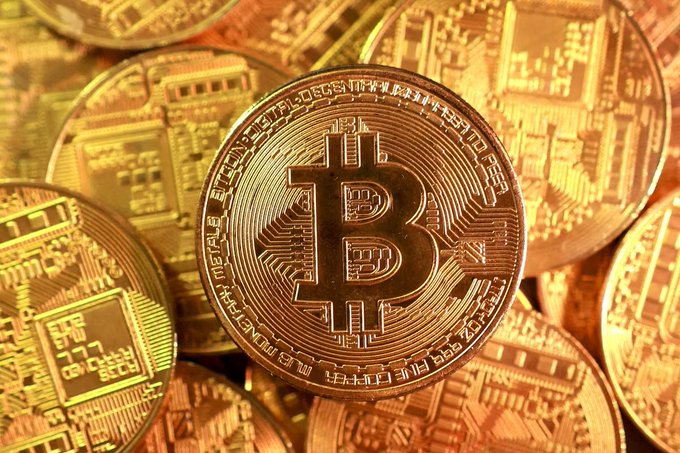
How is there a finite amount of bitcoin? Because Bitcoin was built with a hard issuance schedule: the supply cap is 21 million, new coins enter through block rewards, and those rewards are cut in half on a set cycle.
The limit comes from the protocol, not from trust
At first glance, digital money can seem infinitely copyable. That intuition makes sense for normal files, but Bitcoin does not work like a photo or document that can be duplicated without consequence. Ownership is tracked by a shared ledger, and the network accepts only transactions and issuance that follow its rules.
One of those rules is the fixed supply cap. No central operator gets a special button to create extra bitcoin outside the schedule. If a block tried to include more new coins than the protocol allows, nodes following Bitcoin’s rules would reject it.
That is the key distinction: scarcity in Bitcoin is enforced by verification, not by a promise from a company or government.
How new bitcoin is created
Bitcoin was not released all at once. New coins are introduced over time through mining. In simple terms, miners compete to package transactions into new blocks. When a valid block is added to the chain, the successful miner can receive a block reward, and that reward includes newly issued bitcoin.
A useful comparison is a ticket machine programmed before it is switched on. It dispenses tickets at regular intervals, but the machine does not decide on the fly how many to print forever. The schedule is already built in. Miners compete for the reward; they do not set the monetary policy.
Bitcoin also targets a new block roughly every 10 minutes. That timing matters because issuance is tied to block production, not to someone making a discretionary decision behind the scenes.
Why supply does not keep expanding forever
The answer is the halving mechanism. About every 4 years, or every 210,000 blocks, the block reward is reduced by half. Known halving years include 2012, 2016, 2020, and 2024. As that process repeats, new supply keeps slowing down.
Think of filling a tank with a faucet that gets tightened every few years. Water still flows, but the stream gets smaller each time. Bitcoin issuance works in a similar way: coins continue to enter circulation, yet the rate falls again and again, so the cumulative total moves toward the cap instead of running past it.
This is where many people get tripped up. Finite does not mean all supply appears at once or that issuance stops immediately after launch. It means the path of issuance is bounded from the start and becomes more restrictive over time.
Could people just change the cap?
In software terms, code can always be edited. That part is not mysterious. The harder question is whether a changed version would still be accepted as Bitcoin by the wider network of nodes, miners, businesses, and holders.
Bitcoin’s fixed cap is not a side detail; it sits close to the center of why many participants care about the asset in the first place. A proposal to expand supply would face resistance from users who value predictable scarcity. If enough participants refuse the change, the modified rules do not automatically become the Bitcoin most people recognize.
So the real answer is social as much as technical. A supply increase is not impossible to code, but it is very hard to make the broader network agree that the new rules define Bitcoin.
Finite supply does not mean ordinary users are shut out
Some people hear “21 million” and assume there will not be enough to go around. That misses an important detail: bitcoin is divisible. The smallest unit is 1 satoshi, equal to one hundred millionth of a BTC. Users do not need to buy a whole coin to hold or transfer value.
That is why a capped supply does not make the system unusable. The cap limits total issuance, while divisibility allows smaller units to be used for pricing and payments. If your question is really about value rather than mechanics, the market price is set by supply and demand, liquidity, sentiment, and broader macro conditions. To check the live price, use an exchange or market data service instead of assuming the cap alone tells you what bitcoin should cost.
FAQ
Why can’t Bitcoin just be copied endlessly like any other digital file?
Files can be copied, but valid bitcoin balances depend on the shared ledger and consensus rules. A copied file does not create accepted ownership, and coins issued outside the rules are rejected by the network.
What happens when all bitcoin has been issued?
Bitcoin can still function as a payment and settlement network because its main job is to verify and record transactions. New issuance is one incentive in the system, but it is not the same thing as the network’s basic purpose.
Was all 21 million bitcoin available from day one?
No. Bitcoin began with the genesis block in January 2009 and releases new coins over time through block rewards. The pace is shaped by the block schedule and the recurring halving events.
Does finite supply guarantee a higher price?
No. Scarcity can influence how people value an asset, but price still depends on demand. Market mood, risk appetite, and trading conditions can all move bitcoin sharply in either direction.
Do you need to buy a full bitcoin to participate?
No. Because bitcoin is divisible into satoshis, users can buy or transfer smaller amounts. The fixed cap and the minimum unit solve two different problems.
If you want to understand Bitcoin’s scarcity, focus on three moving parts: the 21 million cap, block rewards, and the halving cycle. Once those pieces click together, the idea of a finite bitcoin supply stops sounding strange and starts looking like a design choice enforced by the network itself.
Disclaimer: This article is for informational and educational purposes only and is not investment, financial, or legal advice. Crypto assets are highly volatile and you could lose your entire investment. Do your own research and decide carefully.