
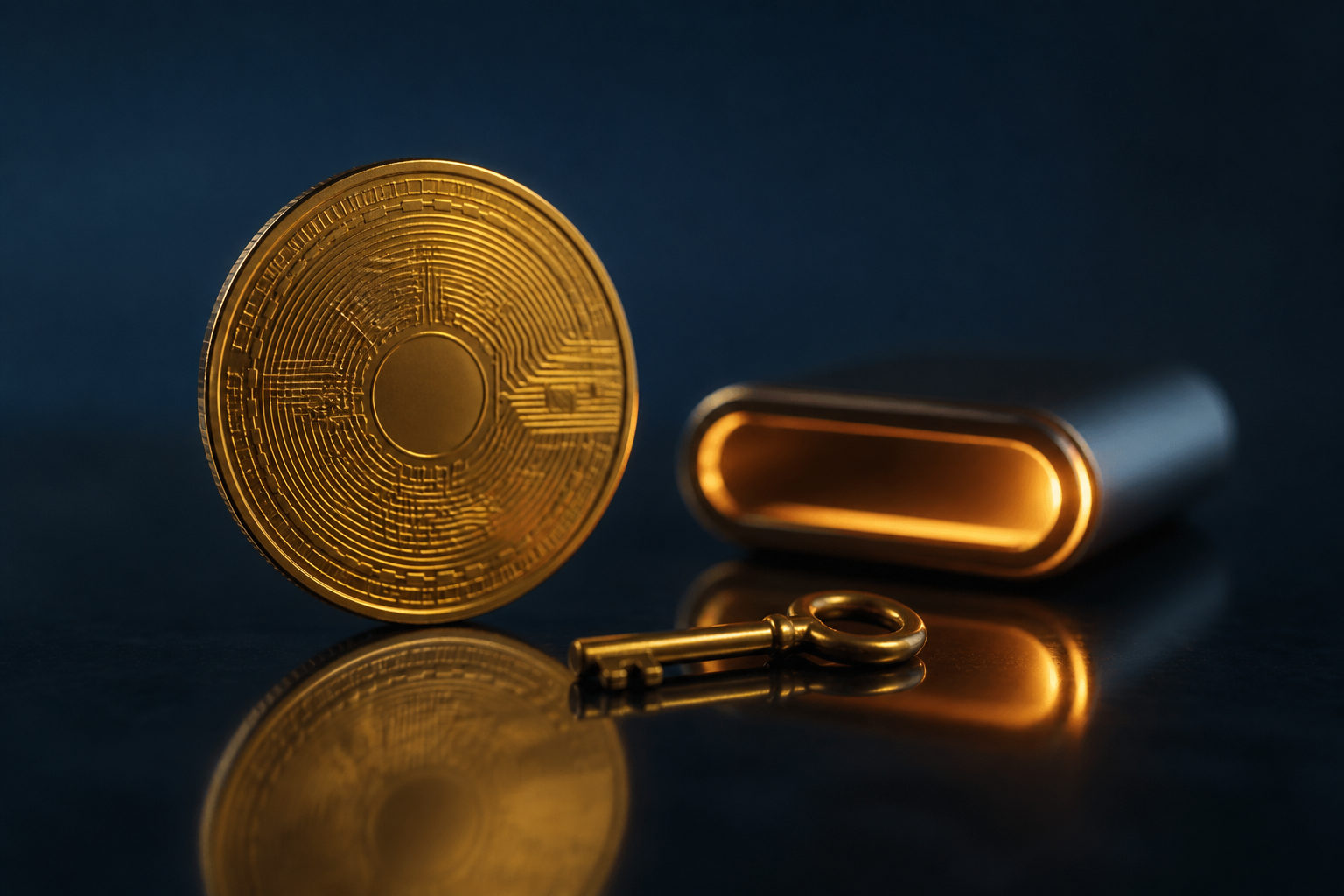
“A mere coin that's worth bitcoin” usually refers to a physical or symbolic item tied to Bitcoin ownership, access, or pricing, not to an ordinary coin that magically becomes Bitcoin on its own.
Why the phrase causes confusion
The phrase sounds simple, but it mixes two very different things: a physical object and a digital asset. Bitcoin exists on a blockchain, and control comes from private keys, so an object with the Bitcoin logo does not automatically carry BTC value.
That distinction matters because many products are sold with Bitcoin imagery. Some are souvenirs, some are collectible pieces, and some are packaging for stored wallet access. If the item does not give the holder a verifiable claim to actual BTC, it should be treated as merchandise first.
When people ask about a coin “worth bitcoin,” the useful question is whether the item represents control, custody rights, or only branding. Once that is clear, the rest of the evaluation becomes much easier.
What this phrase may refer to in practice
Physical items that contain wallet access
Some products are built as physical carriers for Bitcoin access. They may contain hidden credentials, sealed key material, or another method that lets the owner import or spend the associated BTC later.
In that case, the value does not come from the metal, shape, or printing. It comes from whether the linked wallet still holds funds and whether the access method was created and stored in a trustworthy way.
This is where many buyers get caught off guard. A sealed item can look untouched while the secret behind it may already have been copied. If someone else saw the key first, the object can stay in your hand while the Bitcoin is already gone.
Custodial claims dressed up as a “coin”
Some offerings use the word coin as shorthand, but the buyer is really getting a platform balance, a custodial receipt, or a redeemable claim. That setup may track Bitcoin, yet the user does not directly control the asset on-chain.
The difference is practical, not cosmetic. If redemption depends on a company, on platform rules, or on account approval, the holder owns access through an intermediary rather than direct control of BTC.
Collectibles and novelty items
Another category is simple: collectible goods. A brass token with the Bitcoin symbol may have resale value because of design, scarcity in the collector market, or metal content, but that is still different from owning Bitcoin itself.
People often blur these categories because the same visual language appears across all of them. The symbol may be identical while the rights attached to the object are completely different.
How to judge whether a coin can really be “worth Bitcoin”
Start with the source of value. Is the item linked to a private key, a custodial promise, or a resale market for memorabilia? Those are three separate value models, and they should not be treated as interchangeable.
Next, ask how the claim can be verified. A serious product should make it possible to confirm the relevant wallet arrangement, check that the associated BTC has not already been moved, and understand how control would be transferred to the buyer.
If the seller keeps the process vague, that is already useful information. Ambiguity around verification usually means the buyer is being asked to trust packaging, reputation, or storytelling in place of hard proof.
You also need to know who can act first. If the issuer, reseller, or storage provider may still have a copy of the credentials, then the item depends on trust in that party. With Bitcoin, control matters more than presentation.
Exit options are just as important. An item that truly stands in for BTC should allow the holder to move the value into a wallet they control. If the value remains trapped inside the original system, the item is closer to a managed product than to self-held Bitcoin.
Why a physical object can feel like Bitcoin even when it is not
Physical possession creates a strong sense of ownership. People naturally assume that holding an object means holding the value attached to it, yet Bitcoin ownership is defined by cryptographic control, not by who keeps a token in a drawer.
Another source of confusion is pricing language. A seller can quote an item in BTC terms or say that one token corresponds to one unit, but pricing does not create on-chain ownership. A collectible may be marketed around Bitcoin without containing any Bitcoin rights at all.
There is also a psychological shortcut at work. A visible object feels easier to understand than wallet security, key management, and blockchain verification, so buyers may pay more attention to appearance than to the legal or technical structure behind the item.
For beginners, a good filter is this: if the sales pitch spends more time on design, rarity, or presentation than on independent verification and transfer control, treat the product carefully.
Useful context about Bitcoin itself
Bitcoin was introduced in the white paper Bitcoin: A Peer-to-Peer Electronic Cash System and the first block appeared in 2009. Its creator used the name Satoshi Nakamoto, though the real identity remains unknown.
The system has a supply cap of 2100 million coins. Bitcoin can also be divided into smaller units, with 1 satoshi equal to one hundred millionth of 1 BTC. That divisibility is one reason physical representations can be misleading: ownership can be split, shared, wrapped, or represented in many ways without changing what Bitcoin actually is.
New blocks are added about every 10 minutes, and the issuance schedule changes through a halving about every 4 years, or every 210000 blocks. Those design rules belong to the network itself; a souvenir coin or branded token does not inherit those properties just by using the name.
FAQ
Does a physical Bitcoin coin count as actual BTC
Only if it gives you a real, verifiable path to control the linked Bitcoin. A decorative coin with the Bitcoin symbol is still just an object unless it carries valid access rights.
If a coin says BTC on it, do I own Bitcoin
Not necessarily. You own Bitcoin only when you hold direct control of the wallet credentials or a clearly defined redeemable claim that can be checked and exercised.
How can I verify whether such a coin has real value behind it
Ask for a method that lets you confirm the claim independently. You should understand how the value is stored, whether it remains unspent, and how you can move it into your own wallet.
Is a collectible Bitcoin coin a good way to get exposure
It may suit collectors, but it is a different decision from buying Bitcoin itself. Collectibles carry design premiums, authenticity concerns, and resale market risk that do not match normal BTC ownership.
If I only want Bitcoin, what is the cleaner route
Use a wallet structure you understand and make sure you know who controls the keys. That keeps the focus on the asset rather than on a physical wrapper that may add confusion.
If you come across “a mere coin that's worth bitcoin,” pause before looking at the object and inspect the rights behind it. The real question is simple: are you buying a souvenir, a claim, or actual control of BTC.