
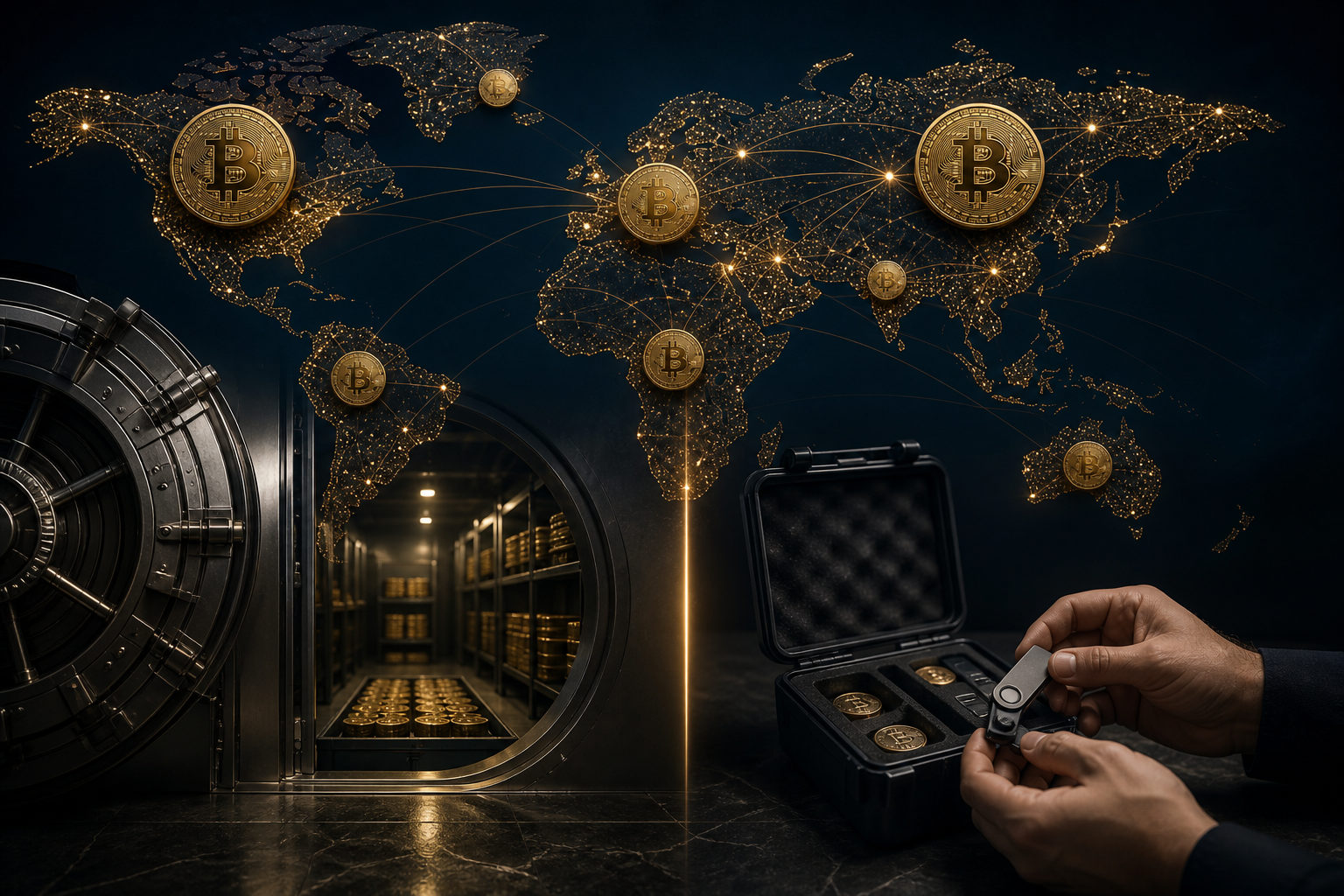
Which country owns the most bitcoin? There is no single permanent answer unless you first separate government-controlled bitcoin, custodied bitcoin, exchange-held customer assets, and privately owned bitcoin.
Why this question does not have one clean answer
People often ask which country owns the most bitcoin as if ownership were easy to read from the blockchain. It is not. Bitcoin addresses show balances and transfers, but they do not identify a country, a government agency, a fund, an exchange, or a household.
That means public discussion relies on a mix of official disclosures, court records, seizure announcements, public company filings, fund documents, and blockchain analysis. Each source shows only part of the picture. A large address may reflect state control after a seizure, a custodian holding assets for clients, or an exchange wallet storing coins for users around the world.
So the headline version of the question is already too broad. Before anyone can answer it in a useful way, the category of ownership has to be defined.
Four different meanings of “owns the most bitcoin”
Government-held bitcoin
This is the version that gets the most attention in news coverage. Governments may control bitcoin because law enforcement seized it, courts ordered forfeiture, or agencies took custody during legal proceedings. In some cases, the state may hold those coins for a period of time before selling, transferring, or otherwise disposing of them.
That distinction matters. Government control does not always mean a long-term strategic position. A country can appear to hold a large amount of bitcoin at one moment and then hold much less later without any change in its broader policy view.
Custodied assets for funds and institutions
Large investment products often use professional custodians. On-chain, the bitcoin may sit in addresses associated with a custodian in one jurisdiction. Economically, though, the beneficial owners can be spread across many countries. Treating custody location as national ownership can produce a very misleading ranking.
Exchange wallets
Some of the largest known wallets belong to trading platforms. Those balances are usually pooled customer assets rather than coins owned by the exchange itself. If an exchange operates in one country, that does not mean all bitcoin in its wallets belongs to that country.
Private ownership by residents
This is probably the hardest version to measure. If the real question is which country’s residents collectively hold the most bitcoin, the blockchain still cannot give a direct answer. Many people use self-custody, hardware wallets, multisignature setups, or offshore platforms. Their coins may be visible on-chain, but their nationality, residence, and tax status are not.
How the topic is usually discussed in practice
In serious discussion, the question usually splits into two separate questions. One asks which government controls the most bitcoin. The other asks which country has the largest overall exposure through households, companies, funds, and other private actors.
These are not interchangeable. Government-controlled bitcoin is sometimes easier to track because seizures, forfeitures, and official transfers may appear in public records. Private ownership is much harder to estimate because it is spread across many wallets, legal structures, and custodians.
Even when public data exists, interpretation remains tricky. A wallet movement does not always mean buying or selling. It may reflect internal transfers, security procedures, a custody change, or progress in a legal case. That is why confident rankings should always be read with caution.
Why some countries are mentioned more often than others
Some countries appear again and again in public debate about bitcoin ownership. Usually that happens because they have more visible capital markets, more public company disclosures, more mature fund structures, more identifiable custodians, or more transparent legal records tied to seized assets.
Visibility is not the same as certainty. A country can look dominant simply because more of its relevant activity is public. Another country may have significant private ownership that is much harder to observe because users prefer self-custody, local disclosure is limited, or major holdings sit behind structures that do not map neatly to a national label.
That is the main trap in this topic. People confuse what is easiest to see with what is largest in reality.
What to check before trusting any ranking
- Definition: Is the ranking about governments, public companies, funds, exchanges, or residents in aggregate?
- Source quality: Does it rely on official documents, company filings, court records, or just repeated media claims?
- Custody versus ownership: Are client assets being counted as if they belonged to the custodian or the custodian’s home country?
- Temporary control versus long-term holding: Seized bitcoin should not automatically be treated as a strategic national reserve.
- Data freshness: Bitcoin can move quickly, and a transfer does not always mean a change in economic ownership.
If a ranking does not explain those points, it is better treated as a rough talking point than as a hard conclusion.
What readers usually want to know behind this question
In many cases, people are not really asking for a neat league table. They want to know where bitcoin adoption looks deepest, where institutional participation is strongest, and whether any state has meaningful influence through direct control of coins.
That is a better way to think about it. Instead of chasing a simple answer to which country owns the most bitcoin, ask a more precise set of questions. Is the country visible because of seizures? Because listed companies disclose bitcoin positions? Because investment vehicles are popular there? Because self-custody is common among residents? Each explanation points to a different type of market exposure.
For investors and researchers, that distinction is practical. State-controlled coins may create headlines but do not always signal conviction. Exchange wallets can look huge but represent customer balances from many places. Custodians may hold bitcoin inside one legal system while the economic owners live elsewhere. And private ownership often remains the least measurable part of the whole picture.
FAQ
Which government is believed to control the most bitcoin?
There is no permanent answer that stays reliable over time. Government balances can change with seizures, court orders, transfers, auctions, and other disposal decisions, so any ranking depends on timing and source quality.
Which countries are most often mentioned in bitcoin ownership discussions?
Countries with more public disclosures, identifiable custodians, active capital markets, or visible enforcement records usually get mentioned more often. That says a lot about transparency, but not everything about real ownership.
Can the blockchain show which country owns a wallet?
No. The blockchain records addresses and transactions, not nationality, residence, or jurisdiction. National attribution usually comes from public filings, legal documents, or informed analysis rather than from the chain itself.
Do exchange wallets count as bitcoin owned by the country where the exchange operates?
Usually no. Exchange wallets often hold pooled customer assets, so the platform’s location should not be confused with the final owners of the coins.
Does seized bitcoin mean a government is bullish on bitcoin?
Not by itself. Seizure means control, not necessarily long-term commitment. Governments may hold seized bitcoin for legal or administrative reasons and later sell or transfer it.
If you want a reliable read on this topic, start by checking the definition, then the source, then whether custody has been confused with ownership. That simple filter removes a large share of weak claims about which country owns the most bitcoin.
Disclaimer: This article is for informational and educational purposes only and is not investment, financial, or legal advice. Crypto assets are highly volatile and you could lose your entire investment. Do your own research and decide carefully.