
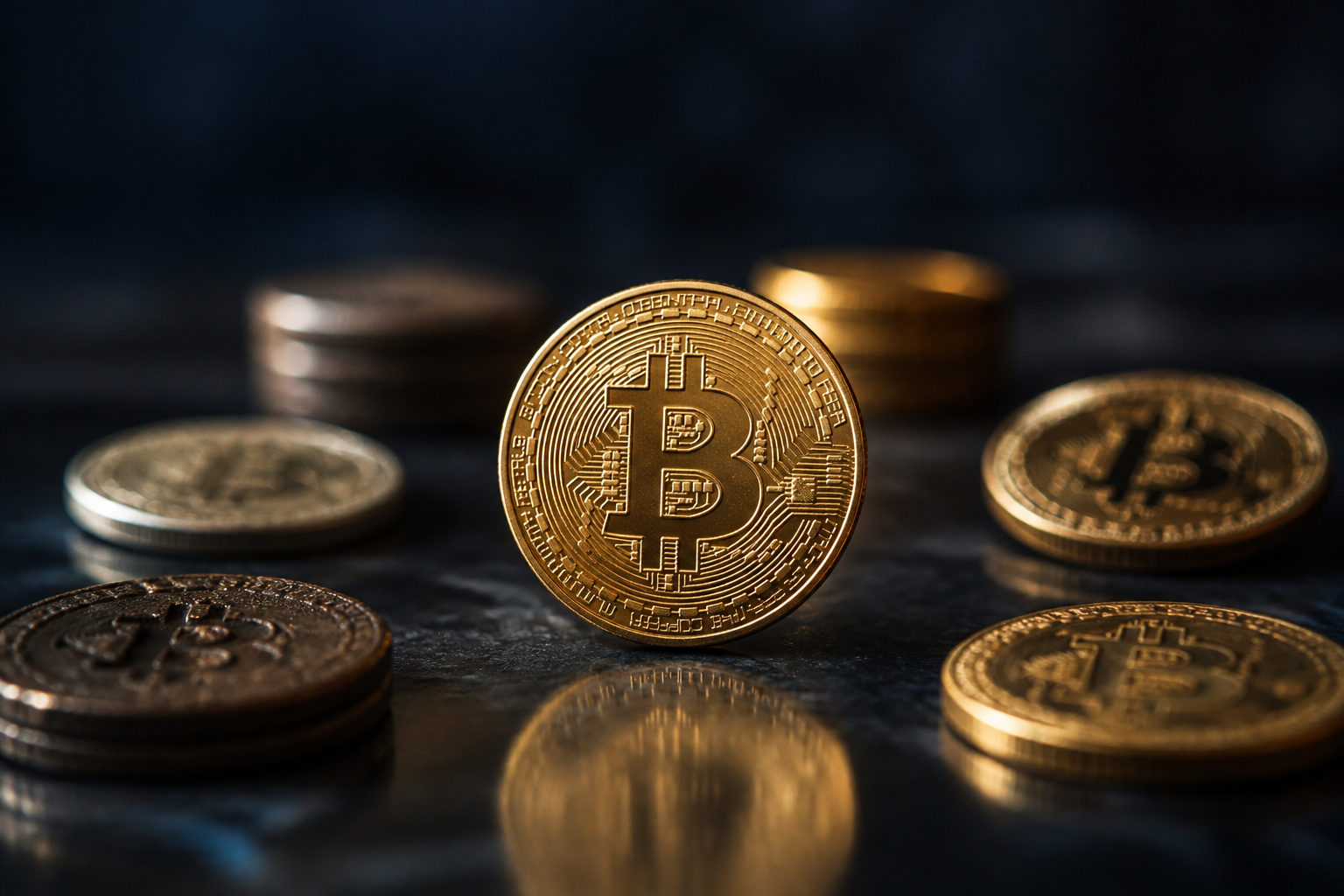
The bitcoins that are worth money are usually real BTC on the Bitcoin network, or clearly defined Bitcoin-related assets that buyers are willing to pay for. The label alone means very little; verifiability, transferability, and market demand matter far more.
What people usually mean by this question
When someone asks which bitcoins are worth money, they are often mixing together several different issues. They may be asking whether the coin they own is genuine BTC, whether a Bitcoin-themed token or product has real resale value, or whether some kinds of bitcoin are worth more than others.
The best way to answer the question is to sort assets into categories first. Start with whether it is native BTC, then ask whether you can control it directly, and only after that look at whether a market exists for it. If the first two points fail, the asset may still have a story, but it may not have dependable monetary value.
The main kinds of Bitcoin-related assets that can hold value
| Category | Why it may be worth money | What to check | Common mistake |
|---|---|---|---|
| Native BTC on the Bitcoin blockchain | It is the base asset of the network and has the strongest market acceptance | Whether standard Bitcoin wallets and platforms recognize it | Confusing BTC-branded tokens with actual bitcoin |
| Fractions of BTC | You do not need a full coin for it to have value | Bitcoin can be divided into satoshis | Thinking only whole bitcoins count |
| Special sats or special UTXOs | Some collectors may pay a premium for traceable attributes | Whether there is a real buyer community | Assuming niche demand is universal demand |
| Wrapped or represented BTC assets | They may be useful in other systems or applications | Custody, redemption rights, and issuer credibility | Treating them as risk-free equivalents of native BTC |
| Bitcoin-linked rights or products | Markets may price them based on utility or expected cash flow | How clear the structure and trading rules are | Assuming anything linked to Bitcoin is the same as bitcoin |
For most people, the clearest answer is native BTC. It has the strongest market recognition because it exists directly under Bitcoin's own rules. Bitcoin has a hard cap of 21,000,000 BTC, with issuance expected to continue until around 2140. That fixed supply path is one of the core reasons people assign value to it at all.
A partial amount can still be worth money. The smallest unit is 1 satoshi, equal to 0.00000001 BTC. So the question is not whether you own a whole coin, but whether the amount you own is real, transferable, and salable in a functioning market.
Three tests that decide whether a bitcoin asset is truly valuable
Can it be verified under Bitcoin's rules?
Bitcoin has operated as an open network since the genesis block on 2009-01-03. New blocks target an interval of about 10 minutes. If an asset cannot be recognized by standard Bitcoin wallets, common blockchain tools, or established market venues, it should not automatically be treated as genuine BTC.
This is where many people get misled. A platform balance may show a BTC amount on screen, yet that does not always mean you control bitcoin on-chain. If you cannot withdraw it to a Bitcoin address that you control, you may only have a platform claim rather than full possession of BTC itself.
Is there real liquidity?
An asking price is not the same as market value. An asset is worth money in practice when buyers are willing to complete transactions repeatedly, not when a seller posts a hopeful number. Native BTC generally has deeper and broader liquidity than niche Bitcoin collectibles or highly specialized sat categories.
Liquidity changes how useful value really is. Something can seem rare and still be hard to sell. If a buyer must be found through a small collector circle or a private negotiation, the asset may have a theoretical premium but weak day-to-day tradability.
Is the scarcity recognized by the market?
Bitcoin's core scarcity is written into the protocol. The block subsidy is cut in half every 210,000 blocks, roughly every four years. Those halvings took place on 2012-11-28, 2016-07-09, 2020-05-11, and 2024-04-19. The current block reward is 3.125 BTC, and with about 144 blocks per day, the network adds roughly 450 BTC daily. The next halving is expected around 2028.
Those facts support the value case for BTC as a whole. They do not automatically make every Bitcoin-themed item valuable. A special sat, a vintage wallet file, or a historical claim may be scarce in some technical sense, but scarcity only becomes money when a meaningful number of buyers agree that it matters.
Items people often mistake for valuable bitcoin
| Situation | Why it looks valuable | What you actually need to verify |
|---|---|---|
| A token with BTC in the name | It looks connected to bitcoin | Whether it is native BTC or a different token on another chain |
| A BTC balance shown by an exchange or app | The interface presents it as bitcoin | Whether you can withdraw it to your own Bitcoin wallet |
| A physical coin or commemorative product | It may look rare or historic | Whether it includes spendable BTC or is only a collectible item |
| An old wallet without access credentials | It may once have held BTC | Without the private key or seed phrase, control is usually gone |
| A wrapped BTC product | Its price may track BTC closely | Whether custody and redemption are credible and transparent |
A major source of confusion is the difference between being related to Bitcoin and being bitcoin. The market does not reward branding by itself. If the asset depends on another issuer, another chain, or another set of transfer rules, its value should be judged on those terms, not on the strength of Bitcoin's name.
People also assume that older bitcoin must be worth more than newer bitcoin. For ordinary BTC, that is not how the protocol works. One BTC is one BTC at the protocol level. Extra value only appears if a buyer specifically wants a coin or sat tied to a certain history, trace, or collection rule. That can happen, but it is a niche condition, not a universal one.
A practical checklist for judging whether your bitcoin is worth money
| Checkpoint | Question to ask | Why it matters |
|---|---|---|
| Asset type | Is it native BTC, a wrapped version, or a different token? | This defines the source of value and the source of risk |
| Control | Can you move it yourself or withdraw it to your own wallet? | Control affects whether you can truly use or sell it |
| Verifiability | Do standard Bitcoin tools identify it consistently? | Easy verification usually improves trust and saleability |
| Market access | Are there active buyers and normal trading venues? | Value is easier to realize when trading is straightforward |
| Premium source | Is any extra price based on real demand or seller marketing? | This helps separate collector demand from pure hype |
If what you really want is the current price, that is a separate question and depends on live market data. This article does not provide a real-time BTC quote. A better first step is to confirm whether the asset in front of you is actual BTC that can be verified and transferred, because only then does the price question become meaningful.
Bitcoin history does include events that make some users care more about early chain activity. One famous example is Bitcoin Pizza Day on 2010-05-22, when Laszlo Hanyecz bought two pizzas for 10,000 BTC. Historical interest can shape collector demand in certain corners of the market, but it still does not mean every old or story-rich Bitcoin-related object commands a premium.
FAQ
Do you need a whole bitcoin for it to be worth money?
No. Bitcoin is divisible, and the smallest unit is 1 satoshi, or 0.00000001 BTC. Any genuine amount of BTC can have value if there is a market price and you can actually control and transfer it.
Are older bitcoins worth more than newly acquired ones?
Ordinary BTC is not priced differently by age at the protocol level. A premium only appears when a buyer cares about a specific history, source, or collectible attribute tied to that coin or sat.
Is any coin with BTC in its name basically the same as bitcoin?
No. Many assets borrow Bitcoin branding while existing under completely different rules. You need to check which chain it lives on, how it is issued, and whether it can be redeemed or transferred as actual BTC.
If an exchange shows BTC in my account, does that mean I fully own bitcoin?
Not always. The key question is whether you can withdraw it to a Bitcoin wallet that you control. If you cannot, what you hold may be an account claim rather than direct on-chain control.
Are special sats always more valuable than regular BTC?
No. Their premium depends on collector interest and can be much less liquid than standard BTC. If your priority is broad market acceptance and simpler resale, regular native BTC is usually the more practical asset.
If you want a clean answer to which bitcoins are worth money, use this order: identify whether it is native BTC, confirm that you control it, and then check whether a real market exists. That sequence removes most of the confusion before you even look at price.
Disclaimer: This article is for informational and educational purposes only and is not investment, financial, or legal advice. Crypto assets are highly volatile and you could lose your entire investment. Do your own research and decide carefully.