
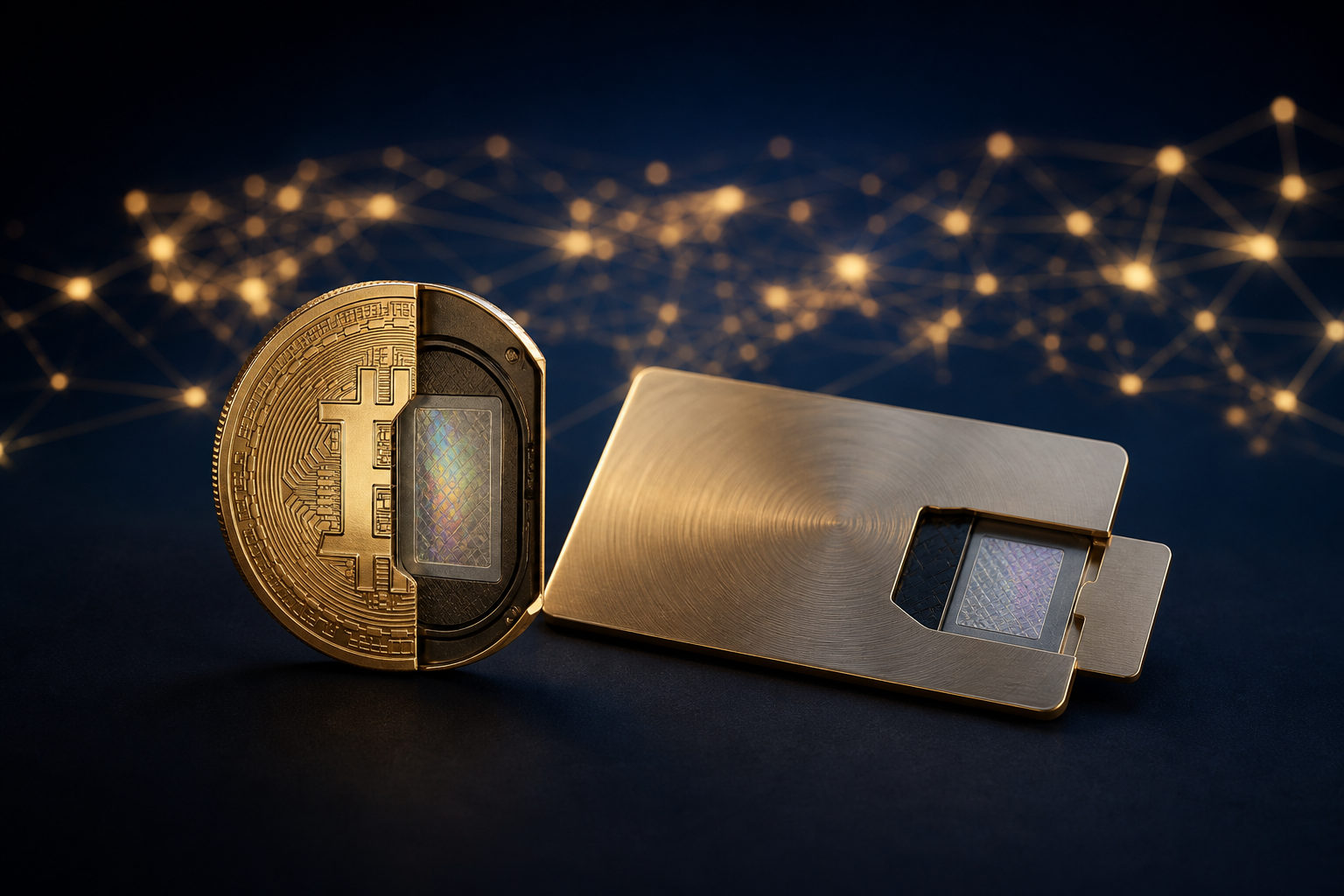
A physical bitcoin is not Bitcoin itself. In most cases, it is either a collectible item or a physical container for private-key information, while the real BTC exists only on the blockchain.
What people mean by a physical bitcoin
Beginners often hear the phrase and picture a digital coin turned into a real one they can hold. That is the core misunderstanding. A physical bitcoin can refer to a metal token, a printed paper wallet, a card with access details, or a sealed collectible that may contain key information.
These items do not all do the same job. Some are only souvenirs with the Bitcoin symbol on them. Others are built to store a private key or redemption details that can give access to BTC held at a blockchain address.
Why Bitcoin itself is not physical
Bitcoin was designed as a digital system from the start. Since the genesis block in January 2009, ownership has been represented by entries on the blockchain, with control proven through cryptographic keys rather than by handing over a physical object.
That means you never hold Bitcoin in the same way you hold cash or a gold coin. What you hold is control information. A so-called physical bitcoin is just a way to package that control information into something tangible for storage, display, gifting, or collecting.
The difference between the object and the asset
The easiest way to think about it is this: the asset is on-chain, the object is off-chain. The BTC is the asset. The coin, card, or paper is only a storage medium for the information needed to control that asset.
This distinction matters because the object can be damaged, copied, opened, or resold. The blockchain record remains where it is, but access can be lost or stolen if the private key has been exposed. A beautiful metal token does not prove ownership of BTC, and a sealed product is not automatically safe.
Common forms
- Collectible tokens: decorative items with no BTC attached.
- Paper wallets: printed storage for addresses and private keys.
- Physical cards: card-based storage for access details.
- Sealed collectibles: items that may contain hidden key or redemption data.
What to check before buying one
If you are thinking about buying a physical bitcoin, first ask what is actually being sold. Is it a souvenir, a collector's item, or a device that gives access to on-chain BTC? Those are very different products, even if they look similar in photos.
Next, focus on key security. Who generated the private key? Could anyone have seen it before sale? Is the seal meaningful, or is it just packaging? Can you move the BTC to your own wallet right after receiving the item? For most beginners, learning to use a wallet they control is safer than trusting an unknown seller's setup.
Another common mistake is to assume that a physical form is safer because it feels more real. In practice, a physical wrapper can add risk if the key generation and handling process is unclear. Tangibility does not equal security.
FAQ
Do physical bitcoins actually exist?
Yes, but usually as collectibles or as containers for private-key information. Bitcoin itself does not become a physical coin, because the asset remains on the blockchain.
Is Bitcoin something you can hold in your hand?
No. What you can hold is an object related to Bitcoin, such as a token, card, or paper wallet. The BTC itself is still digital and controlled through keys.
Does buying a physical bitcoin mean you bought BTC?
Not always. It only represents BTC if it includes valid access information for on-chain funds and that information has not been exposed to anyone else.
Are collectible physical bitcoins safe?
They may be safe, but appearance alone tells you very little. If a private key was copied at any point, the BTC linked to it may no longer be under your exclusive control.
What should a beginner do instead?
If your goal is to own Bitcoin rather than collect memorabilia, start by learning how wallets, backups, and private keys work. That gives you a clearer view of what a physical product can and cannot do.
A more practical way to think about it
If you see the phrase “a physical bitcoin,” treat it as a packaging description, not a different kind of Bitcoin. Decide first whether you want a collectible or actual control of BTC, then check how the keys are created, stored, and moved before you pay for anything.