
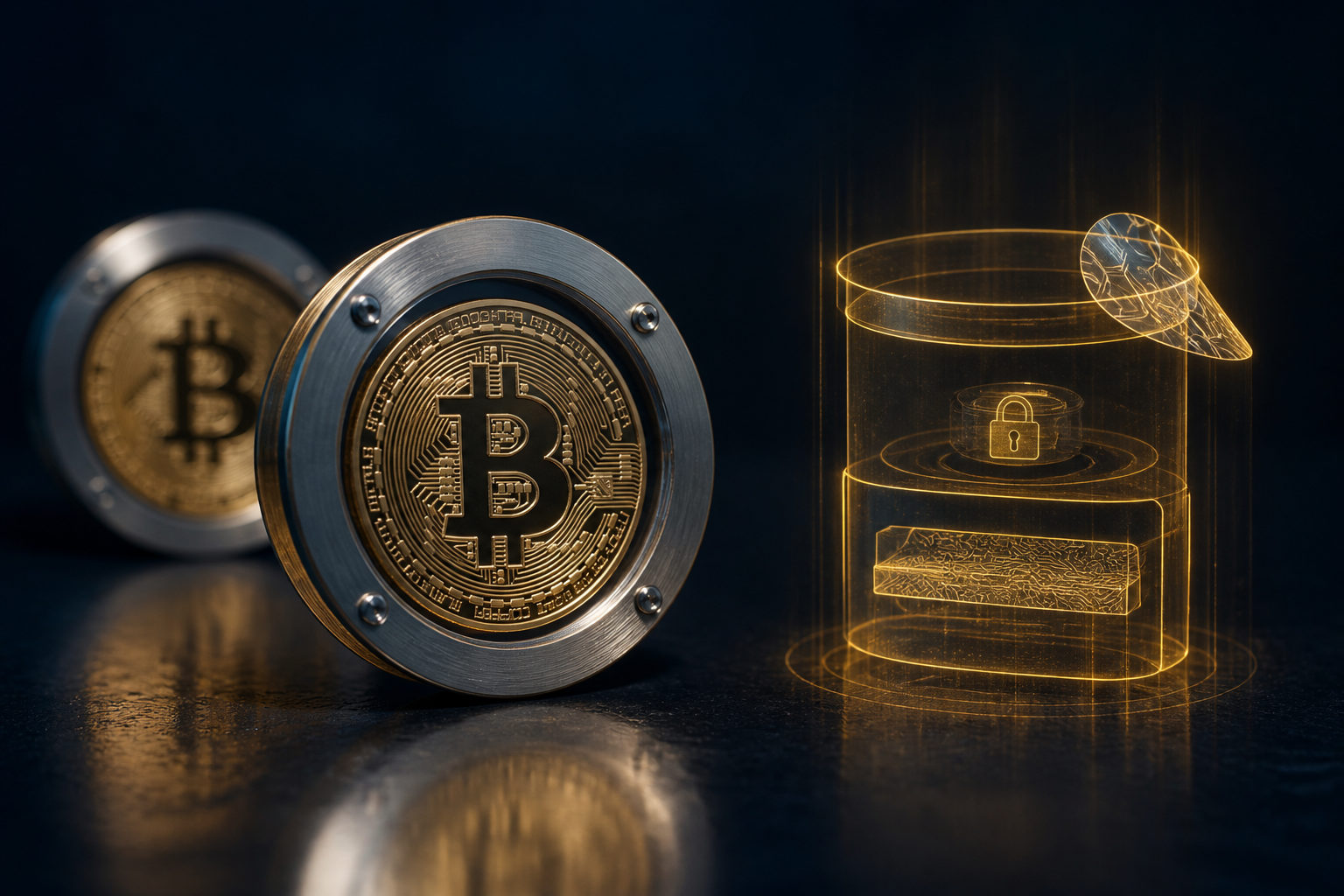
Physical bitcoins can be worth something, but the real value usually comes from either access to actual on-chain bitcoin or from collectible demand, not from the metal object by itself.
What a physical bitcoin actually is
Beginners often picture bitcoin as something that could be minted into a coin and stored in a drawer. That is the first mistake to fix. Bitcoin itself is a digital asset on a blockchain, so a metal token with a Bitcoin logo is not automatically bitcoin in the network sense.
In practice, a physical bitcoin is usually a container, a representation, or a themed object. It might be a metal coin, a card, or another item designed to hold or point to private key information. So the object is not the bitcoin itself. It is either a souvenir, a collectible, or a physical carrier tied in some way to digital control information.
Where the value can come from
There are two main sources of value, and they should be treated separately. One is the value of actual bitcoin that can be controlled on-chain. The other is the value collectors assign to the object as a piece of crypto history, design, or memorabilia.
It may represent spendable on-chain bitcoin
If a physical item contains a private key, and that key still controls bitcoin that has not been moved, then the item may have direct monetary value. In that case, what matters is not the weight, shine, or packaging. What matters is whether the holder can prove that the linked bitcoin exists and that the spending authority has not already been compromised.
This is the part many buyers miss. If the private key has been exposed, copied, photographed, or used, then the object may no longer represent any claim on bitcoin at all. It can still exist as a collectible, but its function as a gateway to on-chain funds may be gone.
It may have collectible value even without spendable bitcoin
Some physical bitcoins attract collectors for reasons that have little to do with current access to funds. Design, condition, rarity, community recognition, and the story behind the piece can all matter. In that case, the market is acting more like a collectibles market than a simple bitcoin holding market.
That distinction matters. A collectible premium is not the same thing as bitcoin value. An item can be desirable because it represents a moment in crypto culture, while having no usable private key or no linked balance at all. For a beginner, mixing those ideas together is one of the fastest ways to overpay.
Common misunderstandings beginners should avoid
The phrase “physical bitcoin” sounds straightforward, but it hides several different ideas. Once those are separated, the question becomes easier to answer.
- A Bitcoin-branded object is not automatically bitcoin. It may only be a themed token or display piece.
- Control comes from the private key, not the casing. Whoever controls the key controls the on-chain bitcoin.
- “Unopened” does not guarantee safety. Packaging can look intact even if key information was copied earlier.
- Collector interest does not prove a redeemable balance. People may pay for design or rarity alone.
Another source of confusion is that many products are marketed with Bitcoin imagery even when they are just souvenirs. There is nothing wrong with that by itself, but buyers should not assume that a decorative item carries the same economic meaning as actual BTC held in a wallet.
How to judge whether a physical bitcoin is worth buying
If you are thinking about buying one, start with the category. Ask whether it is being sold as a collectible, as a novelty item, or as an object that still provides access to on-chain bitcoin. Those are very different offers, even if the photos look similar.
- Identify the type. Is it a souvenir, a collector piece, or a key-bearing object tied to bitcoin on-chain?
- Look for independent verification. If the seller claims it corresponds to real bitcoin, there should be a way for you to check the linked address and see whether funds are still there.
- Think about key exposure risk. If anyone else had access to the private key before you, exclusive control may already be lost.
- Separate collectible pricing from bitcoin pricing. A high asking price may reflect rarity or branding rather than usable BTC.
- Consider resale reality. Even if you find it valuable, a future buyer may not agree with your reading of its worth.
For many beginners, buying bitcoin directly through a normal wallet setup is easier to understand than buying a physical object with uncertain history. Physical form can feel reassuring because it is tangible, but tangibility can also hide the very information that matters most.
Why some physical bitcoins are worth a lot and others are worth almost nothing
The answer depends on what is actually being sold. If the object has no linked bitcoin and no collector demand, then it may be little more than a themed token. If it has collector demand but no redeemable on-chain funds, then its value depends on that niche market. If it still gives safe access to actual bitcoin, then it may carry direct financial value as well.
That is why the question “are physical bitcoins worth anything” does not have a single universal answer. Some are worth money because they control bitcoin. Some are worth money because collectors want them. Some are worth very little because they are just decorative items using Bitcoin branding.
For a beginner, the safest mental model is simple: bitcoin is digital, private keys control access, and physical objects are only valuable when they either preserve that access safely or have clear collectible demand on their own.
FAQ
Does owning a physical bitcoin mean I own bitcoin?
Not necessarily. You own bitcoin in the meaningful sense only if you control the private key to bitcoin that exists on-chain.
A metal coin or card with Bitcoin branding may just be a souvenir. Without real and uncompromised key control, it should not be treated as actual BTC ownership.
Is a physical bitcoin worth anything if it has no linked balance?
It can be, but then the value usually comes from collectibility rather than from bitcoin itself. Buyers may care about design, condition, rarity, or historical interest.
If none of those factors apply, it may have little market value beyond the material it is made from or its novelty appeal.
How can I tell whether a physical bitcoin has real value?
Start by asking what kind of value is being claimed. If the claim is about on-chain bitcoin, you need a reliable way to verify the linked address and think carefully about whether the private key could have been exposed.
If the claim is about collectibility, then the question shifts to demand, condition, and whether collectors actually care about that specific piece.
Are physical bitcoins a good choice for beginners?
Usually not as a first step. They combine key security, verification, and collectibles knowledge in a way that can confuse new users.
If your goal is to learn bitcoin ownership, it is usually clearer to understand wallets and private keys first. Once that foundation is in place, physical pieces are much easier to evaluate.
If you are looking at a so-called physical bitcoin right now, do not begin with the price tag. First decide whether it is a souvenir, a collectible, or a genuine carrier of on-chain access, because that is the only starting point that makes the value question answerable.
Disclaimer: This article is for informational and educational purposes only and is not investment, financial, or legal advice. Crypto assets are highly volatile and you could lose your entire investment. Do your own research and decide carefully.