
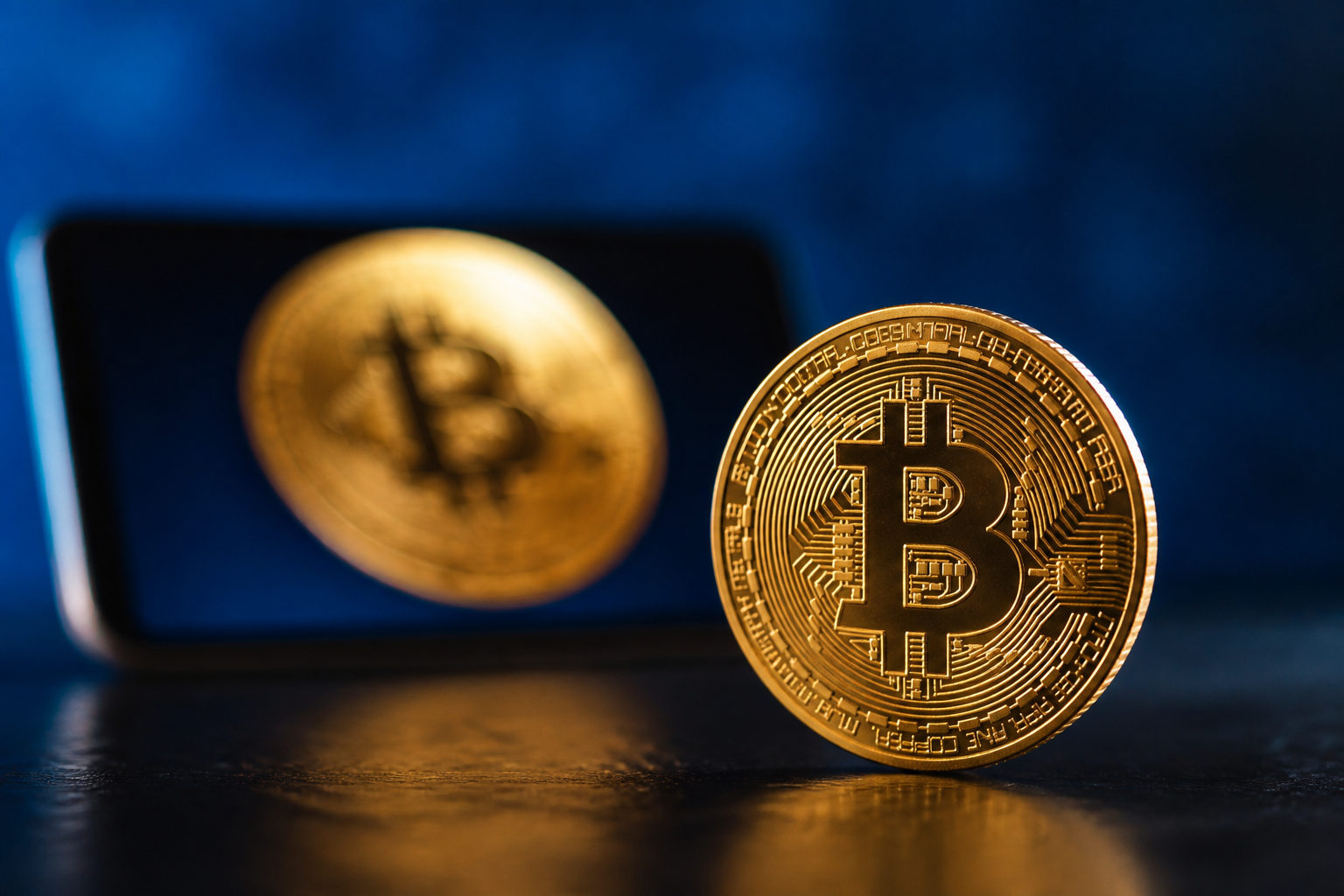
A picture of a bitcoin usually shows the symbol of Bitcoin, not the thing people actually own on the network. That distinction matters. An image can explain, decorate, or teach; it cannot prove control of BTC by itself.
Why bitcoin is so often shown as a gold coin
When people search for “a picture of a bitcoin,” many expect to see a round gold coin with a bold B in the middle. It works because the design gives shape to something you cannot hold. News sites use it. Designers use it. Beginners recognize it fast.
Still, Bitcoin has no official physical form. The network began with the genesis block on 2009-01-03, and the asset exists as entries on a blockchain tied to private-key control. So the familiar coin photo, glowing orange logo, or trading-screen background is a visual shortcut. Useful, yes. Literal, no.
| Common image type | What it usually means | What people get wrong |
|---|---|---|
| Gold coin with a B | A popular symbol for Bitcoin | People assume BTC comes as a standard physical coin |
| Wallet app screenshot | An account view, address, or balance display | A screenshot can be edited and proves very little on its own |
| Blockchain explorer page | Public transaction or block information | Seeing a record is not the same as controlling those coins |
| Paper wallet photo | A printed address, private key, or QR code | Sharing the image may create a direct security problem |
What to look for in a bitcoin image
Start with the iconography. The best-known visual mark is a capital B with two vertical strokes, often placed inside an orange circle. Online, that mark does a lot of work. It signals the topic in a split second.
Then look at the background choices. Circuit boards, lock icons, city lights, candlestick screens, QR codes, metallic textures — each one points the viewer toward a certain idea: technology, security, trading, payments, scarcity, speed. None of that makes the image evidence. It just frames the message.
Physical novelty coins create another layer of confusion. They can be photographed, collected, gifted, or displayed at events, and they look convincing in close-up shots. But the photo of a token is still just a photo of an object. Ownership of BTC depends on private keys, not on how realistic the prop looks.
What an image can do, and what it cannot do
Bitcoin images are genuinely helpful in education. A clean graphic can make an abstract topic less intimidating. A wallet screenshot can show where a receive address appears. A blockchain explorer capture can help explain what a transaction field looks like.
That is where the strength of the image ends. It cannot independently verify a balance. It cannot confirm that a payment is final. It cannot replace a backup. Even a believable screen capture may be old, cropped, edited, or taken from a demo environment.
| Use case | What the image can help with | What it cannot establish |
|---|---|---|
| Educational graphic | Explaining the basic idea of Bitcoin | Who owns any coins |
| Balance screenshot | Showing what a wallet screen looks like | That the person still controls the funds |
| Transaction screenshot | Pointing out labels and fields | Real-time on-chain status by itself |
| Photo of private key material | Illustrating cold storage formats | Safe public sharing |
This matters even at the smallest unit. One satoshi equals 0.00000001 BTC. The network tracks spendable value through keys and transaction rules, not through pictures. You can stare at an image all day and still learn nothing about who can actually move the coins.
When a bitcoin picture is enough, and when you need on-chain information
If your goal is a presentation, article header, social post, or classroom handout, a picture may be all you need. In that setting, clarity beats drama. A simple image with recognizable Bitcoin branding usually does the job better than a flashy collage stuffed with random financial graphics.
But if the task involves receiving payment, confirming a transfer, checking a wallet, or keeping records, move past the image immediately. Look at the address. Look at the transaction ID. Look at the wallet itself or a blockchain explorer. Verify what is actually there on that day.
Scams often live in the gap between those two worlds. Someone sends a screenshot that claims payment was made. Someone else shows a wallet image full of funds to look trustworthy. Neither should change your decision until you verify the relevant data yourself.
How to choose a useful bitcoin image
The right image depends on the job. For a beginner audience, the strongest choice is often the simplest one: a clear Bitcoin symbol with little visual clutter. For instructional content, an interface screenshot or annotated process image carries more value because the reader can match the picture to a real action.
Security content needs another filter. Any image that exposes a full private key, seed phrase, account name, or live QR code should be treated as sensitive material. Some pictures are fine as symbols. Others can leak access if shared carelessly.
| Scenario | Best image style | Main selection rule |
|---|---|---|
| News or editorial art | Simple symbolic Bitcoin graphic | Fast recognition without misleading detail |
| Beginner tutorial | Wallet interface or process image | Readable fields and practical context |
| Security warning | Redacted example image | No exposed sensitive information |
| Design asset use | High-contrast icon or clean composition | Easy cropping and clear scaling |
FAQ
Is there such a thing as a real photo of a bitcoin?
You can photograph bitcoin-related objects such as novelty coins, printed cards, or storage materials. The BTC itself is not a physical item sitting inside that photo. It exists on the network and is controlled through keys.
Are those gold bitcoin coin pictures fake?
They are usually real images or real design assets, but they do not show an official physical Bitcoin coin issued by the protocol. Think of them as symbols people adopted because they are easy to recognize.
Can a wallet screenshot prove someone owns bitcoin?
Not by itself. A screenshot may be old or altered, and it says nothing certain about who controls the keys at the moment you see it. Verification requires checking the wallet or the relevant on-chain record.
Should I scan a QR code shown in a bitcoin image?
Only if you understand where the image came from and what the code is supposed to do. Some QR codes are just for demos, while others point to live addresses, so it is smart to inspect the displayed address before taking any action.
Why do so many bitcoin images look almost identical?
Because the internet settled on a visual shorthand that works. Bitcoin’s white paper, “Bitcoin: A Peer-to-Peer Electronic Cash System,” was published by Satoshi Nakamoto on 2008-10-31, but the now-familiar coin-like imagery comes from design convention, not from any rule inside the protocol.
If you only need a picture of a bitcoin for recognition or design, pick one that is clean and hard to misread. If you need proof, skip the image and check the wallet or the chain data directly.
Disclaimer: This article is for informational and educational purposes only and is not investment, financial, or legal advice. Crypto assets are highly volatile and you could lose your entire investment. Do your own research and decide carefully.