
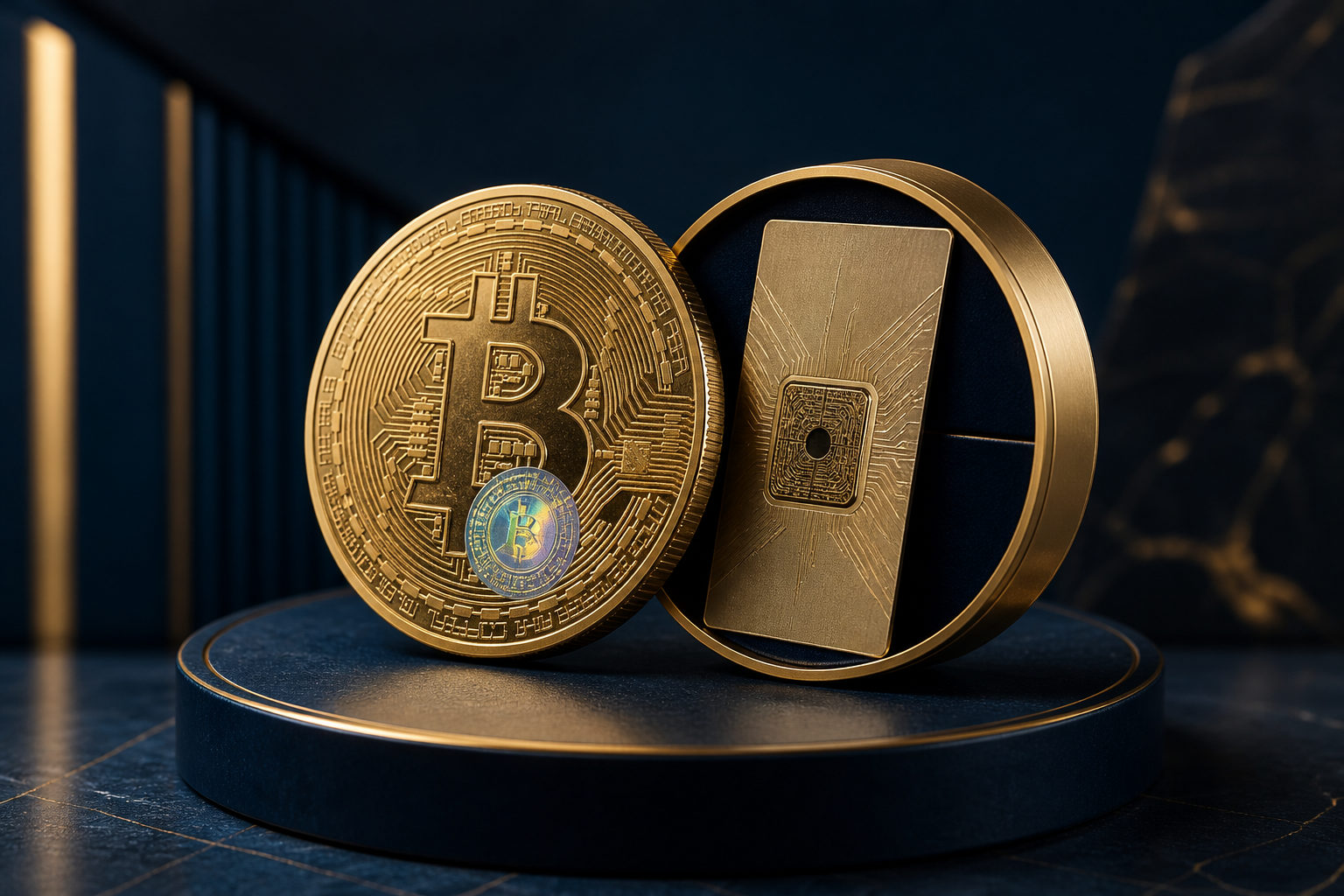
Physical bitcoins are real as tangible items, but they usually are not bitcoin in physical form. In most cases, they are objects that store or represent access to bitcoin through a private key or similar recovery information.
What people mean by a physical bitcoin
Beginners often imagine bitcoin as something that could exist like a coin in a wallet or a bill in a drawer. That is the wrong starting point. Bitcoin itself exists on the network as a record of ownership controlled by cryptographic keys, not as a metal token or printed certificate.
When people talk about a physical bitcoin, they usually mean a real-world object linked to bitcoin in some way. It might be a metal coin, a sealed card, a paper wallet, or a collectible item with hidden access information. The object is physical. The bitcoin is still on the blockchain.
That distinction matters. A shiny metal piece with the Bitcoin symbol on it is not automatically bitcoin. It may be a souvenir, a collector's item, or a storage device for a private key. Only the last category has anything to do with actual control over bitcoin.
So, are there real physical bitcoins?
The short answer is yes, if you mean objects that exist in the real world and are tied to bitcoin. The short answer is no, if you mean bitcoin itself has a native physical version. Bitcoin was introduced in the 2008 white paper titled Bitcoin: A Peer-to-Peer Electronic Cash System, and the network began with the genesis block in January 2009. Its design has always been digital.
A physical item can still matter if it contains the information needed to control coins on-chain. In that sense, the object can function like a package for ownership credentials. Still, the thing you hold is not the bitcoin itself. It is only a container, a pointer, or a key holder.
This is where many new users get confused. Physical form feels more real because you can touch it. Bitcoin ownership, though, does not depend on touch. It depends on whether you control the private key and whether that key has remained secret.
How a physical bitcoin can be real and still be misunderstood
A good way to think about it is to separate appearance from control. Appearance tells you almost nothing. Control tells you nearly everything.
Collectible item vs. key carrier
Some products called physical bitcoins are only themed merchandise. They may look impressive, come in presentation boxes, and use the Bitcoin logo, but they do not include any valid access information. In that case, they are just collectibles.
Other items are closer to cold storage. They may contain a hidden private key, a tamper-evident seal, or instructions that let the holder move bitcoin into a wallet they control. Those items can relate to real bitcoin ownership, but only if the key is valid, secret, and unused by anyone else.
Why the seal matters
If an object claims to hold bitcoin, the private key is the sensitive part. A sealed surface may suggest that the key has not been exposed. Even so, an intact seal is not final proof of safety. The key could have been copied during creation, or the maker could still have a record of it.
That is why beginners should avoid assuming that unopened means safe. The object may be physically genuine while the bitcoin connection is weak, compromised, or already gone.
Why self-custody is the real test
The practical test is simple: can you move the bitcoin into a wallet you control on your own? If you cannot verify and transfer control independently, then you do not really know what you have. You may only have a promise printed on metal or paper.
Bitcoin ownership is not about presentation. It is about exclusive control. If someone else can access the same key, your “physical bitcoin” may have little more than decorative value.
Common mistakes beginners make
Most misunderstandings come from treating bitcoin like a traditional object instead of a network-based asset. A few errors show up again and again.
- Mistake one: assuming a metal coin is more real than a wallet app. It may feel more concrete, but bitcoin is not made real by metal. It is made controllable by keys and network consensus.
- Mistake two: thinking a physical version removes the need to learn wallets. If the item holds a private key, you still need to understand wallets, backups, and safe transfer procedures.
- Mistake three: trusting appearance over verifiability. Premium packaging, weight, and design do not prove that any bitcoin is attached to the item.
- Mistake four: assuming no visible damage means no risk. A key may have been copied long before the item reached you.
Another point often missed is that the physical object has nothing to do with how bitcoin is issued. Bitcoin has a fixed supply cap of 21 million coins. New blocks are added about every 10 minutes, and the block subsidy halves about every 4 years, or every 210,000 blocks. Those rules belong to the network itself. They do not change because someone places access information inside a coin-shaped object.
At the smallest level, bitcoin is divisible into satoshis, with 1 satoshi equal to one hundred millionth of 1 BTC. That does not mean a physical object needs to match a certain shape or denomination. The object is only a storage or presentation method.
What to do if you come across a physical bitcoin
Start by asking a basic question: is this a souvenir, or is it supposed to contain spendable bitcoin? If it is only a collectible, treat it like memorabilia. If it is supposed to hold actual value, then your focus should shift to verification and transfer.
- Find out whether the item includes a private key or only Bitcoin-themed branding.
- Check whether the key or recovery data appears sealed and whether the setup is clearly explained.
- Do not rely on seller descriptions alone. The goal is independent control, not confidence in marketing.
- If the bitcoin is real and accessible, move it to a wallet you control as soon as practical.
- Make a secure backup and do not depend on one physical object as your only protection.
For a beginner, this mindset removes a lot of confusion. The object can be real. The branding can be real. The collectible market around it can be real. None of that tells you, by itself, whether you truly control bitcoin.
FAQ
Can a physical bitcoin be an actual bitcoin?
It can be linked to actual bitcoin if it contains a valid and secret private key. The object itself is not the bitcoin; it is only a way to hold or transfer control information.
Is there a real coin version of bitcoin that exists off the network?
No. Bitcoin does not have a native physical form outside the network. What exists in the real world are objects that may store access credentials or simply imitate the idea for display.
Are physical bitcoins safer than using a normal wallet?
Not by default. If the private key was copied, exposed, or poorly created, the physical format does not fix that problem. Safety comes from key control, not from the fact that an item is tangible.
How can I tell whether a bitcoin coin is just a souvenir?
Look for a clear explanation of whether it includes private key material or recovery information. If it only offers design features, branding, and collectible language, it is probably just a themed item.
Should I keep bitcoin in a physical object if I am new?
It can help as a gift or a conversation piece, but it should not replace learning the basics of wallet security. If value is attached to it, move that value into a wallet you understand and control.
If you see something marketed as a physical bitcoin, ignore the shine first and check the control path: if it does not give you exclusive access to a private key and a way to move the funds into your own wallet, treat it as a collectible, not as bitcoin ownership.