
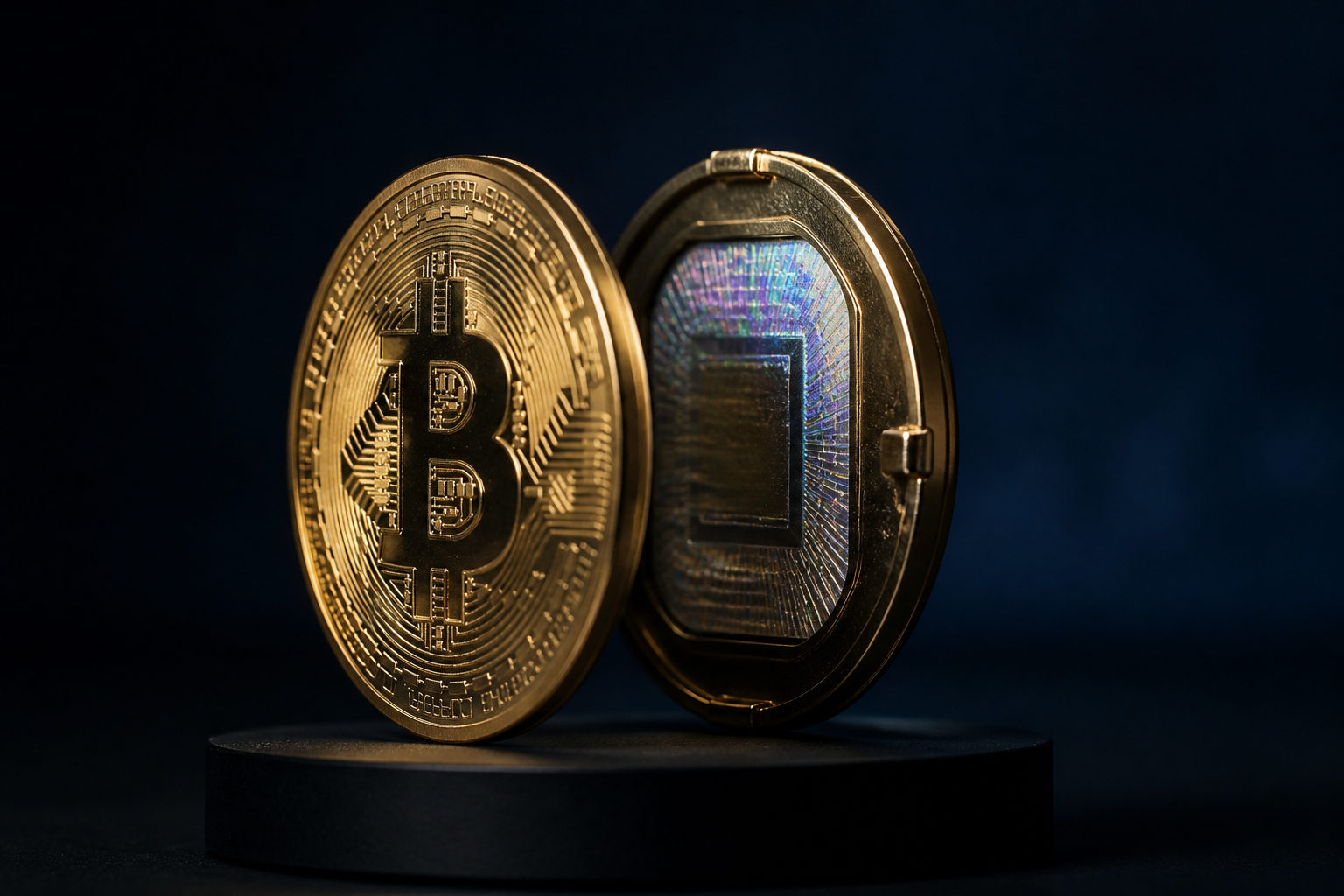
Physical bitcoins can have value, but only after you separate three very different things: a souvenir, a collectible, and a physical item that may control real bitcoin on-chain.
What a physical bitcoin actually is
Bitcoin itself is not a coin you can hold in your hand. It exists as entries on the blockchain. When people talk about a physical bitcoin, they usually mean a tangible object tied in some way to bitcoin, such as a metal token, a card, a sealed item, or another object that may contain private key information.
That distinction matters because a bitcoin-themed object is not automatically the same as owning BTC. A round metal piece with the Bitcoin logo may look impressive, but appearance alone says nothing about whether it gives the holder any access to bitcoin on-chain.
Where the value can come from
| Source of value | What it means | What buyers usually need to check |
|---|---|---|
| On-chain control | The item contains information that can control real bitcoin | Whether the private key is intact, secret, and still usable |
| Collectible appeal | The item is wanted by collectors of bitcoin-related objects | Condition, background, and market interest |
| Memorabilia value | The item commemorates bitcoin as an idea or cultural symbol | Design, material, and theme |
| Display value | The item works as a showpiece, gift, or teaching prop | Presentation and visual appeal |
Some physical bitcoins are valuable because they may hold the keys to actual BTC. Others are valuable because collectors want them. Many have only decorative or novelty value. These are separate categories, and mixing them together is where beginners usually get confused.
A physical object can also carry more than one kind of value at the same time. A sealed item may interest both a collector and someone who believes the on-chain bitcoin is still accessible. Even so, those two reasons for buying it are not the same, and each needs its own evaluation.
Why some are worth far more than others
The first issue is control. If the item was created to hold private key information, the core question is whether that information has ever been seen, copied, photographed, or backed up by someone else. With bitcoin, control follows the private key. If another person has it, the physical shell may no longer represent secure ownership of anything on-chain.
The second issue is verification. A buyer often cannot tell by sight alone whether the private key was kept secret. A sealed sticker, hologram, or package may suggest that the contents were protected, but it does not remove the need for trust. If the original maker retained a copy, the physical item may still look untouched while the security assumption has already failed.
The third issue is collector demand. Some items keep value even when the bitcoin link is weak or gone, simply because collectors want them for their place in bitcoin culture, their design, or their rarity within a niche market. Other items are visually attractive yet still trade like ordinary merchandise because buyers do not assign much collector premium to them.
| Type of item | Possible value | Main risk |
|---|---|---|
| Bitcoin-themed token or medal | Decorative, gift, or novelty value | People may mistake it for actual bitcoin |
| Physical carrier with private key data | Potential on-chain value plus collectible value | Key exposure, broken seal, weak trust |
| Opened or tampered item | Mostly collectible or display value | Bitcoin may already be moved |
| High-priced item with unclear origin | Depends on what the market believes | Authenticity disputes and weak resale liquidity |
Common misunderstandings to avoid
One common mistake is thinking that bitcoin becomes physical once it is printed, stamped, or engraved on something. It does not. The object is only a carrier for information or branding. The bitcoin remains on the blockchain.
Another mistake is assuming a physical item must be safer than a digital wallet because you can lock it away. Physical possession introduces its own problems: loss, damage, tampering, accidental disclosure, and the possibility that someone copied the key long before the current owner received the item.
A third mistake is treating every physical bitcoin as if its value comes only from the BTC it may represent. In practice, collector markets can price an item for reasons that have little to do with spendable bitcoin. Design, condition, packaging, and buyer interest can matter a lot.
How a beginner should evaluate one before buying
Start with a simple question: what exactly are you trying to buy? If you want a bitcoin-themed gift, your checklist should focus on material, finish, and presentation. If you want a collectible, you need to think about condition, market interest, and whether other collectors care about that specific item. If you want actual bitcoin exposure, the hard part is not the metal or card stock. It is whether the control method is trustworthy.
| Buying goal | Main focus | Lower priority |
|---|---|---|
| Gift or decoration | Look, build quality, packaging | Whether it can control BTC |
| Collecting | Origin, condition, collector demand | Short-term price stories |
| Getting usable bitcoin | Private key security and verifiable control | Whether it looks like a coin |
For many beginners, buying bitcoin through a regulated exchange and then moving it to a wallet they control is far more direct than trying to buy a physical representation. If the physical form is what interests you, learn the basics of addresses, private keys, and transaction signing first. Without that foundation, it is easy to overpay for an object that offers no real access to BTC.
A useful mental split is this: some items are mainly for display, while others are meant to represent control. The same object can sit in both categories, but you should never assume it does.
FAQ
Is a metal coin with the Bitcoin logo a real bitcoin?
Usually no. In most cases, it is just a bitcoin-themed object unless it includes a real and still-secure way to control BTC on-chain.
The logo matters far less than the underlying key information.
Does the value come from the metal or from the bitcoin inside?
It depends on the item. A souvenir may get most of its value from craftsmanship or design, while a physical key carrier is judged mainly by whether the private key remains trustworthy.
If control cannot be trusted, premium materials do not replace actual bitcoin value.
How can I tell whether a gifted physical bitcoin is actually useful?
First check whether it includes any private key data or another method of control. Then consider whether that information could have been exposed before it reached you.
If the origin is unclear, treat it as a collectible or keepsake until you can verify more.
Is an opened physical bitcoin still worth buying?
It may still be worth buying as a collectible, but opening usually weakens confidence in any on-chain claim. Once the protective layer is disturbed, buyers have to assume the key may have been copied.
If your goal is usable BTC, an opened item is often a poor fit.
Does the physical form change the price of bitcoin itself?
No. The market price of BTC is checked on major price trackers or trading platforms, while the physical form affects only the collectible premium or discount of that specific object.
So the price of bitcoin and the value of a physical bitcoin item are related only in some cases, not by default.
Before you buy, classify the item first. If you know whether you are looking at memorabilia, a collector piece, or a control mechanism for BTC, the rest of the decision becomes much clearer.
Disclaimer: This article is for informational and educational purposes only and is not investment, financial, or legal advice. Crypto assets are highly volatile and you could lose your entire investment. Do your own research and decide carefully.