
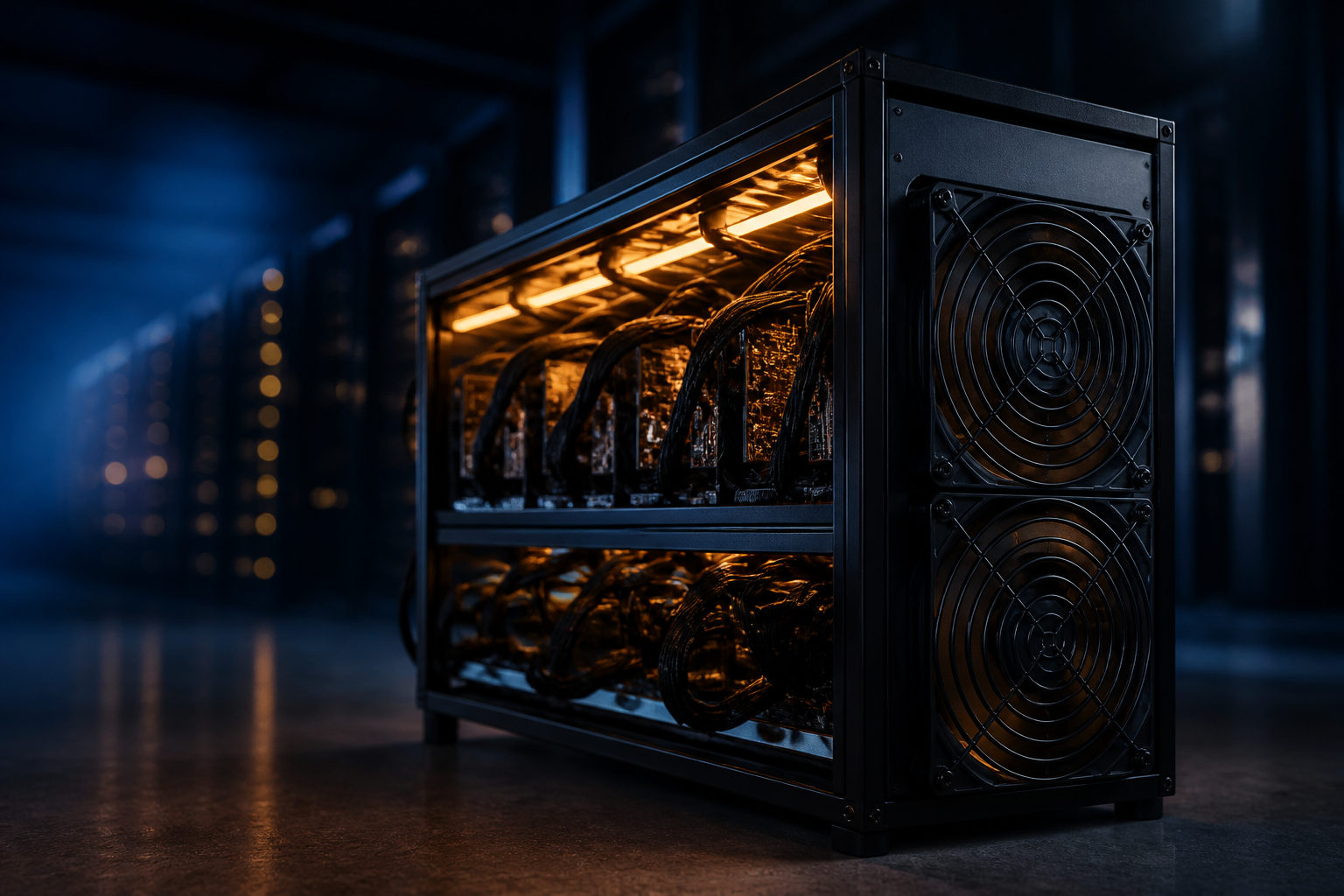
New bitcoins are created by miners when they successfully add a block to the chain, but they do not get to invent the rules. Bitcoin’s protocol sets the schedule, the limit, and the reward structure.
Where new bitcoins actually come from
People often hear the word mining and picture something close to manufacturing. That is not what happens on Bitcoin. Miners compete to assemble transactions into a valid block. If a miner wins that race and the network accepts the block, the miner receives a block reward.
That reward has two parts. One part is newly issued bitcoin. The other part is transaction fees paid by users whose transfers were included in the block. So if you are asking who creates new bitcoins, the direct answer is miners, through block production, under rules they did not write on the fly.
Bitcoin began with the genesis block in January 2009. Since then, the network has produced a new block about every 10 minutes. Each valid block releases new coins according to the protocol in force at that point. The process keeps going, though the amount of newly issued bitcoin falls over time because the issuance schedule tightens by design.
| Question | What actually happens |
|---|---|
| Who creates new bitcoins | Miners receive them through successful block creation |
| Can supply be increased at will | No, issuance is constrained by protocol rules |
| Is the reward only new bitcoin | No, it also includes transaction fees |
| Does the creator keep issuing coins | No, the network runs on predefined rules |
| Will new coins keep growing forever | No, Bitcoin has a supply cap of 21 million coins |
Miners create new supply, but they do not control issuance
This distinction matters more than it first appears. Miners are the parties that bring new bitcoin into circulation. Still, they cannot decide the total supply, speed up the schedule, or award themselves extra coins whenever they want. Their role is to compete for blocks. The rulebook sits elsewhere.
Every block is checked by nodes across the network. If a miner tries to claim a reward that does not fit the protocol, the block is rejected. Simple as that. A miner can produce a candidate block, but the network only accepts it if it follows consensus rules.
That is why saying “miners create new bitcoins” needs context. They are the recipients of newly issued coins when they produce valid blocks. They are not central bankers. They are not system administrators with a hidden console. Bitcoin issuance works because block producers and validators are bound to the same public rules.
| Role | Main job | Can it decide total new supply |
|---|---|---|
| Miners | Package transactions, compete to add blocks, earn rewards | No |
| Full nodes | Verify that blocks and transactions follow the rules | Not on their own |
| Protocol rules | Set issuance timing, halvings, and the supply cap | Yes, as the governing framework |
| Satoshi Nakamoto | Designed and released Bitcoin | No ongoing coin issuance role |
Why the flow of new bitcoins keeps shrinking
Bitcoin does not have an open-ended supply. Its maximum supply is capped at 21 million coins, which means the stream of new coins gets smaller as time passes. So the question is not only who creates new bitcoins. It is also who sets the pace. The answer, again, is the protocol.
The block reward is cut in half about every 4 years, or every 210,000 blocks. The known halving years are 2012, 2016, 2020, and 2024. Miners still keep working after each halving, but each newly accepted block carries fewer newly issued coins than before.
That changes the shape of miner revenue over time. Early on, new issuance is a larger piece of the reward. Later, transaction fees take on more weight. The big point is easy to miss if you only look at the word create: miners are releasing the remaining supply on a fixed schedule, not producing unlimited new money.
| Rule | Detail |
|---|---|
| Network start | Genesis block in January 2009 |
| Typical block interval | About 10 minutes per block |
| Halving cycle | About every 4 years |
| Halving trigger | Every 210,000 blocks |
| Maximum supply | 21 million coins |
| Smallest unit | 1 satoshi equals one hundred millionth of 1 BTC |
Common misunderstandings that cause the most confusion
One common mistake is to hear that Satoshi Nakamoto created Bitcoin and then assume Satoshi is still issuing coins. Satoshi is the name attached to Bitcoin’s creation, and the identity remains unknown. The 2008 white paper, Bitcoin: A Peer-to-Peer Electronic Cash System, introduced the system. After launch, though, ongoing issuance comes from the network’s block reward process, not from a person pressing a button somewhere.
Another mistake is thinking any computer can casually produce new bitcoin. Mining is competitive. Very competitive. A person may participate, join a pool, or use specialized equipment, but the answer to who creates new bitcoins does not change: miners who produce valid blocks and have those blocks accepted by the network.
A third misunderstanding shows up in everyday trading. If you buy bitcoin on an exchange, that does not usually mean fresh coins were created for you. In most cases, you are buying existing coins already in circulation. Newly issued bitcoin enters the market through block rewards, not through ordinary exchange listings or customer purchases.
| Common claim | Accurate or not | Better explanation |
|---|---|---|
| Satoshi keeps issuing bitcoin | No | New coins are released by the network through block rewards |
| Exchange sales are newly created coins | No | Most exchange trades involve existing circulating bitcoin |
| Miners can mint any amount they want | No | Rewards must match protocol rules and pass network validation |
| Mining income only comes from new coins | No | It also includes transaction fees |
FAQ
Are new bitcoins generated automatically by the system?
In a broad sense, yes, because the issuance rules are automatic. More precisely, miners receive newly issued bitcoin when they add valid blocks, and the network enforces the reward rules.
Can anyone take part in creating new bitcoins?
In principle, yes. Bitcoin is open to participation. In practice, getting the reward depends on winning block production and having the block accepted by the network.
Will miners still earn income after new issuance gets very small?
Yes. Mining rewards are made up of newly issued coins and transaction fees. As new issuance declines, fees matter more to miner revenue.
Does a mining pool create new bitcoins?
A mining pool is mainly a coordination and payout structure for miners working together. The pool does not print extra coins; new bitcoin still appears only through valid block rewards.
If I buy bitcoin on an exchange, is that newly created bitcoin?
Usually no. Most exchange purchases involve bitcoin that already existed in circulation. Protocol-level new supply comes from newly accepted blocks.
If you want the shortest usable answer, keep this one: miners create new bitcoins by adding valid blocks, but the protocol decides how much can be issued, how fast that happens, and where the process ends.