
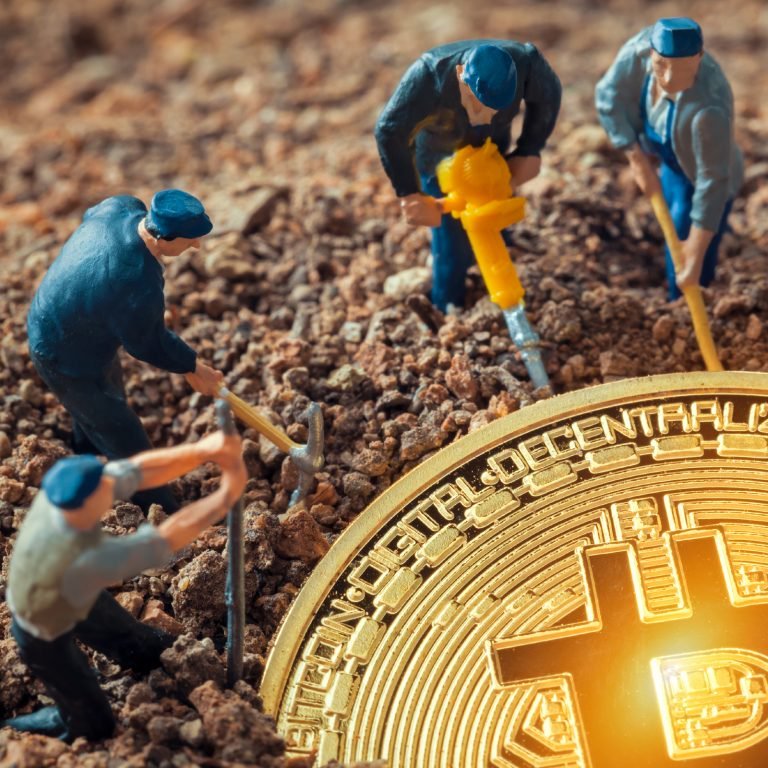
All bitcoins are not expected to be mined anytime soon. Based on Bitcoin’s built-in issuance schedule, the last new coins are widely expected to be released around the year 2140.
Think of mining as a contest to win the next page of the ledger
The word “mining” can be misleading. Bitcoin miners are not digging coins out of the ground. A better analogy is a nonstop competition to earn the right to add the next batch of transactions to the public ledger.
Miners collect pending transactions, package them into a block, and compete to produce a valid result under the network’s rules. The miner that succeeds can add that block to the chain and receive newly issued bitcoin plus transaction fees. That is how new supply enters circulation: slowly, block by block.
Why it takes so long for all bitcoins to be mined
Two rules explain the long timeline. First, Bitcoin has a hard cap of 21 million coins. Second, the amount of new bitcoin created in each block falls over time through a process called halving.
The network is designed to produce a block about every 10 minutes. After every 210,000 blocks, the block reward is cut in half. Halvings have occurred in 2012, 2016, 2020, and 2024. This means a large share of the supply is issued earlier, while the remaining coins are released at a slower and slower pace.
That slowing curve matters more than the headline date. Bitcoin does not move from “still being mined” to “fully mined” in one sudden jump. New issuance keeps shrinking until it becomes extremely small, which stretches the final phase across many years.
What “all bitcoins mined” actually means
In casual conversation, people often ask when all bitcoins will be mined as if there will be a single dramatic finish line. The reality is quieter. The phrase usually refers to the point when nearly all of the fixed supply has been issued and the block subsidy has become tiny.
Bitcoin itself does not stop at that stage. Blocks can still be produced, transactions can still be confirmed, and miners can still be paid through transaction fees. Mining is not only about receiving newly created coins; it is also the process that keeps the chain ordered and operating.
That distinction is important for beginners. The countdown is about new issuance, not about the life of the network.
Can ordinary people still mine bitcoin today?
In theory, yes. In practice, bitcoin mining is a specialized business with real operational demands. The challenge is no longer just learning the basics of the software. It is about hardware efficiency, access to electricity, heat management, uptime, maintenance, and the ability to stay competitive over time.
If you picture mining as a ledger race, you are joining a global field, not a local hobby group. Other participants may have better machines, cheaper power, and more experience running equipment at scale. That does not make participation impossible, but it does change the question from “Can I mine?” to “Can I mine under conditions that make sense for me?”
Common ways to participate
- Solo operation: You run your own equipment and handle setup, cooling, power, noise, and repairs yourself. Control is higher, but so is responsibility.
- Mining pool participation: You combine computing power with other miners and share block rewards under the pool’s rules. This can smooth out the waiting time between successful results, though it does not erase costs.
- Research first, decide later: Many people are better served by learning how block rewards, halvings, fees, and mining difficulty fit together before spending money on equipment.
What can affect the timing
The broad answer stays the same because Bitcoin’s cap and halving structure are written into the protocol. That is why the common estimate points to around 2140. Still, block production is not perfectly even from one period to the next.
Changes in network hash power and difficulty adjustment can make the real-world pace run a bit faster or slower for a time. Even so, those shifts do not change the main idea: bitcoin issuance approaches its limit gradually, not all at once.
FAQ
Will bitcoin be mined out on one exact day?
Not in the simple way that phrase suggests. The issuance rate keeps falling through halvings, so the endpoint is better understood as a long approach rather than a sudden cutoff.
Is the year 2140 an exact deadline?
It is better treated as a widely used estimate based on Bitcoin’s issuance rules. Blocks are targeted for a regular rhythm, but they do not arrive with perfect clockwork precision.
What do miners earn after new bitcoin issuance is nearly gone?
They can still collect transaction fees from the blocks they produce. The network can continue to function as long as miners keep providing computing power to secure and confirm transactions.
Does mining still make sense for an individual?
That depends less on curiosity and more on operating conditions. Equipment, electricity, heat, maintenance, and competition all matter before someone can judge whether participation is realistic.
Do I need to mine to own bitcoin?
No. Many people interact with Bitcoin without mining at all, starting instead with wallets, custody, and basic transaction handling.
If you are trying to decide whether to get involved, start with the mechanics and the cost structure. Understanding how the ledger race works will tell you far more than chasing the idea that the remaining coins are somehow easy to capture.
Disclaimer: This article is for informational and educational purposes only and is not investment, financial, or legal advice. Crypto assets are highly volatile and you could lose your entire investment. Do your own research and decide carefully.