
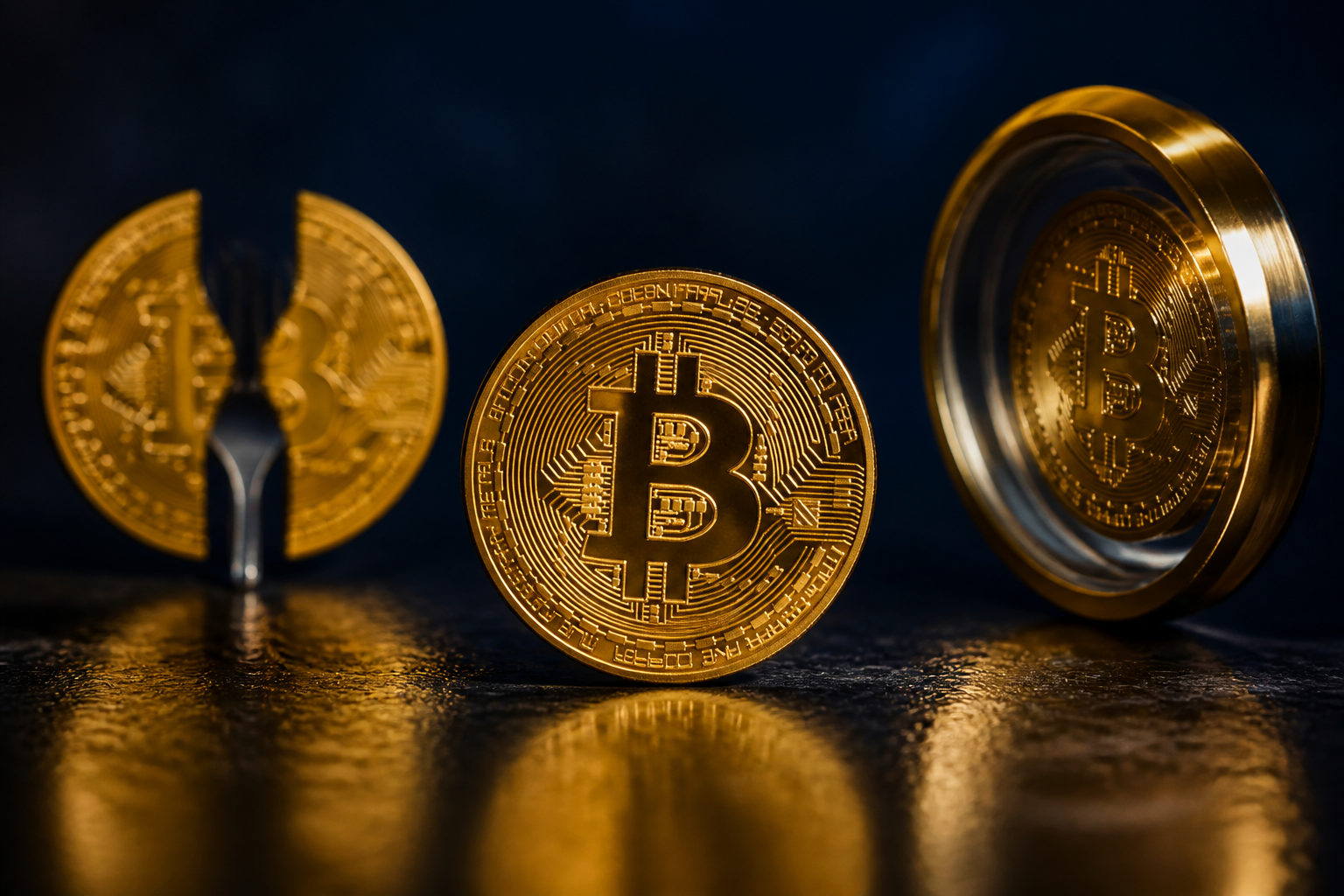
Are there different types of bitcoins? In strict terms, there is only one native Bitcoin: BTC on the Bitcoin network. What people call “different types” usually refers to forks, wrapped versions on other blockchains, smaller units, or different ways of holding exposure.
What counts as Bitcoin in the first place
If you define Bitcoin by its network and protocol, Bitcoin means the native asset of the Bitcoin blockchain: BTC. The system traces back to the 2008 white paper, the genesis block in January 2009, and a maximum supply of 21 million coins. Those points help separate Bitcoin itself from products or tokens that only borrow the name.
That distinction matters because new users often assume anything labeled with “Bitcoin” belongs to the same asset family. A similar name, logo, or ticker does not prove that two assets are the same. The real question is where the asset exists, how transfers are settled, and whether it lives on Bitcoin’s own chain.
| Item | Native Bitcoin? | Main test |
|---|---|---|
| BTC | Yes | Exists on the Bitcoin main network and follows Bitcoin rules |
| Coins created by a fork | No | Run on their own chain with separate rules and markets |
| Wrapped versions on other chains | No | Represent claims or mapped value, not the native asset |
| Units such as satoshis | No | Only a different denomination of the same asset |
What people usually mean by “different types”
Different units of the same asset
Bitcoin can be divided into smaller units. The most common is the satoshi, and 1 satoshi equals one hundred millionth of 1 BTC. This changes the way the amount is displayed, but it does not create a new form of Bitcoin.
Forked coins
A fork can produce a separate chain with its own rules and community. Once that happens, the resulting coin is a distinct asset even if the name stays close to Bitcoin. For a beginner, a simple rule works well: if it does not circulate as the native asset on the Bitcoin network, do not treat it as BTC itself.
Wrapped Bitcoin and similar representations
Some services issue tokens on other blockchains that are designed to track or represent Bitcoin. People use them because they want Bitcoin-linked value inside another ecosystem. That may be useful for trading or on-chain applications, but the holder owns a token structure on another chain, not native BTC on Bitcoin.
That difference adds a layer of dependency. You may rely on a custodian, a redemption arrangement, or a smart contract design. So even when the market value is intended to stay close to BTC, the asset type is still different.
Different holding methods
BTC kept in a self-custody wallet, BTC shown in an exchange account, and Bitcoin exposure inside a broker product may feel very different to the user. The differences are about control, withdrawal rights, and settlement method. They do not automatically mean the underlying asset has turned into another kind of Bitcoin.
| Common phrase | What it really means | New asset type? | What to check |
|---|---|---|---|
| Whole Bitcoin vs fractional Bitcoin | Only a different amount of BTC | No | Check the unit and decimal display |
| A coin with Bitcoin in the name | May be a fork | Usually yes | See whether it has its own chain and market |
| BTC token on another chain | Wrapped or mapped version | Yes | Review the issuance and redemption setup |
| BTC balance on a platform | Possibly a holding format | Not by itself | Check whether you can withdraw to Bitcoin mainnet |
Common mistakes that cause confusion
The first mistake is trusting the label more than the structure. An asset can look familiar and still be something else entirely. The better test is whether it can be sent and received as native Bitcoin on the Bitcoin network.
The second mistake is assuming wrapped versions are interchangeable with BTC for every purpose. They may be convenient, yet they come with extra moving parts. If your goal is to hold native Bitcoin with direct settlement on its own chain, a wrapped token does not give you the same thing.
The third mistake is reading denomination changes as asset changes. A wallet may show BTC in satoshis or display many decimal places, but that is still the same Bitcoin amount expressed differently.
Another easy trap appears on trading platforms. The screen may show “BTC,” but the product page, network option, or withdrawal rules can point to a very different arrangement. A user who checks only the ticker can miss the most important part of the transaction.
How to tell whether you are getting real BTC
The most practical test is whether the asset can move on the Bitcoin main network as Bitcoin itself. Marketing language is less important than network location and settlement path. If an asset only exists inside another blockchain or only inside a platform ledger, you should inspect it more carefully before treating it as Bitcoin.
| Check | If the answer is yes | If the answer is unclear |
|---|---|---|
| Can it be withdrawn to a Bitcoin mainnet address? | It is more likely to be native BTC | Pause and read the asset and withdrawal details |
| Does it have a token contract or another-chain label? | It may be wrapped Bitcoin or another token | Confirm which blockchain it belongs to |
| Does the full name include a distinct suffix? | It may be a fork or a platform-specific product | Read the full asset description |
| Can it only be traded inside one platform? | It may be account exposure rather than transferable BTC | Check whether you own the asset or only price exposure |
For a beginner, four questions usually clear things up fast. Is it actually BTC? Which chain is it on? Can you withdraw it yourself? After withdrawal, does it land on the Bitcoin network? If any of those answers are vague, the product deserves a closer look.
FAQ
Does every coin with “Bitcoin” in the name count as Bitcoin?
No. A name can suggest branding or historical connection, but it does not define the asset. You still need to check whether it is the native asset of the Bitcoin network.
Are satoshis a different type of Bitcoin?
No. A satoshi is just a smaller unit of BTC. The asset stays the same; only the denomination changes.
Is wrapped Bitcoin the same as holding BTC long term?
It depends on what you want to own. If you want native Bitcoin on its own chain, wrapped Bitcoin is not the same thing. If you only need Bitcoin-linked value inside another blockchain, it may serve that purpose with added structural risk.
Why should I check the network if the platform already says BTC?
Because the ticker alone can hide major differences in withdrawal method and asset design. The network and settlement route tell you whether you can move actual Bitcoin or only a substitute.
If a forked coin moves like Bitcoin, is it basically the same asset?
No. Price correlation does not decide identity. If the chain, rules, and market are separate, the asset is separate too.
Before buying, open the asset details and verify the full name, the blockchain it sits on, whether you can withdraw to Bitcoin mainnet, and whether the platform is offering actual BTC or a substitute. That short check prevents most beginner confusion.
Disclaimer: This article is for informational and educational purposes only and is not investment, financial, or legal advice. Crypto assets are highly volatile and you could lose your entire investment. Do your own research and decide carefully.