
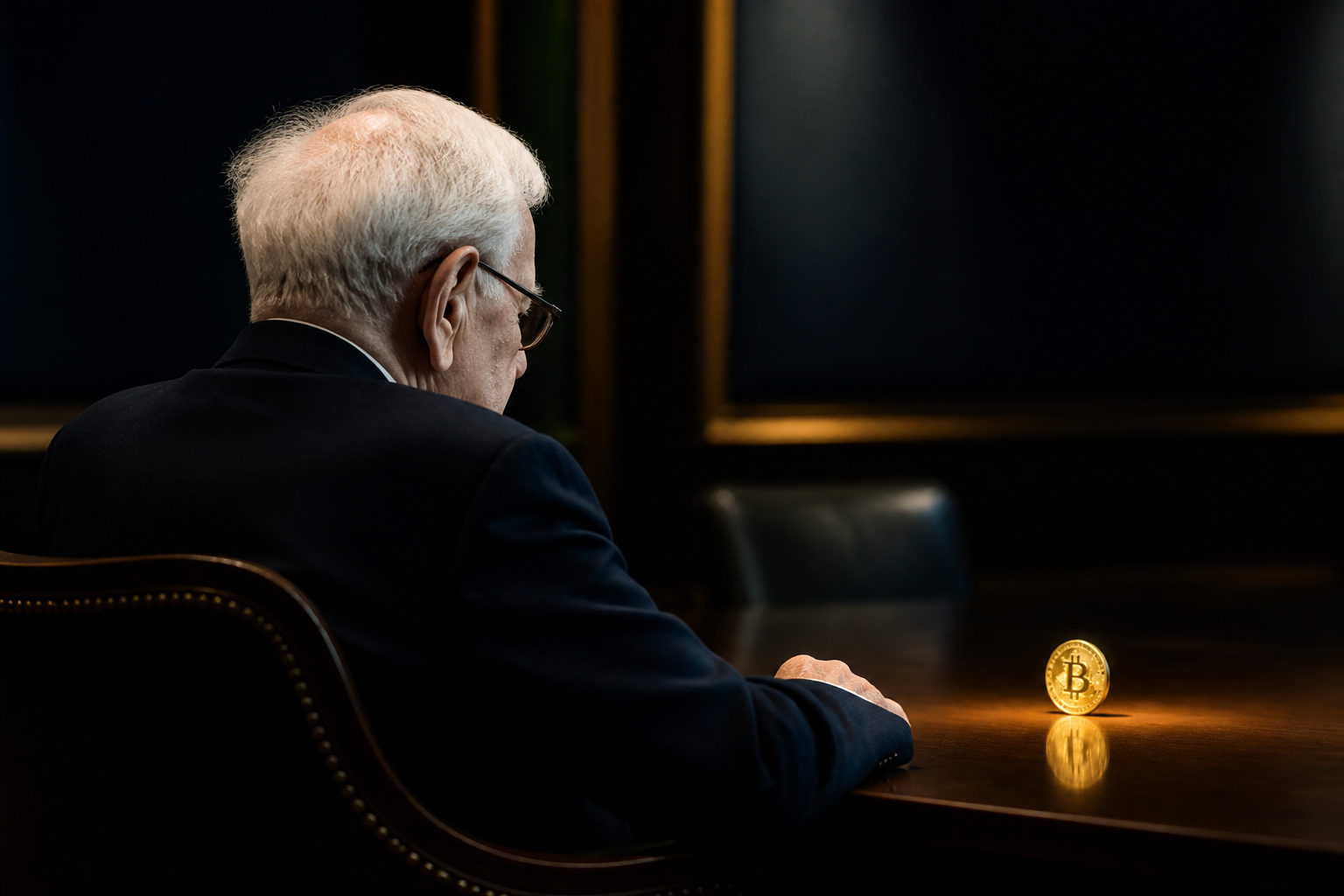
No public evidence shows Warren Buffett owns Bitcoin. The useful way to answer the question is to separate three things: Buffett as an individual, Berkshire Hathaway as a company, and Buffett’s long-standing view of Bitcoin as an asset.
The short answer: no public sign of direct ownership
If someone asks, “does Warren Buffett own Bitcoin,” the most accurate answer is that there is no publicly verifiable record showing that he does. He has not publicly said that he bought Bitcoin, and there is no widely recognized formal disclosure that confirms personal BTC ownership.
That wording matters. Personal wallets are not open books, and rumors are not evidence. For a claim like this, the cleanest sources are direct interviews, shareholder meeting remarks, regulatory filings when they apply, and company reports that clearly identify what sits on a balance sheet.
This is why many headlines on famous investors and crypto can be misleading. A public figure may comment on Bitcoin often, appear in endless recycled clips, or be linked to a broad conversation about digital assets. None of that proves personal ownership.
Why people mix this up so easily
The first source of confusion is the difference between personal holdings and company exposure. Even if a large investment group has owned shares in a business connected to crypto markets, that does not mean its best-known leader personally holds Bitcoin. It also does not mean the parent company directly holds BTC.
The second problem is category blur. A stock tied to payments, trading infrastructure, or financial services can benefit from activity around crypto without being the same thing as spot Bitcoin. Investors often flatten these distinctions because “crypto-related” sounds close enough, but the risk drivers are different.
There is also a media effect. Buffett is one of the most quoted investors in the world, and his criticism of Bitcoin has made his name show up in Bitcoin stories for years. Repetition creates familiarity, and familiarity can create a false impression of ownership or secret interest.
Another issue is that markets love conversion stories. The idea that a famous skeptic quietly changed his mind is click-friendly, so weak evidence gets stretched into a stronger claim than it deserves. A clipped quote, a reposted social post, or a vague reference to a portfolio is often where the confusion starts.
Why Buffett has stayed negative on Bitcoin
To understand why the phrase “does Warren Buffett own Bitcoin” keeps returning, it helps to look at his investment framework. Buffett has long preferred assets that can be tied to business performance: companies with understandable operations, durable earnings power, and cash flow that can be analyzed over time. His style is built around estimating value from what an asset or business can produce.
Bitcoin does not fit that method neatly. It does not generate corporate earnings, issue dividends, or provide the kind of operating statements that traditional equity investors use as anchors. People who support Bitcoin usually focus on scarcity, decentralization, portability across borders, and rules that are visible on a public network. Those are meaningful traits to many holders, but they are not the same inputs Buffett is known for prioritizing.
There is also the matter of competence and comfort. Buffett has repeatedly favored areas where he believes he can judge the economics with confidence. Bitcoin involves private key custody, network consensus, exchange mechanics, on-chain settlement, and a market structure that feels far removed from the insurance, consumer, industrial, and classic financial businesses he has understood for decades.
That does not settle the Bitcoin debate by itself. It simply explains why Buffett’s framework has led him away from it. One group sees a scarce digital asset with monetary properties; another sees something with no conventional cash-flow base and a valuation process that depends heavily on belief, adoption, and market demand.
How to judge claims about famous investors and Bitcoin
If you see a headline suggesting Buffett bought Bitcoin, slow down and check the source chain. Start with the original statement. Was it a direct quote, a full interview, or a partial summary written by someone else? Short clips and social screenshots often remove the context that gives the comment its real meaning.
Next, identify the holder. Is the claim about Buffett personally, Berkshire Hathaway, one of Berkshire’s investment managers, or a company in which Berkshire owns shares? These are separate buckets, and mixing them leads to bad conclusions. A public company can have some operational tie to crypto without its shareholders owning Bitcoin directly.
Then identify the asset. Spot Bitcoin, a fund linked to Bitcoin, shares of a mining company, a trading platform, and a payment stock all sit in different risk categories. Articles often compress them into one idea because that is easier to package, but an investor should unpack them before drawing a conclusion.
Time matters too. A quote can circulate for years and get attached to a fresh headline as if it were new. The age of the source can change the meaning of the story, especially when it is used to suggest that someone has reversed a view or started building a position.
What this question should teach regular investors
Many people who search “does Warren Buffett own Bitcoin” are looking for more than trivia. They want a shortcut. If a famous value investor owns it, maybe that validates Bitcoin. If he rejects it, maybe that settles the argument. That instinct is understandable, but it can lead to lazy decision-making.
A better use of the question is to sharpen your own framework. Bitcoin supporters often point to the fixed supply cap of 21 million coins, its independence from a single issuing authority, and the ability to transfer value on a global network. Skeptics focus on sharp volatility, custody risk, shifting regulation, and the lack of a standard valuation anchor. Those are not small disagreements. They reflect different ideas about what gives an asset value in the first place.
If your process centers on cash-generating businesses, Buffett’s skepticism will probably make intuitive sense. If you are open to owning a scarce digital asset with different monetary characteristics, you may reach a different answer. The important part is to know which standard you are using before you commit capital.
It also helps to separate learning from buying. You can study how Bitcoin works without purchasing any. Understanding wallets, custody, transaction finality, counterparty risk, and record-keeping will give you more practical clarity than copying any celebrity investor’s position.
FAQ
Has Warren Buffett ever said he bought Bitcoin?
No public, verifiable statement shows that he has. The public record is far more consistent with skepticism than ownership.
Does Berkshire Hathaway hold Bitcoin directly?
There is no clear public record confirming direct Bitcoin ownership by Berkshire Hathaway. Exposure to businesses related to crypto should not be treated as direct BTC ownership.
Does Buffett’s criticism prove Bitcoin has no value?
No. It shows that Bitcoin does not fit his usual valuation framework. Other investors use different standards when they assess Bitcoin.
Where should I check claims about famous investors owning Bitcoin?
Look for original interviews, shareholder meeting transcripts, formal filings, and company reports. Secondary summaries and viral posts are much less reliable.
If Buffett does not own Bitcoin, should I ignore it too?
Not automatically. You should first decide whether Bitcoin fits your own risk tolerance, research process, and custody preferences rather than borrowing someone else’s framework without examination.
If you want to go one step further after reading this, do not start with celebrity opinions. Start by checking how you would access Bitcoin, where it would be held, and what risks you would personally carry once you own it.
Disclaimer: This article is for informational and educational purposes only and is not investment, financial, or legal advice. Crypto assets are highly volatile and you could lose your entire investment. Do your own research and decide carefully.