
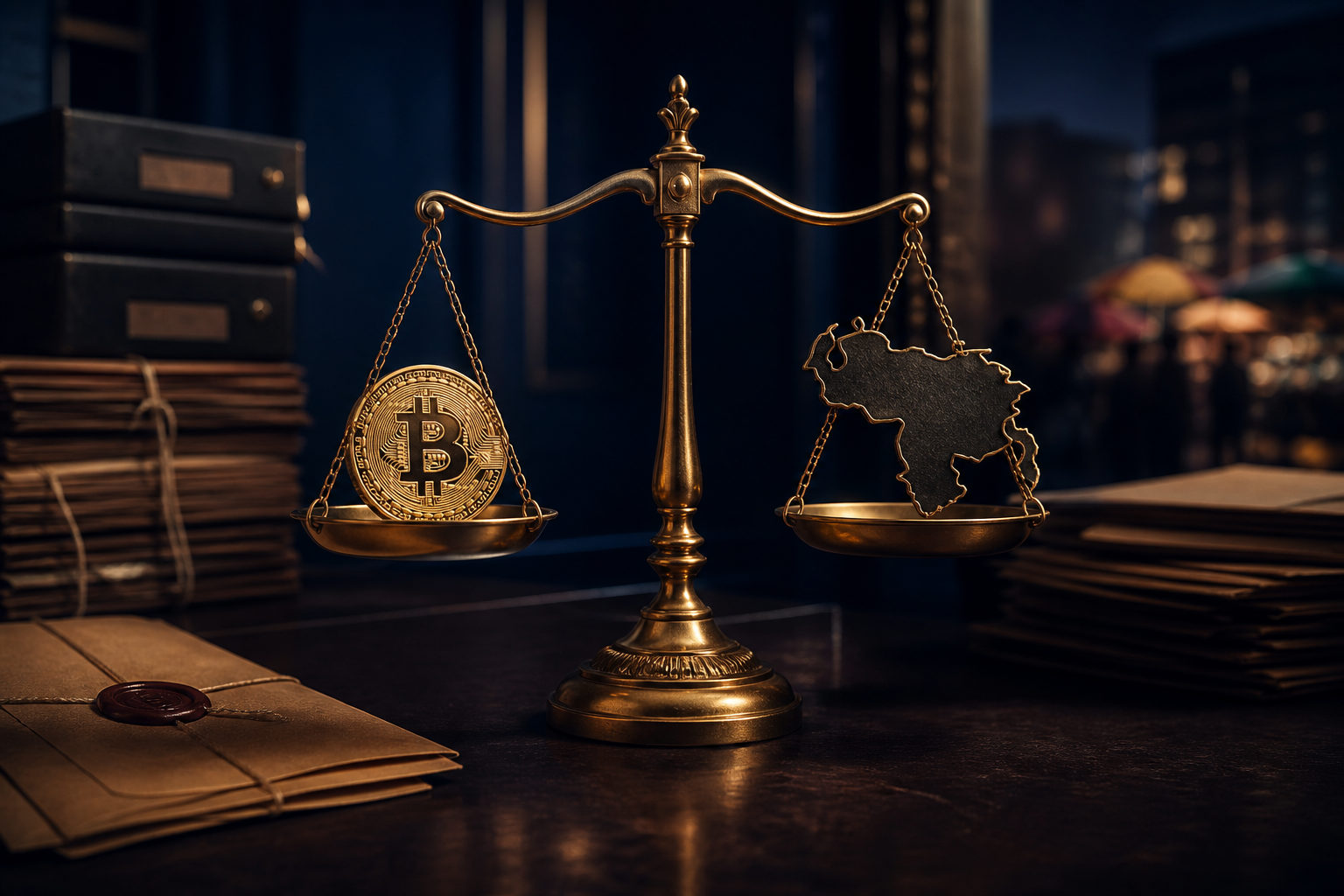
How many bitcoin does Venezuela have? There is no verified, continuously updated public figure that can answer that with confidence. The useful answer is that people often mix up state reserves, government-linked entities, and widespread public use, even though those are very different things.
Why there is no clean public number
This query sounds simple, but the evidence standard is high. A country-level bitcoin holding is only reasonably knowable if there is an official disclosure, an auditable document, or a blockchain address that can be tied to the state with strong proof. Without that, any exact number is mostly speculation dressed up as fact.
That distinction matters because “Venezuela” can mean several different actors at once. It could mean the central government, a ministry, a state-owned company, a public agency, or just people living in the country who use BTC. Those are separate buckets, and combining them into one headline creates a false sense of certainty.
A second problem is that adoption and ownership are not the same. A country can be discussed often in bitcoin circles because residents use BTC for savings, remittances, payments, or value transfer. None of that proves that the government treasury itself holds bitcoin on its balance sheet.
What evidence would actually count
If you want to answer the question seriously, start with primary documents. Budget disclosures, court filings, audit records, official financial statements, and direct government announcements carry the most weight. If none of those exist, the case for any precise holding number is weak from the start.
Next comes on-chain attribution. Bitcoin is transparent at the transaction level, but addresses do not identify their owners by default. A wallet balance only becomes useful for this question if a government openly identifies the address, or if there is strong outside evidence linking that address to an official entity. Seeing coins move on-chain is not enough to say, with confidence, that they belong to the Venezuelan state.
Context also matters. A government body may have interacted with bitcoin at some point without keeping a long-term reserve. Assets can be sold, transferred, held through intermediaries, or moved under a different administrative structure. So even if a past report suggested official control, that still would not guarantee the same status today.
That is why exact claims need to be treated carefully. A hard number sounds authoritative, yet without a document trail or verified wallet attribution, it is just a number. For readers trying to separate signal from noise, the absence of verifiable proof is the main fact.
Why Venezuela is so often linked to bitcoin
The search interest around this topic usually comes from a broader narrative. Venezuela is often mentioned in discussions about currency instability, remittances, access to global payments, and the use of alternative financial tools when local conditions are difficult. In that setting, bitcoin appears in the conversation often, which leads many readers to ask whether the state itself also accumulated BTC.
That leap is understandable, but it is still a leap. Public interest, merchant acceptance, peer-to-peer activity, mining participation, or strong attention to self-custody tools can all exist without any confirmed national reserve. A population using bitcoin is not the same thing as a government stockpiling it.
There is another source of confusion as well. Reports about crypto policy are often broader than bitcoin alone. They may refer to digital assets in general, payment rails, settlement systems, or token structures that are not BTC at all. Once headlines compress those categories into a single story, readers can walk away believing that the government holds bitcoin when the underlying source never proved that claim.
So when people ask how many bitcoins Venezuela has, the better response is to slow down and narrow the question. Are we talking about the state treasury? A public entity? Seized or managed assets? Or simply local usage by citizens and businesses? Until that is defined, the question sounds sharper than the available evidence allows.
The biggest mistakes readers make with this topic
- Treating rumors as disclosures: Social posts and repeated media summaries can make an unverified figure feel settled when it is not.
- Confusing usage with reserves: A high level of public interest in BTC does not mean the state owns a measurable stockpile.
- Merging agencies into the nation: Even if a public body touched bitcoin, that does not automatically create a national reserve.
- Ignoring time: A reported holding from an earlier period may no longer exist if the assets were moved or sold.
- Mixing bitcoin with other crypto assets: A policy story about digital assets can easily be misread as a BTC holding story.
For investors, this matters because country-holding narratives can move attention even when they lack proof. In practice, unverified state-level bitcoin claims are often poor inputs for decision-making. They generate chatter, but they do not offer the kind of evidence that supports durable analysis.
Better questions to ask instead
If your real goal is research, a more productive question is whether Venezuela has ever publicly acknowledged direct BTC holdings. Another good one is whether there are any official wallet addresses that can be verified independently. You can also ask whether any audit, court, or financial record confirms control over bitcoin by a specific state entity. Those questions are harder, but they lead closer to reality.
If your goal is to understand why bitcoin keeps appearing in the Venezuela story, then focus on use cases rather than an unverified reserve figure. Ask why people might turn to BTC, how cross-border transfers fit in, whether businesses accept it, and what role self-custody plays when trust in institutions is weak. That line of inquiry explains the relevance of bitcoin far better than chasing a number that may not be public at all.
It also helps to remember what would make such information market-relevant. Verified, trackable, primary-source disclosures are useful because they can be checked and monitored over time. A vague claim that a country holds “a lot” of bitcoin has little analytical value if no one can prove ownership, timing, or current control.
FAQ
Has Venezuela publicly disclosed an official bitcoin holding?
There is no widely accepted, continuously verifiable public figure that clearly answers that question. If you see a precise amount, check whether it comes from a primary document or a verifiable official wallet attribution.
Does strong bitcoin use in Venezuela mean the government owns BTC too?
No. Public use and state ownership are different issues, and one does not prove the other. Citizens can use bitcoin actively while the government holds none, or at least none that has been publicly confirmed.
Why do so many articles imply that Venezuela has a large bitcoin stash?
Because several themes get blended together: crypto policy, economic stress, local adoption, and rumor. Once those threads are merged, readers may assume state ownership even when the evidence does not support that jump.
How can I judge whether a country bitcoin holding claim is credible?
Look for primary records first. Then check for verified wallet attribution and independent documentation that supports the same claim. If those pieces are missing, the safest position is uncertainty.
Is this question useful for bitcoin investors?
Yes, but mainly as a lesson in evidence quality. The practical value is learning how to separate verified information from narratives that sound important but are too thin to trust.
If you want to check similar claims about any country, company, or institution, use the same filter every time: official disclosure, verifiable wallet attribution, and independent records. If the chain of proof breaks, treat any exact bitcoin figure as unconfirmed.