
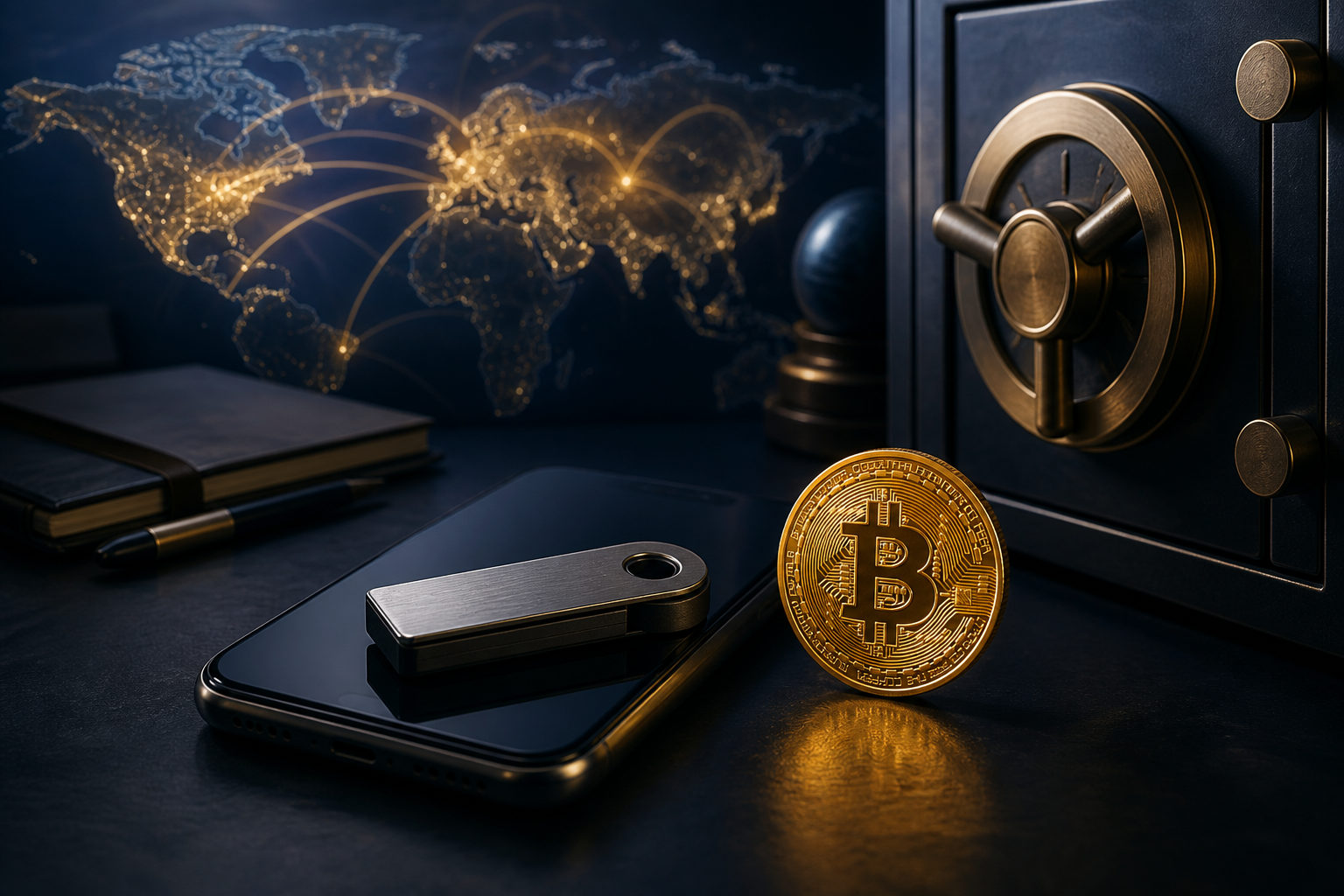
Why use Bitcoin? The practical answer is simple: people use it when they want a digital asset they can hold themselves, transfer across borders, or study as a monetary network with fixed rules. Before any of that, safe setup matters more than buying quickly.
Step 1: Decide what you want Bitcoin to do
A lot of people search for why use bitcoin when the better first question is what problem they want to solve. Bitcoin is not automatically better for every person or every payment. It tends to fit people who are willing to manage some responsibility themselves, accept price swings, and learn the basics of wallets and transfers.
If your goal is education, Bitcoin can help you understand how a public blockchain works in practice. If your goal is ownership, it offers a way to hold a digital asset without relying entirely on one company. If your goal is moving value internationally, it can serve as a different rail from traditional systems. If you want chargebacks, account recovery handled by a call center, or zero volatility, Bitcoin may not match what you need.
- Action: Write down your purpose first: learning, transferring value, or long-term holding.
- Why it matters: Your purpose changes the wallet setup, your storage method, and how often you need to transact.
- Watch out for: Do not start because of social pressure, hype posts, or fear of missing out. Those are common entry points for mistakes and scams.
Step 2: Understand why people use Bitcoin in the first place
When people ask why do people use bitcoin, the reasons usually fall into a few clear groups. Some care about the rules. Bitcoin has a known supply cap of 2100 million? No, 2100万枚 is 21 million. The protocol sets a hard limit of 21 million coins, and supporters value that predictability. Some care about control, because Bitcoin can be held directly rather than through a bank account. Others care about portability, since it can be transferred on a global network.
Bitcoin began with the genesis block in January 2009. Its creator used the name Satoshi Nakamoto, though the real identity remains unknown. The white paper, Bitcoin: A Peer-to-Peer Electronic Cash System, was published in 2008. New blocks are added about every 10 minutes, and issuance is cut roughly every 4 years, or every 210,000 blocks. The halving years so far are 2012, 2016, 2020, and 2024.
These design choices explain part of the appeal, but they do not make Bitcoin a magic tool. A transfer still requires care. Network conditions can change. A transaction sent to the wrong address is usually not easy to reverse. The reasons people use Bitcoin are real, but so are the trade-offs.
- Action: Separate the appeal into three buckets: rules, control, and transfer utility.
- Why it matters: This keeps expectations grounded and stops you from treating Bitcoin as a cure-all.
- Watch out for: Do not assume every crypto asset works like Bitcoin. Risk profiles and design choices differ a lot.
Step 3: Build your safety setup before you buy or receive any Bitcoin
If you do decide to use Bitcoin, security comes first. That is not a slogan. Bitcoin transactions are usually final, so a leaked seed phrase, a fake app, or a copied address changed by malware can cause real damage.
For beginners, the best approach is not complexity for its own sake. It is a clean process. Learn the difference between custody and self-custody. Use a device you trust. Turn on two-factor authentication where relevant. Keep recovery information offline. Verify every receiving address carefully.
- Choose custody or self-custody.
If you leave Bitcoin with a service, you gain convenience but take on service risk. If you hold your own keys, you gain direct control but also take full responsibility for backups and recovery.
Do not confuse seeing a balance on a screen with controlling the asset itself. In Bitcoin, control comes down to the keys.
- Use a clean device and a trusted setup path.
Many losses do not begin on-chain. They begin with phishing pages, fake wallet apps, browser add-ons, fake support agents, or remote access scams.
Do not install software from random messages. Do not trust search ads by default. Save official entry points yourself once you verify them.
- Set the basics before you move funds.
Use a strong password for accounts that need one. Enable two-factor authentication where possible. Lock your phone or computer. Store recovery details offline, not only in screenshots or chat logs.
The point is simple: account security and wallet recovery are different jobs. You need both.
Step 4: Use Bitcoin by scenario, not by impulse
Asking why use bitcoins often turns into “should I buy now,” but that is too narrow. A better method is to match your action to your purpose and begin with a small, low-risk step.
Scenario A: You want to learn how Bitcoin works
In this case, focus on three ideas first: addresses, private keys, and confirmations. An address is where you receive funds. A private key is what gives control. Confirmations are part of how the network settles a transfer. Those basics matter more than market chatter.
- Action: Learn where your wallet shows receive, send, and backup functions.
- Why it matters: Familiarity lowers the odds of clicking the wrong thing during a real transfer.
- Watch out for: Anyone telling you to send Bitcoin first to “verify” your account or “unlock” funds is a major red flag.
Scenario B: You want to use Bitcoin for transfers
Some people use Bitcoin because it gives them another way to move value globally. If that is your use case, your main concern should be accuracy. Confirm the address, make sure the recipient can accept the transfer as intended, and remember that settlement takes time.
- Action: Send a small test transaction first, then proceed only after the recipient confirms it worked.
- Why it matters: A test transfer can catch address mistakes and process misunderstandings before the stakes get larger.
- Watch out for: Never let a stranger control your device remotely to “help” with the transfer. Never copy an address from an untrusted chat and send funds without checking.
Scenario C: You want to hold Bitcoin over the long term
Others use Bitcoin as a long-term asset rather than a daily payment tool. The case for holding usually centers on the fixed supply cap, the open rules, and the network’s long operating history. None of that removes volatility.
- Action: If long-term holding is your plan, define your own buying process, storage plan, and exit rules before you start.
- Why it matters: A written plan reduces emotional decisions during sharp moves.
- Watch out for: Do not borrow to buy. Do not commit money you need for living expenses. Do not increase exposure because someone else posted a gain screenshot.
Step 5: Treat scam prevention as part of using Bitcoin
Many beginners think the main risk is price. Often the first real risk is fraud. People lose Bitcoin to fake support, fake investment mentors, romance scams, phishing sites, and social engineering long before they make any serious market decision.
Scam prevention should be built into every step of your process. If you ignore it, the rest of your plan may not matter.
- Guaranteed returns: If someone promises fixed profit, low risk, or managed Bitcoin gains with no downside, assume danger. Real Bitcoin use does not require handing your coins to a stranger.
- Requests for your seed phrase or private key: No legitimate support worker needs them. Recovery should happen on your own trusted device.
- Fake airdrops, fake mining offers, fake rewards: Be careful with any page that asks you to connect a wallet, approve something quickly, or sign a message you do not understand.
- Private deals in chats or social groups: Lower fees can be a trap if you are dealing with fake payment proof, identity fraud, or switched addresses.
- Search-result phishing: Scam sites often copy the look of wallet tools and service pages. Save known-good URLs and app sources after you verify them, instead of searching fresh every time.
There are also a few common misunderstandings to clear up. Bitcoin is not the same as total anonymity; blockchain records are public. Self-custody is not automatic safety; backups and device hygiene still matter. A long-term thesis is not the same thing as a promise of smooth price action.
Step 6: Build habits you can repeat without stress
The people who use Bitcoin well usually do not rely on luck. They rely on repeatable habits. A simple checklist used every time is often more valuable than any market opinion.
- Use the same verification order every time.
Check the address, the network, the amount, and the recipient’s instructions in the same order for every transfer.
This lowers the chance of skipping a field when you are distracted or rushed.
- Separate active funds from long-term holdings.
Funds used more often face more exposure. Long-term holdings need stronger backup and recovery planning.
Do not keep everything in one place. Do not store all backups in one physical location either.
- Learn recovery before you need recovery.
A backup is not just a photo saved somewhere. It means you know how to restore access on a new device using a trusted wallet.
Never type recovery words into a random website. Restoration belongs inside software you trust.
- Filter what you read and watch.
Educational material and promotional material are not the same thing. A lot of content that sounds helpful is really trying to push you into a quick deposit or transfer.
If someone pressures you to act immediately, send coins now, or copy a trade right away, step back.
FAQ
Why would someone choose Bitcoin instead of a regular payment method?
The usual reason is not that Bitcoin replaces every payment tool. People choose it when they want self-custody, a global transfer rail, or exposure to a digital asset with known issuance rules.
Why should beginners learn security before deciding how much Bitcoin to buy?
Because many mistakes are hard to undo. A wrong address, a leaked seed phrase, or a fake app can do more damage than poor market timing.
Why do some people hold Bitcoin without trading it often?
Some users care more about long-term ownership than frequent trading. Fewer moves can also mean fewer chances to make emotional decisions or fall into a scam.
Why is a small test transaction such a good habit?
It confirms that the address, process, and recipient instructions are correct before the amount gets larger. One test can prevent several avoidable errors.
Why is “send me your Bitcoin and I will manage it for you” a warning sign?
Because control leaves your hands the moment the coins leave your wallet. Whether the person calls themselves a coach, support agent, or friend, that request should raise immediate concern.
If you plan to use Bitcoin, the most useful order is this: define your purpose, choose how you will store it, set up basic security, and make a small test transfer before anything larger. Keep control of the keys and keep strangers away from the critical steps.
Disclaimer: This article is for informational and educational purposes only and is not investment, financial, or legal advice. Crypto assets are highly volatile and you could lose your entire investment. Do your own research and decide carefully.