
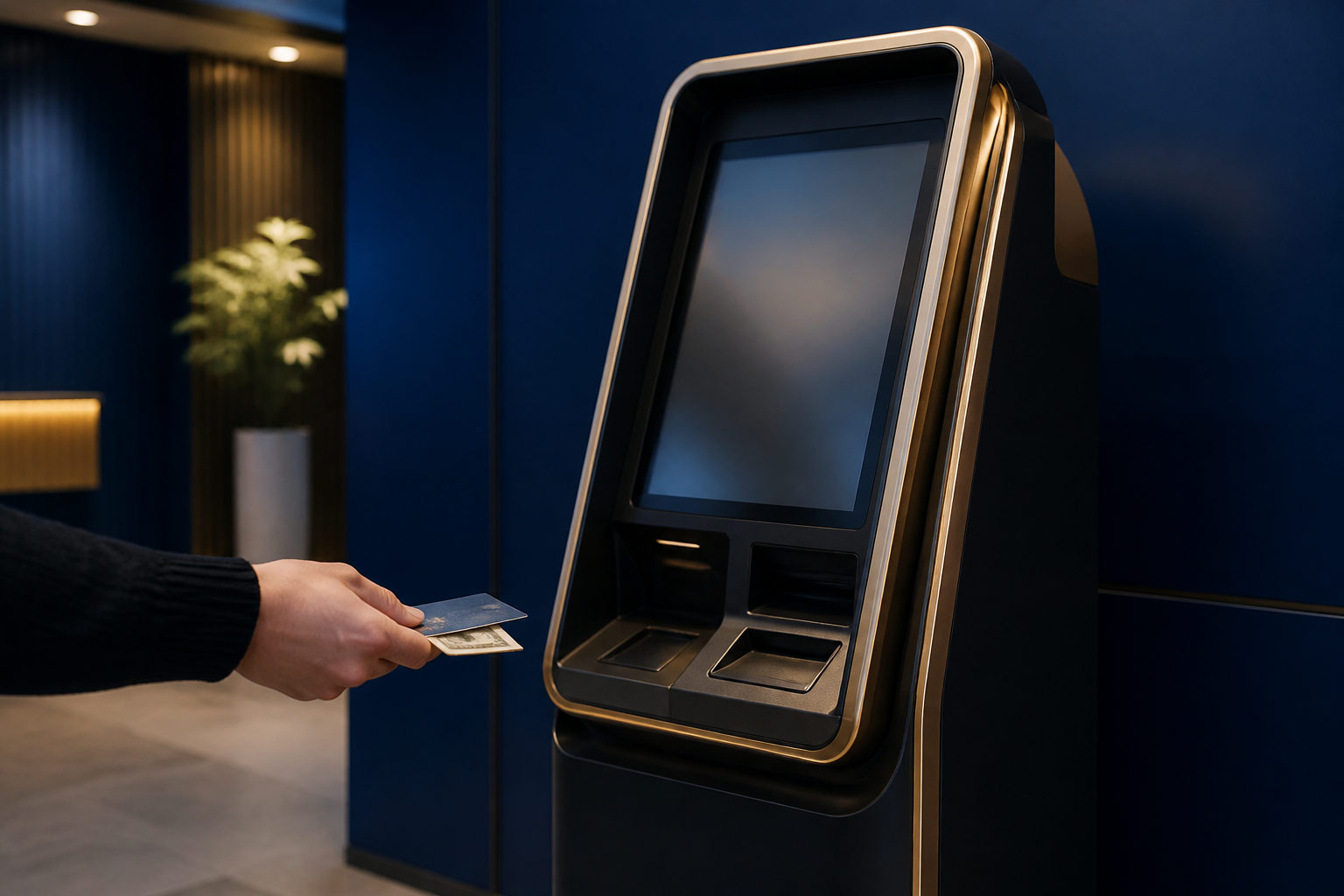
A Bitcoin ATM is a self-service kiosk that lets people buy or sell bitcoin in person. It may look like a bank ATM, but its main job is to convert cash or card payments into bitcoin, or the other way around when supported.
What a Bitcoin ATM actually is
The name causes a lot of confusion for beginners. A regular ATM connects to your bank account for withdrawals, deposits, or balance checks, while a Bitcoin ATM usually connects to a crypto service provider that handles exchange and transfer requests.
Some machines are one-way and only let users buy bitcoin. Others are two-way machines that also let users sell bitcoin and receive cash or another payout method, depending on the operator and local rules.
How it differs from a normal ATM
The biggest difference is what sits behind the screen. A bank ATM works inside the banking system, but a Bitcoin machine is built around crypto transactions, wallet addresses, identity checks, and exchange pricing.
- Different backend: bank ATMs connect to bank networks, while Bitcoin ATMs usually connect to a crypto operator.
- Different purpose: traditional ATMs focus on banking tasks; Bitcoin ATMs focus on buying or selling bitcoin.
- Different delivery: when you buy, the bitcoin is sent to your wallet address rather than placed into a bank account.
- Different checks: many machines ask for phone verification, ID review, or a photo before the transaction goes through.
That is why “what is a bitcoin machine” and “what is a Bitcoin ATM” often lead to the same answer. They usually refer to a kiosk that helps users exchange fiat money and bitcoin through a guided on-screen process.
How a Bitcoin ATM is used
The exact steps vary by operator, but the flow is usually simple. You choose whether to buy or sell, enter the amount, complete any identity checks, scan a wallet QR code, and confirm the transaction.
If you are buying, the machine will usually ask for a receiving address. That address comes from your own Bitcoin wallet app. After payment is made, the operator sends the bitcoin to that address, and the final display in your wallet can depend on blockchain confirmation time.
If you are selling, the process often runs in reverse. The machine may show a destination address for your bitcoin, and after the transfer is confirmed, it will release cash or complete the payout in the way shown on screen.
What you should prepare first
- A working Bitcoin wallet
- A phone that can receive verification messages
- A clear view of fees and quoted rates
- Good habits for checking addresses before you confirm
New users often assume the machine will handle everything for them. It will not. In most cases, you still need your own wallet, and you still carry the responsibility of checking every detail before sending funds.
Common misunderstandings and risks
A Bitcoin ATM can feel easier than opening a trading app, especially for someone who wants an in-person process. Even so, ease of use does not mean lower fees, better privacy, or stronger protection from mistakes.
Another mistake is thinking that a physical machine makes a crypto transfer easy to reverse. It does not. If you scan the wrong wallet code, send funds to the wrong address, or follow instructions from a scammer, fixing the error can be very hard.
- Fees may be high: operators often build service costs into the quoted rate or charge them separately.
- Features vary: not every machine supports both buying and selling.
- Identity rules differ: some locations ask for more verification than others.
- Scams exist: if someone tells you to stand at a machine and send bitcoin to solve an urgent problem, stop and verify first.
If you are asking what a Bitcoin ATM is used for, the short answer is this: it gives people a way to buy or sell bitcoin through a physical kiosk, but it does not remove the usual risks of crypto transactions.
FAQ
What does a Bitcoin ATM do?
Its main role is to help users buy or sell bitcoin through a self-service machine. Depending on the operator, it may support only purchases or both directions.
Is a Bitcoin machine the same as a bank ATM?
No. A bank ATM handles banking functions, while a Bitcoin ATM is built for crypto exchange and wallet transfers. The similar shape causes confusion, but the service is different.
Do I need a wallet before using one?
In most cases, yes. When you buy bitcoin, it usually needs to be sent to your wallet address, so having your own wallet ready makes the process smoother and safer.
Can every Bitcoin ATM give out cash?
No. Some machines only support buying bitcoin. Cash payout is usually limited to two-way machines and can depend on local operator rules and identity checks.
Are Bitcoin ATMs safe for beginners?
They can be simple to use, but safety depends on your actions. Always verify the wallet address, read the fees, and ignore pressure from strangers telling you what to do on the screen.
Before using any Bitcoin ATM, set up your wallet first, save your wallet backup details securely, and double-check the amount, fees, and destination address on the machine. Those checks matter more than finishing fast.